
Plan Your Long Distance Move From Los Angeles With Route-Specific Estimates
Scan your LA home with AI, see distance-based estimates for routes like Los Angeles to New York, Seattle, or Texas, and compare interstate movers who already know LA parking, elevators, and traffic.

long distance movers in Long Distance Movers From Los Angeles, CA
Long Distance Movers From Los Angeles Need More Than a Zip Code
A long distance move starting in Los Angeles is not the same as loading a truck in a quiet suburb. Your movers might be dealing with: • Tight street parking in neighborhoods like Silver Lake, Echo Park, Venice, or Palms • Steep hills in areas such as Mt. Washington, Hollywood Hills, or parts of Highland Park • Elevator reservations and loading docks in DTLA, Koreatown, or Century City high-rises • Shared underground parking, HOAs, and gate codes in the Valley and Westside communities like Sherman Oaks or Santa Monica These details change how long it takes to load your shipment, which trucks can safely access your building, and ultimately how your long distance moving quote is built. MoveCost uses AI-based home scanning to capture the real layout and contents of your LA home before you book. Instead of guessing how many boxes will come out of a one-bedroom in West Hollywood or a three-bedroom house in Woodland Hills, you walk through with your phone and let the system build an itemized inventory. Once your inventory is complete, you can compare interstate movers that regularly run routes out of Los Angeles. You’ll see how they price your move based on volume or detailed item lists, what delivery window they expect for your specific destination, and how they handle access challenges that are common across LA. You’re not filling out a generic form. You’re giving long distance movers a detailed picture of an actual LA home, and you’re comparing their responses side by side.
Typical Long Distance Routes Out of Los Angeles—and What Affects Price
People move from Los Angeles to many different regions, but a few interstate routes come up again and again: toward the East Coast, the Pacific Northwest, and fast-growing Western and Sun Belt states like Texas, Arizona, and Colorado. Each direction has its own distance, timing, and cost drivers. Below are example distance ranges and shipment patterns—not quotes or guarantees, but useful context for what often drives long distance pricing out of LA: • Los Angeles to New York or other East Coast cities Frequently 2,700–2,900+ road miles depending on the exact route. Longer mileage usually means higher transportation cost and a wider delivery window. Many LA-to-East-Coast moves involve full apartments or multi-bedroom homes. • Los Angeles to Seattle or Portland (Pacific Northwest) Shorter than a coast-to-coast move but still a multi-day drive through mountain passes and potential weather. Seasonal conditions along I‑5 and other corridors can affect timing. • Los Angeles to Texas (Austin, Dallas, Houston, San Antonio) Popular corridor with many carriers running regular trips. Depending on the city, distances can be roughly midway between a regional Western move and a full LA–NYC route. • Los Angeles to Arizona (Phoenix, Tucson, Scottsdale) Regional long distance with fewer driving days, but LA loading conditions, building rules, and heat on both ends can still impact timing and crew planning. • Los Angeles to Colorado, Nevada, or Utah Common for people heading to Denver, Las Vegas, or Salt Lake City. Routes may cross mountains or desert, so season and truck capacity planning still matter. For the same inventory, a move from LA to Phoenix may come back with a shorter delivery window than LA to Boston, and a different mix of pricing models. Some movers quote based on estimated weight, others on volume, and others on a detailed item list. By starting with an AI scan of your LA home, you give each mover the same information, so their route-specific estimates are easier to compare and understand.
Los Angeles to New York and East Coast Moves: What to Expect
Moving from Los Angeles to New York, Boston, Washington, D.C., or other East Coast cities is one of the longest common routes in the country. That distance affects: • Delivery windows – Carriers often give a wider delivery window for LA–East Coast moves than for regional routes, because trucks are covering thousands of miles and may be combining shipments. • Route planning – Your shipment may travel on a tractor-trailer that passes through several major hubs on the way east. Traffic, weather, and required breaks all play a role in how long the run takes. • Building access on both ends – You might start in a Koreatown high-rise and end up in a Brooklyn walk-up or a Boston brownstone. Stairs, elevators, loading docks, and parking all need to be factored in. Using MoveCost’s AI scan, you can: 1. Capture the full contents of your LA home, including storage spaces, patio furniture, and any delicate or oversized items like TVs, bikes, or instruments. 2. Add notes about LA-specific constraints—such as narrow alleys, steep driveways, or time-limited loading zones—that can affect pickup time. 3. Request route-specific estimates from interstate movers that already run LA–East Coast and other cross-country routes. Because every mover sees the same detailed inventory and access notes, the estimates you receive are built on a consistent understanding of your move, rather than a quick phone description. You can then weigh tradeoffs: a tighter delivery window at a higher price versus a more flexible schedule at a lower price, or additional packing services versus packing yourself before the truck arrives.
Los Angeles to Seattle, Portland, and the Pacific Northwest
LA to Seattle, Portland, and other Pacific Northwest cities is a popular move for people changing jobs, seeking a different climate, or relocating for school. While it’s not as far as a coast-to-coast haul, it still involves: • Travel through mountain regions where weather or road work can affect timing • Busy departure conditions in Los Angeles, especially if you’re in a dense neighborhood or high-rise • Urban arrival conditions in cities like Seattle or Portland that may have their own parking, elevator, and loading dock rules When you create an AI-powered inventory with MoveCost, you can: • Specify whether your LA home is a hillside property, a multi-story walk-up, or a building with a reserved freight elevator • Flag any long carries from where the truck can legally park to your front door • Indicate items that might need special attention, like large TVs, instruments, bikes, or heavy workshop equipment Interstate movers can then look at that detail and determine whether they need a smaller shuttle truck for your LA pickup, how many crew members to assign, and how to structure their timing for the multi-day run up the coast. The same inventory also helps at the destination side—so the crew arriving in Seattle, Tacoma, or Portland has a clear picture of what’s coming off the truck before it pulls in.
Los Angeles to Texas, Arizona, Colorado, and Other Popular Outbound States
Many people leaving Los Angeles head to states like Texas, Arizona, Colorado, and Nevada. Moves from LA to Austin, Dallas, Houston, San Antonio, Phoenix, Tucson, Denver, or Las Vegas share a few common patterns: • Regular routes – Because these corridors are popular, many carriers run them frequently, which can expand your options for dates and shipment sizes. • Heat and timing – High temperatures in both Southern California and many destination cities may affect recommended loading times and how crews plan their day. • Suburban arrivals – A lot of LA-to-Texas, LA-to-Arizona, or LA-to-Colorado moves end in single-family homes or low-rise communities with different access considerations than a DTLA high-rise. On MoveCost, you can use the same LA home scan to compare mover options across these routes. For example: • A household moving from a three-bedroom house in the Valley to a suburban home outside Austin can see how different movers price the same inventory. • Someone relocating from a compact Santa Monica apartment to a condo in Scottsdale can evaluate the impact of optional services like packing or unpacking on their overall estimate. The AI inventory gives movers more precise information than a simple “two bedroom” label. That, in turn, helps them estimate the labor needed on both ends and the transportation required for your specific LA-to-Texas, LA-to-Arizona, or LA-to-Colorado move.
How the AI Scan Handles LA’s Parking, Hills, Elevators, and Shared Garages
Los Angeles presents a set of challenges that matter a lot more on move day than your square footage alone: • Steep, narrow roads in hillside neighborhoods • Limited street parking or permit-only zones near popular corridors • Long exterior stairs up to a house or down to a basement or garage • Elevators that must be reserved in advance, often with time windows • Shared underground garages and loading docks with strict rules When you walk through your home with the AI scan, you can: • Capture your furniture and boxes visually, so the inventory reflects reality instead of memory • Add notes like “no truck access to driveway,” “third-floor walk-up,” or “freight elevator, reservation required” • Highlight fragile or awkward items such as large mirrors, art, instruments, or gym equipment Interstate movers use this information to decide whether they need a smaller shuttle truck for pickup, how many people to schedule for loading, and how long they should reasonably plan to be at your LA address. That directly affects labor assumptions and pricing for long distance moves. Because the same inventory follows your shipment from Los Angeles to your new state, it also helps avoid surprises on arrival. The crew unloading at your new address already has a clear, itemized list to work from, which can make delivery smoother and more organized.
Delivery Windows for Long Distance Moves From Los Angeles
Long distance movers usually don’t promise a single exact delivery day when they’re driving across multiple states. Instead, they work with delivery windows based on distance, route, season, and how they group shipments. For LA-originating moves, delivery windows often vary like this: • Regional routes (for example, Los Angeles to Phoenix or Las Vegas) – Delivery windows can be relatively short because the driving distance is limited and weather is more predictable. • Mid-range routes (for example, Los Angeles to Austin, Denver, or Seattle) – Delivery windows may span several days as trucks travel across multiple states and mountain ranges. • Long-haul coast-to-coast routes (for example, Los Angeles to New York, Boston, or Miami) – Delivery windows are usually the widest, allowing for long mileage, possible weather disruptions, and shared loads. When you compare quotes through MoveCost, you’ll see each mover’s estimated pickup and delivery timeline for your specific origin and destination. LA-specific details can influence those estimates: • Building rules that only allow weekday moves or limit weekend access • Preferences for early-morning pick-ups to avoid 405, 10, or 101 traffic • Seasonal demand spikes, such as summer moves, college start dates, or year-end relocations You can use this information to align your own schedule—flights, new lease start dates, or school enrollment—around realistic expectations instead of assumptions. The AI-generated inventory also makes it easier for movers to stay on schedule, because they’re planning with a clear idea of what they’re loading and unloading.
A Practical Checklist for LA Residents Planning a Long Distance Move
If you’re leaving or arriving in Los Angeles for an interstate move, it helps to work through a simple, realistic checklist: 1. Confirm your building and neighborhood rules • Ask about elevator reservations, loading dock hours, required certificates of insurance, and parking procedures. • Check whether there are blackout dates for moves (holiday weekends, major events, or filming days in certain neighborhoods). 2. Scan your entire home with AI • Walk through every room, closet, patio, balcony, and storage area. • Include offsite storage units or garages if they are part of the same shipment. 3. Add LA-specific access notes • Note any hills, stairs, tight turns, or long carries from the truck to your front door. • Mention if your street often has construction, limited parking, or strict enforcement. 4. Compare route-specific estimates • Look at pricing, delivery windows, and what each mover includes, not just the bottom-line number. • Consider how different dates, shipment sizes, or flexibility in your schedule might affect cost. 5. Decide what is worth shipping from LA • Use your inventory to decide which bulky or inexpensive items are better to replace at your destination rather than transport long distance. MoveCost is designed around this process. The AI scan gives you a clear starting point, and the comparison tools help you interpret the estimates you receive from long distance movers, so you can plan your LA move with fewer unknowns and fewer last-minute surprises.
Connect This LA Long Distance Page to the Rest of Your Move Planning
Long distance moving from Los Angeles is easier to plan when this page is connected to the rest of your research: • If you are still comparing state-to-state moving costs, you can look at how routes out of LA stack up against other origin cities. • If you want to see how stairs, elevators, or long carries affect estimates, you can explore tools that focus specifically on access. • If you prefer to compare multiple mover quotes with one scan instead of repeating yourself, you can move directly into the quote-comparison flow. From this LA-focused page, you can move into calculators that cover state-to-state pricing, multi-bedroom homes, and cross-country averages without losing the details of your original AI home scan.
How It Works

1. Scan Your Room With Your Phone
Walk around your space and scan your items in seconds.
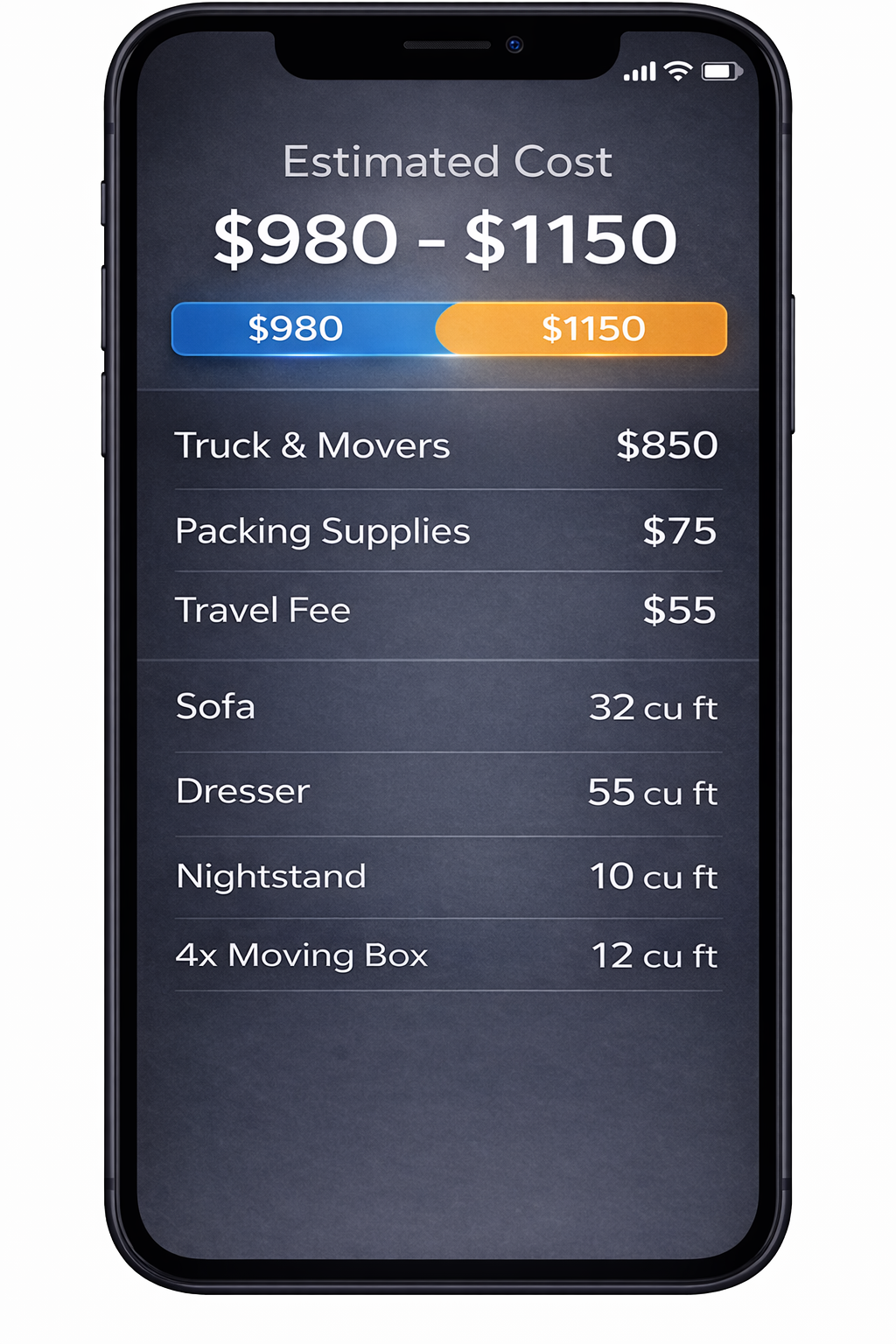
2. AI Detects Your Items
We identify your items and calculate volume for a clearer estimate.
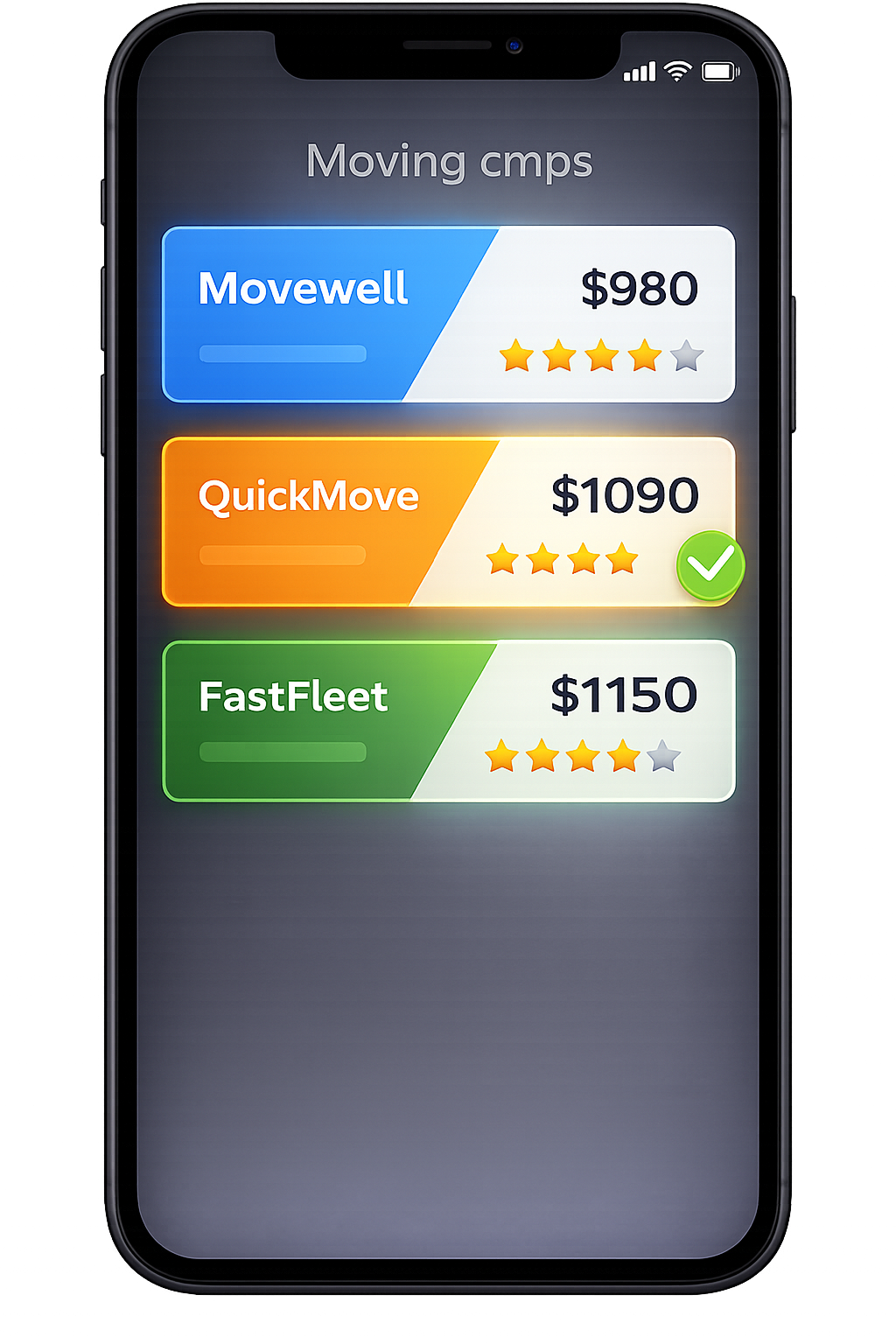
3. Compare Multiple Quotes
Compare mover quotes for Long Distance Movers From Los Angeles, CA from the same scanned inventory.
Frequently Asked Questions
What affects the cost of long distance movers from Los Angeles the most?
For LA-originating moves, cost is mainly shaped by four things: distance, the size of your shipment, access at your Los Angeles home, and your delivery window. A move from Los Angeles to New York will typically involve more miles and a wider delivery window than a move from LA to Phoenix. Within LA, details such as steep hills, limited street parking, long walks from the truck to your door, shared garages, and elevator rules can add loading time, which movers factor into their pricing. Using MoveCost’s AI inventory tool, you can document both your items and your access situation so long distance movers can price your move based on the real conditions they’ll face on move day.
How does the AI scan help with large coastal moves like Los Angeles to New York or Boston?
For long coastal routes such as Los Angeles to New York, Boston, or other East Coast cities, the AI scan creates a detailed, room-by-room inventory of what you’re shipping. Instead of relying on a quick phone estimate where you say you have "about a two bedroom," movers see specific items, quantities, and notes about access. That helps them estimate the space your shipment will take on a long-haul truck and how much time they’ll need to load it in LA. With better information, they can propose delivery windows and pricing that better match the actual scale and complexity of your move.
Can I use MoveCost if I’m moving into Los Angeles from another state?
Yes. You can scan your current home in your origin state to build an inventory, then add details about your new Los Angeles address—such as whether it’s a high-rise in downtown LA, a house with a steep driveway in the hills, or a townhome with shared parking. Interstate movers can then plan for both ends of the trip at once. Even if your origin city is very different from LA, the platform helps carriers anticipate the constraints they’ll face when they arrive with a long distance shipment in Los Angeles.
What are typical delivery windows for long distance moves from Los Angeles?
Delivery windows depend on your destination and time of year. Regional moves from LA to nearby states such as Arizona or Nevada may have shorter windows, while longer routes like LA to New York or LA to Florida usually have wider ranges to account for distance, weather, and shared loads. Carriers also adjust timelines during busy seasons, like summer or major holidays. On MoveCost, each quote clearly shows the expected delivery range for your specific route so you can see how different movers structure their schedules. These are estimates rather than guarantees, but they give you a more grounded expectation than a simple calendar date.
How early should I start planning a long distance move out of Los Angeles?
Many people begin gathering estimates several weeks before their preferred move date, and starting earlier is common during peak season or for complex buildings. In Los Angeles, coordinating elevator reservations, parking permissions, HOA rules, and access for hillside properties can take extra time. Using the AI scan lets you build a detailed inventory quickly so you can request and compare long distance quotes without spending days on separate walkthroughs and calls. Starting earlier gives you more flexibility in choosing dates and carriers, especially if you’re scheduling around a lease end, home closing, or school calendar.
Does it matter if my LA home is on a hill or down a narrow street?
Yes. Hills, narrow streets, and tight turns can limit the size of the truck that can safely reach your home. Movers may need to use a smaller shuttle truck and transfer your items from a larger trailer, or they may need extra time for long carries up or down stairs. These factors affect labor and equipment planning for long distance movers, especially when they’re coordinating multi-day routes from LA to another state. When you use the AI scan, you can add notes about your specific street and access situation so carriers can plan appropriately and reflect that in their estimates.
Can I compare long distance movers from Los Angeles without a lot of phone calls?
MoveCost is built for that kind of comparison. Once you complete your AI home scan and confirm your origin in Los Angeles and destination state, you can request quotes from interstate movers that service that route. Because each mover is working from the same digital inventory and access notes, you can review their estimates, delivery windows, and service details in one place instead of repeating your information in multiple separate calls.
How do I know which items are worth shipping long distance from LA?
After you scan your LA home, you’ll see a structured list of what you plan to move. You can use that list to decide which bulky or low-value items are worth shipping and which might make more sense to sell or donate before moving. For example, older couches, heavy but inexpensive furniture, or items that are easy to replace at your destination can add weight or volume without adding much value. Trimming your inventory before you finalize quotes can help long distance movers give you estimates that better reflect what you’ll actually ship.
Can MoveCost help if I’m comparing LA long distance movers to local movers?
Yes. The same AI-generated inventory of your Los Angeles home can be used to explore both long distance and local options. If you end up deciding between an interstate move and a shorter relocation within the LA area, you can use your existing scan with tools that focus on local moving costs and nearby movers rather than recreating your inventory from scratch.