
Know Your Moving Costs Before You Pack a Box
If this is your first move, this guide shows you how moving estimates actually work—what movers look at, which line items to question, and how to turn a simple AI home scan into clear, comparable estimates across tools and routes.

Moving Estimate Guide for First-Time Movers with AI Scanning | MoveCost.ai
Your Main Moving Estimate Guide (Not a Calculator, Not a City Page)
Use this page to understand estimates and line items; use calculators and city pages to run numbers. MoveCost.ai has a lot of tools: calculators by state and city, local and long-distance route pages, student tools, stairs/elevator calculators, and city examples like Miami. This page is different. It is the central moving estimate guide for first-time movers. That means: • It explains how estimates are built (inventory, access, distance, service level). • It shows you what each line item really means and which ones first-time movers miss. • It teaches you how to read and compare estimates from different movers and online tools. Once you understand those pieces here, you plug the same knowledge into: • The AI Moving Cost Calculator Online Free – to get your first AI estimate and reusable inventory. • The Moving Cost Calculator by State and City – to see how routes and cities change your ranges. • The Moving Cost Calculator Including Stairs and Elevator – to see how floors, elevators, and long walks affect your estimate. • City/route pages like Moving Cost in Miami, Long Distance Movers from Miami, or Cheapest States to Move to From New York – to put your estimate into local or route context. Think of this as the playbook for estimates. The calculators and city pages are the scoreboards that show your actual numbers. Across MoveCost, when other pages say “learn how to understand your moving estimate,” they link back here so this guide is the main reference for first-time movers.
Turn Guesswork Into a Clear Moving Estimate Guide
Most first moves go over budget because the inventory or access is off. Our AI-based home scanning builds your moving list for you and guides every cost decision. If this is your first time hiring movers, it can be hard to know where to start. A rough online calculator might label you as a “small move” or “3-bedroom home,” but that misses important details like stairs, elevators, parking, and hidden storage. This moving estimate guide for first time movers walks you through what actually matters in an estimate and shows you how MoveCost turns a walkthrough of your home into a structured inventory you can reuse everywhere. Instead of filling out long forms or guessing how many boxes you’ll have, you: 1. Scan your home once with your phone. 2. Review a clear, room-by-room inventory. 3. Share that same inventory with movers and calculators so every estimate is based on the same data. Removes guesswork from your first moving estimate Teaches you how professional movers build estimates using inventory and access details Helps you avoid lowball estimates and unclear add‑on charges No More Surprise Fees Clarity on Volume & Move Size Confidence to Ask the Right Questions
From Room Scan to Reliable Moving Estimates in Minutes
A simple three-step moving estimate guide for first time movers—no clipboards, no spreadsheets. Traditional estimates often require a phone interview or an in‑home visit. MoveCost replaces that with a guided AI home scan that you control. You follow a script on your phone, show each space once, and let the system build your inventory. This section of the moving estimate guide explains exactly what happens in each step so first-time movers know what to expect before they start.
What to Capture So Your Estimate Matches Your Final Bill
A simple checklist to help first-time movers give movers everything they need—without over-sharing or overpaying. One of the most common complaints first-time movers have is: “my final bill was higher than my estimate.” In many cases, the original estimate missed items or access details that only showed up on moving day. This checklist is meant to be used while you complete your AI scan or fill out any estimate form. If you capture these details now, your estimates will better reflect the real work involved. Reduces the chance of missed bulky items that raise costs later Makes access challenges visible so movers can plan the right crew and equipment Improves apples-to-apples comparison between movers using the same inventory
Estimate Line Items First-Time Movers Should Always Check
If you only look at the total, you miss the story. These are the lines that usually move the number up or down. Once you have an AI inventory or a detailed list, most professional estimates include similar building blocks. Use this guide next to any estimate—online or from a mover—to see what’s really being priced. Key line items and what they mean: • Labor time How many movers, for how many hours. Example: “3 movers × 6–8 hours.” If one estimate assumes 4 hours and another assumes 8 for the same inventory, ask why. • Truck and travel Time and/or flat fees to get the truck to you, between homes, and back to the yard. Some movers roll this into labor; others list it as a separate “travel time” or “truck fee.” • Access / stairs / elevator / long carry Notes about stairs, elevator rides, or long walks from truck to door. These might appear as extra time in labor, as a “stair” line, or as a “long-carry” surcharge. • Packing and materials Labor to pack boxes plus boxes, tape, shrink wrap, mattress bags, wardrobe boxes, and special crates. Double-check whether the estimate assumes you pack everything yourself. • Special handling Extra time or lines for pianos, large safes, heavy gym equipment, large aquariums, or fragile artwork. • Storage & additional stops Charges for storing items between moves or making more than one pickup/drop-off. Common first-time mover pitfalls: • Comparing hourly rates without checking estimated hours and what’s included. • Accepting an estimate that ignores stairs or elevators you clearly have. • Not catching that one estimate includes packing and materials and another does not. • Assuming travel time is “free” when it’s actually buried inside a vague line. As you read your next estimate, go line by line: 1. Circle anything that says “TBD” or “may apply later.” 2. Compare labor hours and crew size across movers for the same inventory. 3. Ask, “Where are you accounting for my stairs/elevator/long carry?” This is where your AI inventory helps: because the scope is constant, differences in line items are more about each mover’s approach than about missing information.
First-Time Mover Pitfalls That Make Estimates Go Wrong
These issues show up repeatedly in support conversations and are easy to avoid once you know them. Even with a decent calculator, first-time movers tend to bump into the same problems. This short list is here so you can sanity-check every estimate and quote you see, no matter where it comes from. 1. Underestimating how much you own You think in “rooms” while movers think in volume and weight. A packed studio with books, instruments, and equipment can be as complex as a minimal 1‑bedroom. Use the AI scan to see your real inventory instead of relying on square footage. 2. Forgetting about access at the new place Many people describe their current home in detail and barely mention the destination. If your new building has stairs, an elevator, a loading dock, or tricky parking, it belongs in the estimate notes. Otherwise, your quote may only reflect half of the job. 3. Changing the plan without updating estimates Selling or buying furniture, adding a storage unit, or deciding to have movers pack certain rooms can all change the time and price. If something big changes, update your inventory and ask movers to refresh their estimates before move day. 4. Comparing “ballparks” to real written estimates A rough calculator number and a mover’s written estimate don’t carry the same weight. Treat ballparks as orientation, not commitments. Treat written estimates as the baseline you negotiate and plan around. 5. Not checking estimate type Many first‑timers don’t realise there’s a difference between non‑binding (can change based on actual work) and more binding-style estimates. This guide’s FAQ explains those terms so you know what you’re signing. If you walk through this list before you approve any estimate, you’re already ahead of where most first-time movers start.
Binding vs Non‑Binding, Deposits, Tipping & Insurance—Explained for First-Timers
The fine print doesn’t have to be scary. Here’s how to read it without becoming a lawyer. Binding vs non‑binding estimates • Non‑binding estimate A mover’s best guess based on the information you gave. The final price can go up or down once they see the actual volume/weight and access. Look for language like “estimate only” or “charges may increase if…” • Binding estimate A written agreement that the price will not go above a certain amount as long as your inventory and access match what’s listed. If you add items or access changes (for example, an elevator breaks and they use stairs), the agreement can be revised. As a first-time mover, you don’t have to insist on one or the other, but you should: • Know which type you’re looking at. • Make sure your inventory and access notes are accurate before signing anything. Deposits and payment timing Different movers handle deposits differently. Common patterns: • A small deposit to hold your date, credited toward your final bill. • A requirement that you pay a portion on pickup and the rest on delivery. • Clear terms about when deposits are refundable or transferable if your date changes. Questions to ask about deposits: • Is the deposit refundable if my plans change by X days? • Is it applied to my final balance? • What payment methods do you accept (card, ACH, cash, certified funds)? Liability and insurance basics Movers usually offer at least two levels of protection for your belongings: • A basic, weight-based coverage that pays a set amount per pound, often included by default. • An option to purchase higher-value coverage or third‑party insurance for more expensive items. As you read this part of your estimate: • Note whether the default coverage would realistically replace or repair your belongings. • Decide which items (if any) might justify additional protection. • Ask where to list especially valuable pieces in your inventory. Tipping and first-time mover etiquette Tipping is usually not written into the estimate, but many people choose to tip local crews directly based on effort and professionalism. If you’re unsure: • Budget for a tip if your crew handles stairs, heavy items, or tricky access well. • Avoid feeling pressured; tipping should reflect service, not fear. You can read a mover’s policies about deposits and liability, then bring this guide (or a quick note) to your conversation so you remember which questions to ask and which boxes to check.
Pick the Tool That Matches Your First Move
Use this moving estimate guide for first time movers as your foundation, then jump into a calculator or city page tailored to your situation. Once you understand how AI home scanning and inventory work, you can plug that same information into focused tools. Whether you’re moving a 3‑bedroom house, dealing with stairs and elevators, relocating as a student, or planning a move by state and city, these calculators all use the same core idea: accurate inventory first, estimate and price comparison second.
See How a Data-Backed Moving Estimate Protects First-Time Movers
Your AI home scan gives movers the detail they need to estimate fairly—and helps you spot outliers. Most generic moving calculators ignore floor level, walk distance, or whether you’re moving into storage for a few months. This moving estimate guide for first-time movers explains why those details matter. MoveCost uses your actual rooms and belongings to estimate volume and likely labor time, then compares that pattern against what movers typically charge for similar moves. When you view estimates or quotes next to each other, you can see whether a number looks in line with similar jobs or stands out as unusually high or low. Honest cost ranges Transparent tradeoffs
A Moving Estimate Guide That Works in Your City
From dense downtown apartments to quiet suburbs and storage‑unit stopovers, your estimate reflects how moves actually work where you live. Two moves with the same number of boxes can be priced very differently if one involves freight elevators and tight alleys while the other has driveway parking. This section of the moving estimate guide for first time movers explains how to think about your city or route. When you use tools like the Moving Cost Calculator by State and City, Local Moving Cost Calculator Near Me, or city‑specific pages like Moving Cost in Miami or Moving Cost in Chicago, those local factors are layered on top of your inventory so your estimates aren’t copied from another market. More realistic pickup and delivery timing expectations Better alignment between your estimate and local mover availability Reduced risk of last‑minute truck or crew changes due to access surprises
What It Feels Like to Move With a Clear Estimate
Behind every accurate estimate is a calmer moving day. Your first move often comes with a lot of unknowns: new leases, deposits, work schedules, school changes, and more. The purpose of this moving estimate guide for first time movers is to remove at least one major unknown: how much the move itself is likely to cost. Once you have a solid inventory and understand how movers think about your home, you can spend less time worrying about numbers and more time planning your new space.
How It Works
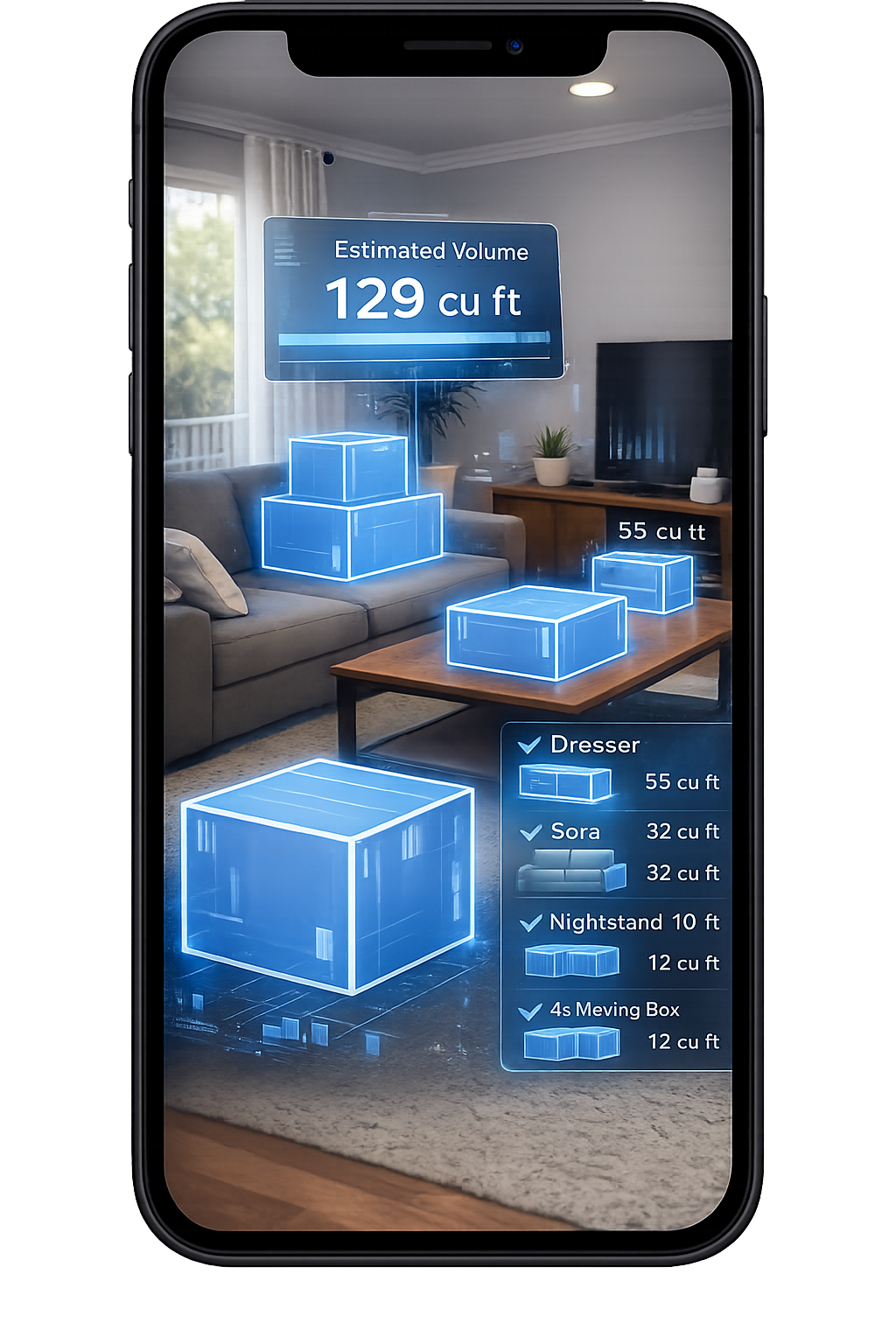
1. Scan Your Room With Your Phone
Walk around your space and scan your items in seconds.
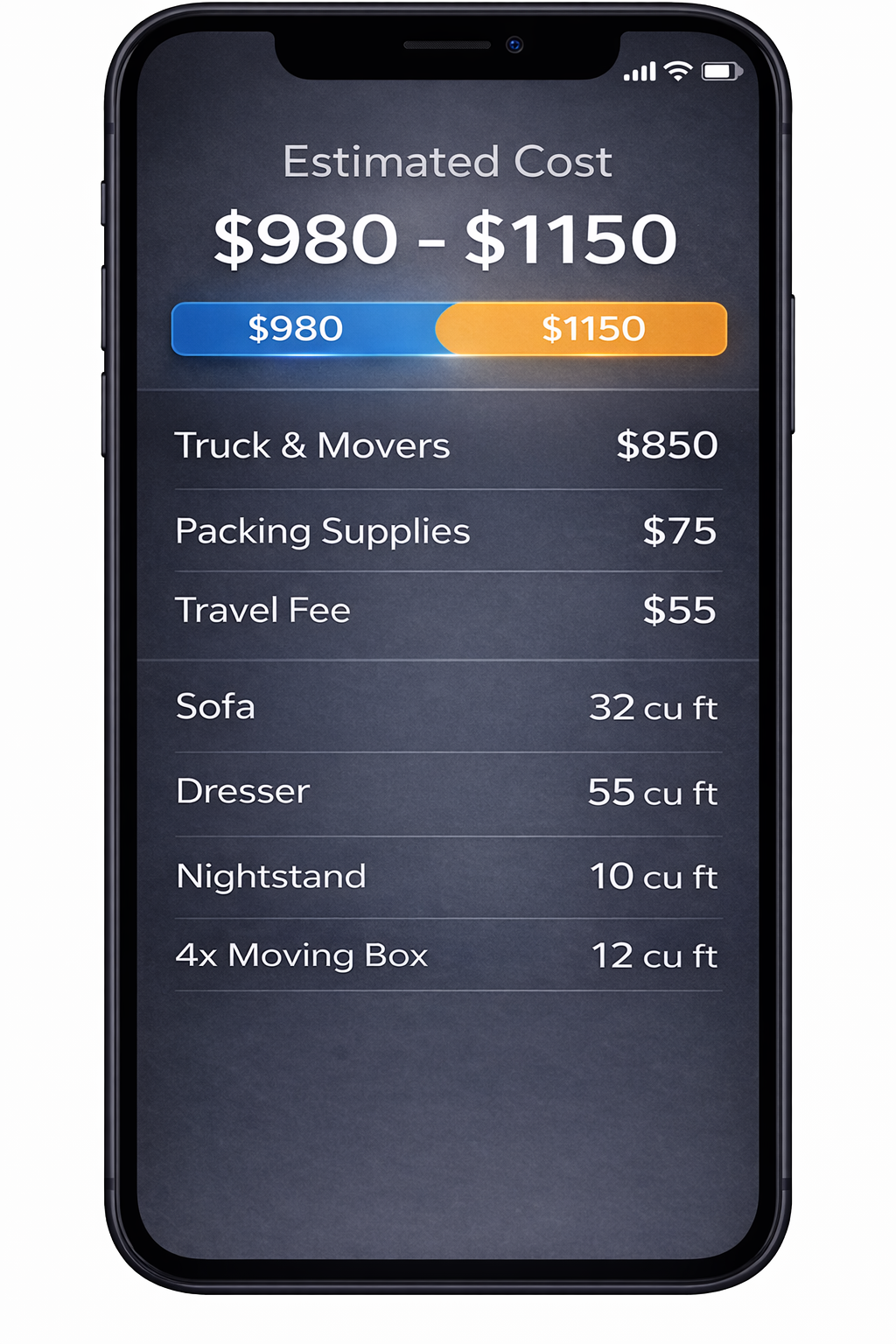
2. AI Detects Your Items
We identify your items and calculate volume for a clearer estimate.
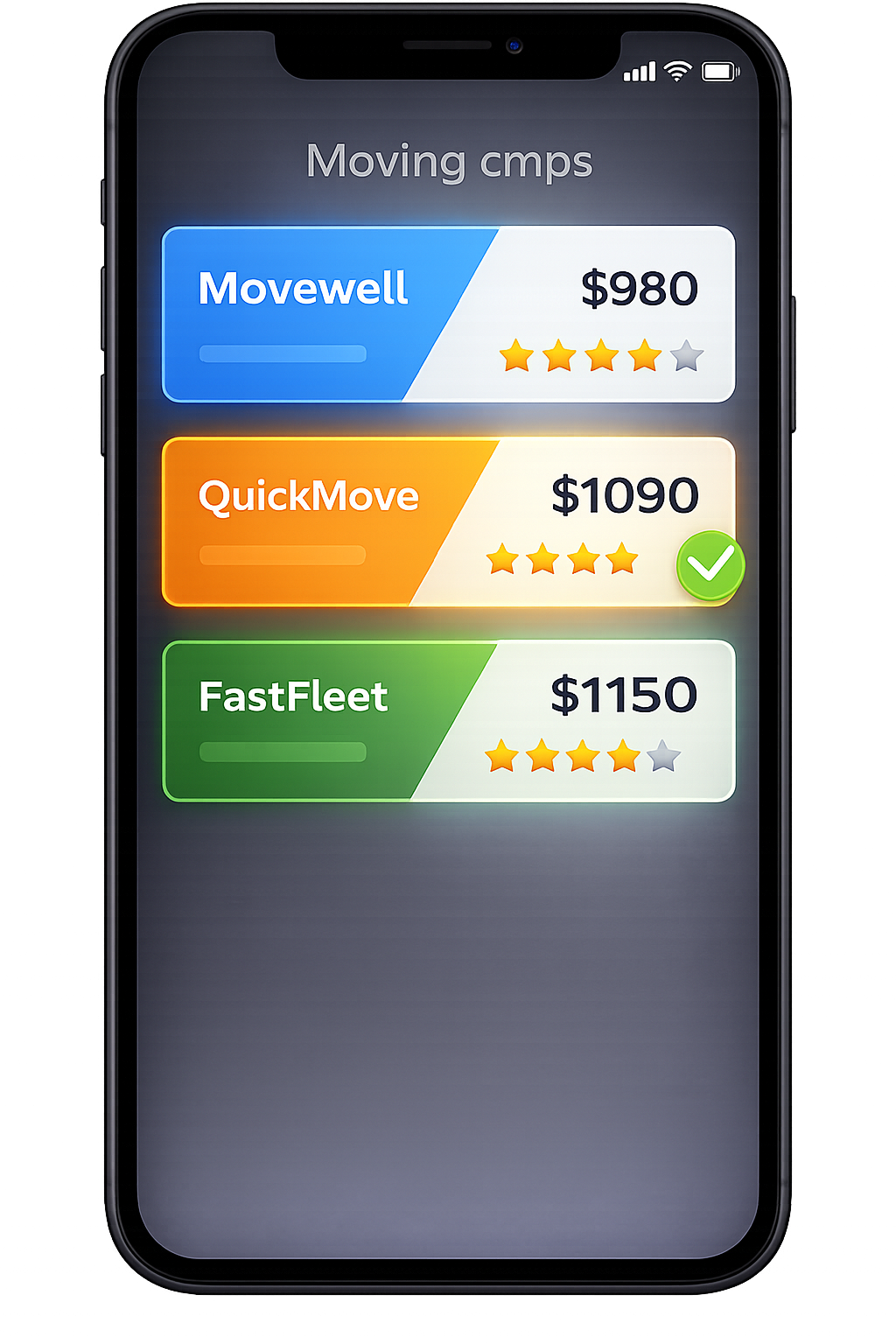
3. Compare Multiple Quotes
Compare verified mover quotes from the same scanned inventory.
Frequently Asked Questions
What is a moving estimate guide for first-time movers, and how does MoveCost use AI to create one?
A moving estimate guide for first time movers is a step‑by‑step explanation of how movers calculate costs, what details they need, and how to prepare your home so estimates are as realistic as possible. Instead of asking you to guess how many boxes or what your move “size” is, MoveCost uses AI-based home scanning to see your actual rooms and belongings. You walk through your home once with your phone, and MoveCost converts that video into an organized inventory and estimated volume. This inventory then powers calculators and comparisons so first‑time movers can see cost ranges that are tied directly to what is being moved—and understand which line items on each estimate are driving the total.
How is this moving estimate guide different from the AI calculator or my city page?
This guide is about understanding estimates; calculators and city pages are about calculating numbers. Use this page when you want to: Learn what inventory, access, distance, and service level mean on an estimate Understand line items like labor hours, truck/travel, access, packing, and special handling Learn the difference between binding and non‑binding estimates, deposits, and basic liability Use tools like the AI Moving Cost Calculator Online Free, Moving Cost Calculator by State and City, or city/route pages (for example, Miami or Chicago routes, or New York outbound cheapest-states) when you’re ready to plug in your inventory and see actual estimate ranges for your route. Those tools link back here when they say “learn how to understand your moving estimate,” so this page stays the main educational reference instead of acting as another calculator.
I’ve never hired movers before. Where should I start in this moving estimate guide?
If this is your first move, a simple path is: 1. Skim the checklist section so you know what to show during your AI scan or any video walkthrough. 2. Complete a short scan of your home using your phone, or build a detailed list room by room. 3. Read the line-item section on this page with one of your estimates open, so you can match each line to what you scanned. After that, plug your inventory into tools like the AI Moving Cost Calculator, the 3‑bedroom house calculator, or the Moving Cost Calculator by State and City to see how route, home size, and stairs or elevators change your price. Always return here when a new estimate line item doesn’t make sense.
How does an AI home scan improve my moving estimate compared to a regular calculator?
Regular calculators usually ask only a few questions, like number of rooms or approximate square footage, and then guess your move size based on averages. That can be especially inaccurate for first-time movers who might have more or fewer belongings than average, or tricky access like narrow staircases. An AI home scan looks at what you actually have—furniture, boxes, closets, storage areas—and uses that to estimate the volume and likely labor time. That means your moving estimate guide is built on your real situation, reducing the chance that movers underestimate how much needs to be moved or how hard your building will be to work in.
What’s the difference between a binding and a non‑binding moving estimate?
A non‑binding estimate is a mover’s best guess based on the information they have. The final charge can go up or down after your belongings are loaded, weighed, or measured, especially if your inventory or access is different from what you described. A binding estimate is a written agreement that the price will not go above a specific amount as long as you do not add significant items or change access conditions. If you add rooms, change addresses, or access gets harder (for example, an elevator is out and movers use stairs), the agreement may be revised. As a first-time mover, it’s important to: Know which type of estimate you have. Make sure your inventory and access notes are complete before signing. Ask what happens if your plans or inventory change.
What should I know about deposits and payment timing on moving estimates?
Deposits and payment timing vary by mover, but typical patterns include: A small deposit to reserve your date, credited toward the final bill. Paying a portion on pickup and the remainder on delivery. Clear rules about when deposits are refundable, transferable, or non‑refundable if your date changes. Before you accept an estimate or sign an agreement, ask: Is the deposit refundable if I change or cancel by a certain date? How is the deposit applied to my final bill? Which payment methods do you accept (card, ACH, cash, certified funds)? Write the answers down next to your estimate so there are no surprises later.
How does insurance and liability work on a moving estimate for first-time movers?
Most movers offer at least two levels of protection: A basic, weight-based level that pays a small amount per pound per item. This is usually included at no extra charge but often won’t fully cover high‑value items. An option to buy higher-value coverage or separate moving insurance for better reimbursement if something is lost or damaged. On your estimate, look for: What the default protection is, in writing (for example, a specific amount per pound per article). Whether there is a line for additional coverage and what it costs. Instructions for how to list any especially valuable items. This guide can’t tell you which option to choose, but it helps you spot where liability is explained so you can make an informed decision or ask for clarity.
What if I’m only moving a small apartment or a student dorm—do I still need a detailed estimate guide?
Even small moves can run into surprise costs if access is difficult or if there are more items than you realize. This moving estimate guide for first-time movers is intentionally simple enough to use for studios, dorms, and shared apartments. The same AI scan and checklist will quickly show how many bulky items and boxes you really have, as well as stairs, elevators, and parking. Once you have that information, you can use the student-focused Moving Cost Calculator by State for Students or tools like Local Moving Cost Calculator Near Me to see ranges that match typical student or first-apartment moves without having to learn a lot of industry jargon.
How do stairs, elevators, and long walks from the truck affect my moving estimate?
Stairs, elevators, and long walks between your door and the truck can significantly change how long a move takes. For first-time movers, this is one of the most commonly overlooked cost drivers. In this moving estimate guide, the checklist asks you to show all access points on your AI scan, including stairwells, hallways, and loading areas. When you use tools like the Moving Cost Calculator Including Stairs and Elevator or read city pages like Moving Cost in Miami or Moving Cost in Chicago, those details are baked into your estimate range so you can see the impact of harder access compared with easy driveway loading.
Can I use this moving estimate guide if I already have quotes from a few movers?
Yes. Many first-time movers come to this guide after they already have one or two rough quotes and aren’t sure if they are fair. You can: 1. Complete an AI home scan or detailed checklist to build a clear inventory. 2. Compare your existing quotes against what similar moves usually include, using the line-item section on this page. 3. Note which quotes clearly list labor, truck/travel, access, packing, and insurance—and which ones are vague. As you read through the guide and use related calculators, you’ll learn which fees and services should be clearly spelled out. That makes it easier to ask follow‑up questions and request updated estimates that match the level of detail in your MoveCost inventory.
Is this moving estimate guide only useful if I use MoveCost’s calculators and tools?
You can use the concepts in this moving estimate guide for first-time movers even if you request quotes directly from moving companies. The guide helps you: Build a thorough inventory Capture access details Understand major cost drivers and line items You can then share that same information with any mover you contact, on or off the platform. However, when you use MoveCost’s calculators and comparison tools, your AI inventory is automatically structured for you, which usually makes the process faster and reduces back‑and‑forth questions.
What should I do after I finish reading the moving estimate guide for first time movers?
After you finish this guide, the most effective next steps are: 1. Complete an AI home scan (or a detailed manual inventory) so your new knowledge turns into a concrete list. 2. Review your rooms and access notes using the checklist on this page. 3. Choose the calculator or city page that best matches your situation—for example: AI Moving Cost Calculator Online Free (general starting point) Moving Cost Calculator Including Stairs and Elevator (if you have floors/elevators) Moving Cost Calculator by State and City or State to State Moving Cost Calculator (if you’re changing cities or states) City pages like Moving Cost in Miami, Moving Quotes in Chicago, or Long Distance Movers from Miami (for local examples). That workflow lets you move from learning to action while keeping all your estimates based on one consistent view of your home.
How does this guide help search engines and other pages understand its role?
Inside MoveCost.ai, this URL is treated as the main educational guide for moving estimates, especially for first-time movers. The AI Moving Cost Calculator hub links here whenever it needs to explain estimates, not just show numbers. Home-size tools (3‑bedroom and 4‑bedroom guides), access tools (stairs/elevator), and route/destination tools (state-to-state, cheapest-states, Miami/Chicago pages) all point here when they say “learn how to understand your moving estimate.” This guide stays city-neutral and calculator-neutral so it doesn’t compete with those pages for queries like “moving cost calculator” or “[city] moving cost”. That clear division of labor—this page as the guide, other URLs as the calculators and examples—helps search engines index each page for its own intent instead of treating them as duplicates.