
Compare Local Movers in Los Angeles in Minutes
Scan your LA apartment with AI, see real hourly rates for local routes like Hollywood to Downtown or Santa Monica to Culver City, and compare trusted movers before you book.

local movers in Los Angeles, CA
Use MoveCost.ai to Prepare for Local Movers in Los Angeles
MoveCost is a consumer moving cost calculator and mover comparison tool built around how people actually move within Los Angeles. Instead of calling a long list of local movers and trying to describe your place over and over, you: 1. Scan your LA home with AI using your phone to build a detailed moving inventory. 2. Add your Los Angeles route (for example, Hollywood → Downtown LA, Santa Monica → Culver City, Silver Lake → Echo Park, or North Hollywood → Burbank). 3. Share building details like elevators, stairs, parking, and hills at both addresses. 4. Review quotes from local movers that serve your specific LA route, all based on the same inventory. The result is a clearer picture of how long your move might take and how each mover prices Los Angeles apartments, condos, and small homes. You keep control of which company you choose and when you move; MoveCost gives you the information and structure to compare options confidently.
Local Moves That Match How Los Angeles Actually Works
Most local moves in Los Angeles aren’t big suburban houses—they’re apartments and small homes spread across neighborhoods with their own quirks. Think: • A studio in Koreatown to a one‑bedroom in Echo Park • A roommate swap in West LA heading to Downtown LA high‑rises • A Hollywood walk‑up to a Silver Lake hillside duplex • A quick hop from Santa Monica to Culver City or Mar Vista • North Hollywood to Burbank or Studio City within the Valley Each of those routes is only a few miles on the map, but the real cost comes from stairs, elevators, loading zones, hills, and parking rules. MoveCost is built around these LA realities. You tell us where you’re moving from and to—whether it’s Hollywood → Downtown, Santa Monica → Culver City, or Silver Lake → Echo Park—and scan your place with our AI inventory tool. Walking through your home with your phone, the AI detects big furniture, boxes, and tricky items like sectionals, wall‑mounted TVs, or heavy dressers. Local movers in Los Angeles then use this standardized inventory to give more accurate hourly estimates for your specific LA route instead of a generic “small apartment” guess. That means you’re less likely to be quoted for a tiny studio when you actually have a packed one‑bedroom plus a storage balcony. You’ll see hourly rates, minimum hours, and any common LA add‑ons (like long carries from street parking, extra time for hills, or tight stairwells) upfront. That transparency helps you pick a crew that fits your building’s rules, your neighborhood, and your budget—whether you’re moving down the hall, across your block, or from one side of the city to the other.
LA Buildings, Elevators, and Parking: Baked Into Your Quote
In Los Angeles, the hardest part of a local move often isn’t the distance—it’s the building logistics. Many high‑rises along Wilshire, Downtown LA lofts, and newer complexes in Hollywood, Glendale, and Koreatown require elevator reservations, certificates of insurance, or strict move windows. Older buildings in neighborhoods like Silver Lake, Echo Park, and Highland Park may not have elevators at all, but do have narrow stairwells and steep driveways. When you request local mover quotes through MoveCost, you can specify details like: • Freight vs passenger elevator, or no elevator • Exact move‑in/move‑out time windows your building allows • Distance from loading area or curb to your front door • Underground garage height limits and tight ramps • Steep hills, narrow streets, or alley access near your building Movers see this upfront and can adjust their hourly estimates based on what they’re actually walking into. A third‑floor walk‑up in Silver Lake with street parking and narrow steps is very different from a Wilshire Corridor condo with a reserved freight elevator and loading dock. A hillside home above Hollywood or in Mount Washington can require slower, more careful carries than a ground‑level unit in Culver City. Parking changes everything in LA. If you’re on a dense block in Westlake, near the beach in Venice, or off a busy corridor in West Hollywood, movers may need extra time to: • Circle for legal parking • Load from around the corner • Work around street‑cleaning hours or temporary no‑parking signs Some companies build this into their hourly rate; others treat it as a potential extra cost based on how far they end up walking. MoveCost gives you a place to flag all of this, so movers can price your Los Angeles move realistically before they ever arrive.
Understand Local Moving Costs in Los Angeles with AI Inventory
Local movers in Los Angeles usually charge by the hour, but the structure can differ a lot from company to company. You’ll see things like: • 2‑ or 3‑hour minimums for small apartment moves • Different hourly rates for 2‑person vs 3‑person crews • Separate drive‑time or fuel charges across town • Weekend or evening rate differences • Extra time billed for stairs, elevator delays, hills, or long carries from the truck Calling around to decode each company’s pricing can be slow and confusing. With MoveCost, you scan your home once and let AI do the heavy lifting on the volume side, so local LA movers are quoting based on the same information. Using your phone, you walk through your rooms—bedroom, living room, kitchen, balcony, storage closet, even that over‑stuffed hall cabinet. The AI auto‑detects furniture and large items and gives you a visual checklist you can edit. That inventory is then shared with movers who serve your route, whether it’s: • Hollywood → Downtown LA • Santa Monica → Culver City • Silver Lake → Echo Park • North Hollywood → Burbank • Westwood → Palms or Mar Vista Movers respond with tailored estimates that reflect your item count, stairs/elevators, and building access at both locations. Instead of one flat guess, you’ll see time ranges (for example, 3–5 hours) and how that translates into a likely cost at each mover’s hourly rate. You can then compare LA local mover options side by side, filtering by things like price, services offered, and experience with apartments or small homes. Because all quotes are based on the same AI inventory, you’re actually comparing similar estimates—not trying to reconcile five different pricing formats from scratch.
Plan Around LA Traffic, Heat, and Hills for Smoother Local Moves
A local move in Los Angeles might only be 5–10 miles, but traffic patterns and terrain can make those miles feel very different depending on when and where you’re moving. When you submit your move details, you can request or discuss specific time windows that make sense for your route: • Westside to Eastside (e.g., Santa Monica → Los Feliz): Many movers recommend early morning starts to avoid the worst of the 10 and 101. • Within the Valley (e.g., North Hollywood → Burbank or Sherman Oaks → Studio City): Mid‑morning often works better after school traffic clears but before afternoon congestion. • Beach neighborhoods (e.g., Venice, Santa Monica, Playa Vista): Weekends and evenings can mean crowded parking, so movers may suggest weekday daytime windows. Heat is a real factor too. In summer, the Valley and Downtown LA can heat up quickly. Carrying furniture in older buildings without central hall AC or up exterior staircases in Highland Park or Echo Park is simply slower and more tiring in the afternoon. Many movers will suggest earlier start times for those scenarios, or discuss sending extra hands if your building has multiple flights of stairs. Hills and narrow streets—common in parts of Hollywood Hills, Mount Washington, Glassell Park, and Echo Park—can affect how close a truck can park and how quickly the crew can move items. You can note steep or winding streets in your MoveCost request so movers can: • Bring the right size truck for your block • Plan for additional walking time • Allow extra padding in the hourly estimate if parking will be limited Weather is usually mild, but when rain hits, ground‑level units with outdoor walkways or exposed stairs need more floor protection and wrapping. Movers may add this time into the estimate or call it out in their notes. With MoveCost, those assumptions are visible before move day, giving you a clearer sense of how LA conditions affect your final bill.
From Short LA Hops to Nearby Cities: Keep the Same AI Scan
Most people use MoveCost for short, local Los Angeles moves—changing apartments, moving in with a partner across town, or shifting from one LA neighborhood to another. Sometimes, though, the move stretches just beyond what you’d normally call “local,” like: • Downtown LA → Pasadena or Glendale • Hollywood → Long Beach • Santa Monica → Torrance or Redondo Beach • West LA → Orange County suburbs closer to the county line You may still be dealing with LA‑style buildings on at least one end—elevators, parking garages, or walk‑ups—but the drive is longer. In those cases, movers often blend hourly pricing (for loading and unloading) with a set fee for the drive itself. Your AI inventory scan still works the same way: 1. You scan your current LA home once. 2. You add building and parking details for both addresses. 3. Movers that handle your specific route respond with their structure—hourly, hourly plus travel, or a custom approach. If you decide to keep it truly local—say, Culver City → Palms or Koreatown → Westlake—the move usually stays firmly in the hourly, local‑mover category. If you extend farther out of LA County, you’ll start to see options better suited for regional or longer‑distance moves, while still grounded in the same AI‑based volume estimate. Either way, you’re not starting from scratch every time you talk to a new company. Your inventory, access notes, and preferred timing live in one place and can be reused to compare multiple movers serving the Los Angeles area.
Tools for Moving Quotes and Moving Costs in Los Angeles
If you’re still in the planning stage for your Los Angeles move, you can use MoveCost’s calculators and guides before you pick a local mover: • Estimate your local LA moving cost: Use the Local Moving Cost Calculator Near Me to get a volume‑based estimate for an LA apartment or small home move before you request final quotes. • Scan your LA home once, reuse everywhere: The AI Moving Cost Calculator Online Free lets you build your home inventory one time and reuse it for local LA moves, regional routes, or future moves. • Compare moving quotes online: If you’d rather understand how online quotes work in general, read how instant moving quotes without phone calls are generated and what information movers look for. • See how one scan powers multiple quotes: The guide on comparing moving company quotes instantly online explains how a single AI inventory can support quotes for specific LA routes like Hollywood → Downtown or Santa Monica → Culver City. Once you’re comfortable with your approximate costs and how quotes are structured, you can start your LA move scan on this page and use that same inventory in any of these tools.
How It Works
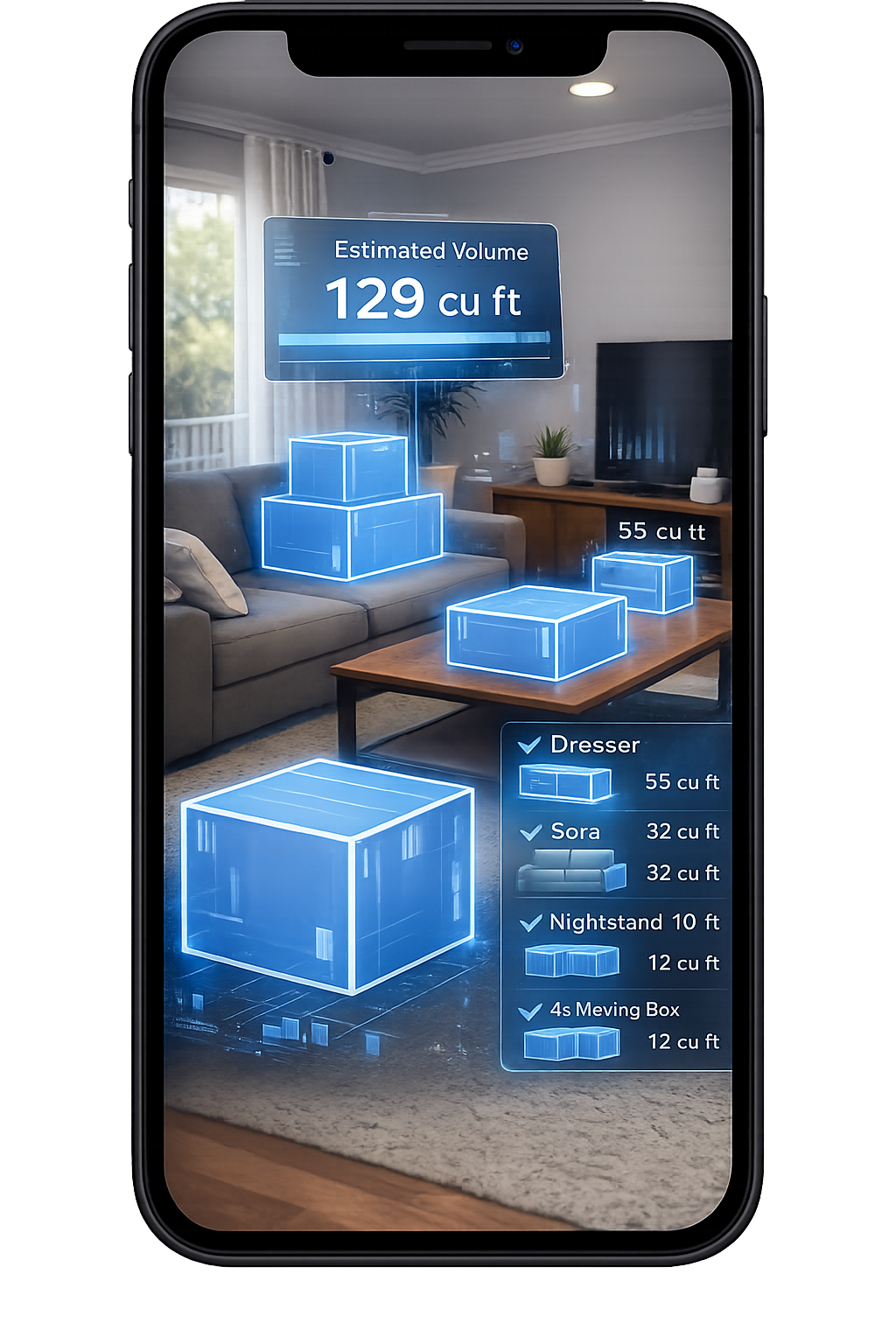
1. Scan Your Room With Your Phone
Walk around your space and scan your items in seconds.
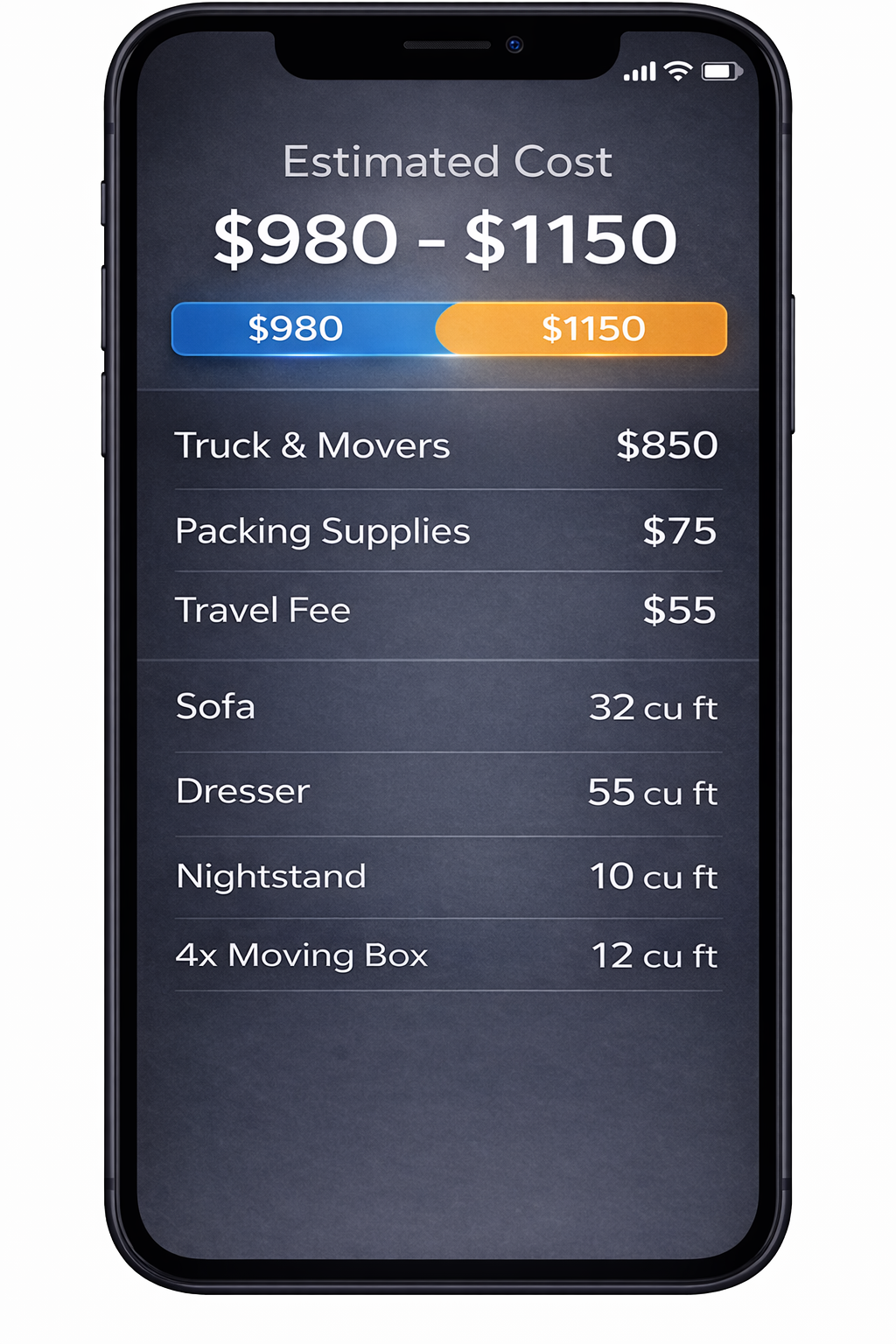
2. AI Detects Your Items
We identify your items and calculate volume for a clearer estimate.
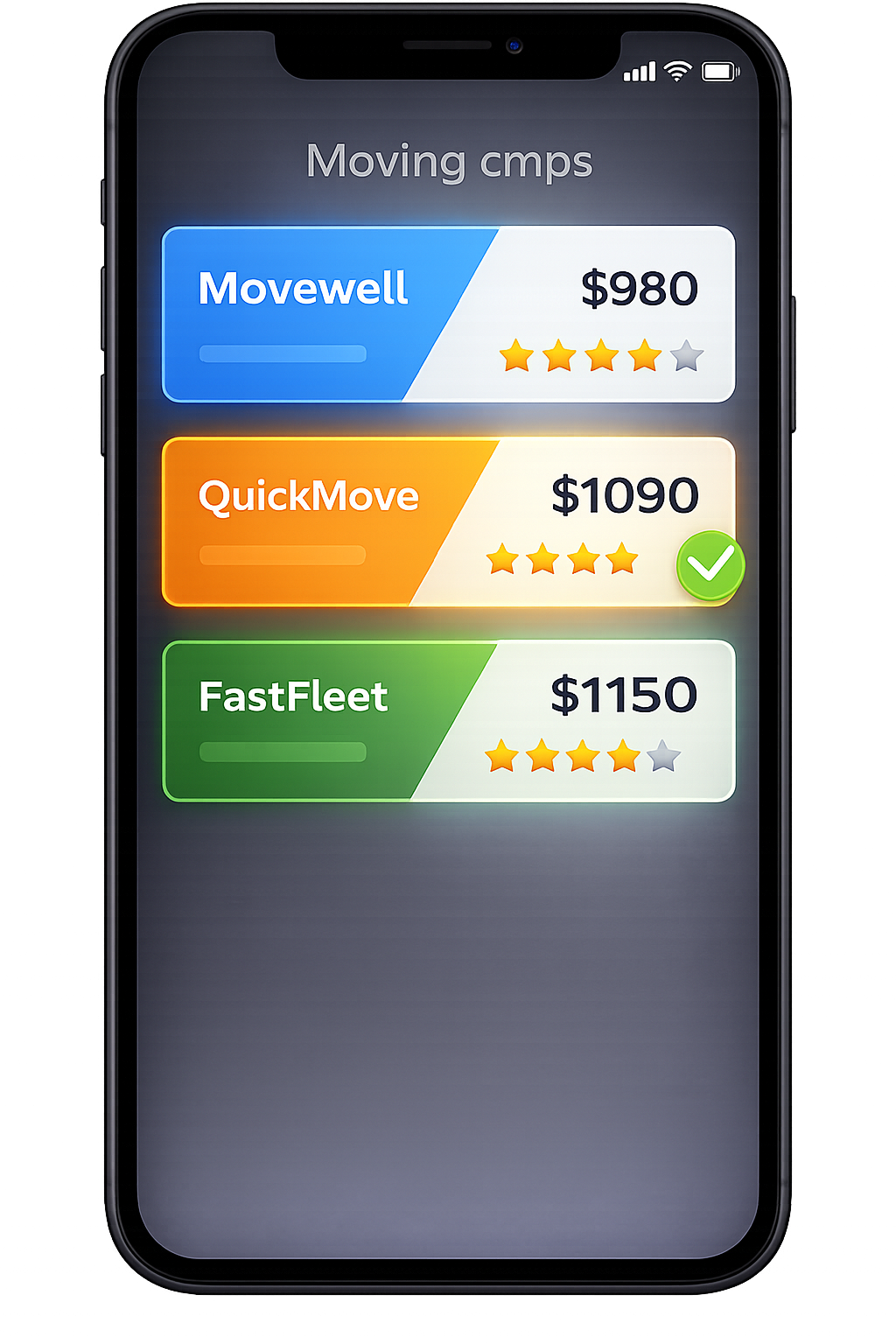
3. Compare Multiple Quotes
Compare mover quotes for Los Angeles, CA from the same scanned inventory.
Frequently Asked Questions
How far in advance should I book local movers in Los Angeles?
For weekday, mid‑month local moves in Los Angeles, 1–2 weeks’ notice is usually enough to find available local movers. If you’re moving at the end or very beginning of the month, on a Saturday, or in late summer when a lot of leases turn over, aim for 3–4 weeks. If you live in a Downtown LA high‑rise, Wilshire Corridor condo, or a large apartment complex in Hollywood, Koreatown, or Glendale, your building may require: Elevator reservations for specific days and times A certificate of insurance from your movers A signed move‑in/move‑out agreement in advance Booking earlier gives you time to collect those documents from your chosen moving company and get building approval before your date. With MoveCost, you can upload or summarize those requirements so movers only accept your job if they can meet them.
Is it better to move early in the morning in Los Angeles to avoid traffic?
For many Los Angeles routes, starting earlier helps. Movers who work LA every day often recommend: Early morning starts (8–9 a.m.) for Westside ↔ Eastside moves that cross the 10, 110, or 101, such as Santa Monica → Los Feliz or West LA → Downtown. Mid‑morning starts (around 10 a.m.) for short Valley moves (North Hollywood → Burbank, Sherman Oaks → Studio City) to avoid school traffic while still finishing before peak afternoon congestion. A very early arrival can also mean easier parking on dense blocks in neighborhoods like Echo Park, Silver Lake, Koreatown, and Westlake. When you enter your route into MoveCost, you can request a time window, and movers who quote your job can suggest what tends to work best for that specific part of town.
What should I tell movers about elevator reservations in LA high‑rises?
If you’re in a Los Angeles high‑rise or mid‑rise with elevators—common in Downtown LA, on the Wilshire Corridor, in Koreatown, or in newer Hollywood and Glendale buildings—try to gather this information before you book: Whether you must reserve a freight elevator and for what hours Any limits on how long movers can use the elevator or loading dock Required paperwork (like insurance or building forms) When you request quotes on MoveCost, you can add these details in your building notes or upload instructions from your manager. Local movers that are familiar with your type of building can adjust their estimated hours to include elevator waits and loading‑dock rules, instead of discovering limitations when they arrive on move day.
How do LA movers handle tight street parking, hills, or narrow streets?
Local movers in Los Angeles regularly deal with tight blocks and hillside streets in areas like Echo Park, Silver Lake, Highland Park, Mount Washington, and parts of Hollywood. To help them plan, include details like: Whether trucks can park directly in front of your building If previous movers needed to park around the corner or at the bottom of a hill Any steep, winding streets that might require a smaller truck Some companies bring cones or ask you to hold a spot with your own vehicle if parking is competitive. If they expect a long carry from the truck to your door, they may add extra time to the quote. MoveCost gives you space to outline these conditions so your hourly estimate lines up better with LA’s real‑world parking situations.
Do I need to use the AI inventory scan for a small Los Angeles apartment move?
You can describe your items manually, but the AI inventory scan usually leads to more accurate local moving estimates in Los Angeles. Even in a studio or one‑bedroom, the scan can catch: Extra shelving, side tables, or cabinets Balcony furniture and bikes Storage‑closet items you might forget to list Because many LA apartments have elevators, tight corners, and long hallway walks from the truck, knowing exactly what needs to be moved helps crews plan the right number of movers and realistic hours. Most people finish the scan in a few minutes and then reuse it to compare several local LA mover quotes without repeating the same item list.
Are short moves within the same Los Angeles neighborhood cheaper?
Shorter routes—like moving within the same building in Sherman Oaks or going a few blocks in Hollywood—usually reduce drive time, but the overall cost still depends on how long the crew spends on site. Stairs, elevators, long hallways, and packing needs are often bigger factors than pure distance. A move from one unit to another in the same complex can still take several hours if: The elevator is slow or shared The walk from the truck to your door is long There are multiple flights of stairs With MoveCost, your AI inventory and access details allow movers to estimate whether your LA move is likely a quick 2–3 hour job or something that realistically needs more time, even if you’re only changing floors or crossing the street.