
Compare Real Moving Quotes in Las Vegas in Minutes
Scan your home with AI, match with movers that work in Las Vegas every day, and see side‑by‑side quotes before you book a local or long‑distance move.
moving quotes in Las Vegas, NV
Moving Quotes in Las Vegas That Match Real‑World Conditions
Moving in Las Vegas isn’t like moving in a quiet suburb. You’re dealing with Strip traffic, apartment complexes with tight parking rules, service elevator schedules, and summer heat that makes carrying boxes feel twice as hard. That’s why getting accurate moving quotes matters. MoveCost lets you compare quotes from movers that actually work in and around Las Vegas every day. Whether you’re going from a studio off Maryland Parkway to a condo in Spring Valley, or moving from Summerlin to Henderson, you’ll see prices that reflect real local conditions—stairs, elevator access, distance from parking, and even tricky loading zones. Instead of calling mover after mover and repeating the same inventory list, you enter your move details once (or scan your place with AI), and the platform does the matching in the background. You get clear, itemized quote details so you can see who’s charging for long carries, who includes furniture wrapping, and who has extra fees for high‑rise moves. The goal isn’t just to find the lowest number. It’s to help you compare movers based on how they handle Las Vegas buildings and neighborhoods, how they schedule around I‑15 traffic, and how clearly they explain what can change the price on moving day. This Las Vegas moving quotes page is part of a larger Vegas moving hub on MoveCost. If you want to understand typical Las Vegas moving costs, you can use our calculators. If you’re learning how movers build moving estimates, you can read our estimate guide. This page focuses on how to read and compare Las Vegas moving quotes specifically—how different movers price the same Strip high‑rise, Summerlin house, or Henderson condo so you can decide which offer actually fits your move.
Use AI Home Scanning to Build a Better Las Vegas Moving Quote
One of the biggest reasons moving quotes in Vegas end up off the mark is bad inventory. People forget about that extra closet of stuff, under‑bed storage, or the garage full of tools. Movers then show up with the wrong truck size or more labor than expected, and the price may change. MoveCost offers optional AI inventory scanning to reduce that guesswork. Using your phone, you can walk through your apartment, condo, or house and record short videos of each room. The AI identifies furniture and boxes, estimates volume, and turns it into a detailed inventory list movers can price against. This is especially helpful in local situations like: • High‑rise apartments along Las Vegas Blvd with limited elevator windows. • Gated communities in Summerlin or Henderson where access and parking distance matter. • Older complexes near UNLV where stairs and tight landings slow movers down. • Townhomes and single‑family homes in North Las Vegas or Centennial Hills with longer walks from curb to door. Instead of guessing how many boxes you’ll have or trying to describe your sectional sofa over the phone, the AI captures it for you. Movers see a clear breakdown: beds, dressers, TVs, dining sets, patio furniture, and more. The result is quotes that better reflect your real move. There’s less risk of surprise charges for “extra items” that were never mentioned, and a lower chance of movers needing a second trip because the truck was too small for what you actually own. When you’re ready to compare, you can update your inventory, adjust dates, or toggle packing help on and off—all without starting over or making new phone calls.
Compare Las Vegas Moving Quotes Side‑by‑Side
Different movers can look similar at first glance, but the details behind each quote matter—how they handle high‑rises, long walks from parking garages, and tight move‑out windows. The examples below use hypothetical movers to show how quotes can differ for the same basic Las Vegas move.
Strip High‑Rises vs Henderson and Summerlin Homes: How Quotes Change
Two Las Vegas moves can have the same number of rooms and still get very different quotes because of where you live. Example 1: One‑bedroom on the Strip to another Strip high‑rise A move between two high‑rises near the Strip might look simple on a map—just a short drive down Las Vegas Blvd. But movers may need to: • Reserve loading docks at both buildings. • Use service elevators with limited time windows. • Protect hallways and elevators with pads and floor coverings. • Navigate hotel‑style driveways where trucks can’t stay parked for long. Quotes for this kind of move often include more time for elevator trips, extra labor during your reserved window, and sometimes building or HOA‑related fees. Example 2: Three‑bedroom house in Henderson to a similar home in Summerlin Now compare that to a family move from a single‑family home in Henderson to a similar home in Summerlin. The drive is longer, but: • Trucks can usually park directly in the driveway or on wider residential streets. • There are no elevators, but movers may deal with stairs or split‑level layouts. • There may be HOA rules, but they’re often more about where the truck can park than about strict time slots. Quotes here might lean more on drive time and overall volume, with fewer access‑related add‑ons. Hourly rates can still apply, but movers may not need to charge as much buffer time for elevators and loading docks. Example 3: Older walk‑up near UNLV to a townhome in North Las Vegas A move out of a third‑floor walk‑up close to UNLV into a newer townhome might: • Increase labor time because of narrow stairs and landings. • Reduce access complexity on the destination side if there’s direct driveway parking. Some movers will call out a stair fee or longer labor estimate on your quote. Others might roll this time into a flat rate. When you compare quotes, look for which movers are clearly explaining how Strip access, Henderson / Summerlin drive times, or UNLV‑area stairs are priced in. Those explanations often matter more than the lowest starting number.
How Las Vegas Neighborhoods and Buildings Change Your Moving Quote
Not every Las Vegas move looks the same. A third‑floor walk‑up near UNLV is nothing like a two‑story house in Centennial Hills or a high‑rise near CityCenter. Those differences can change both how movers plan your job and how your quote is structured. When you request quotes through MoveCost, the system asks questions that reflect how people actually live around Las Vegas: • Strip and nearby high‑rises: Does your building require you to reserve a loading dock or service elevator? Are there specific move‑in/out hours that movers must work around? Are there valet or hotel‑style access roads that change where a truck can park? • Suburbs like Summerlin, Henderson, and Centennial Hills: Is this a gated community where trucks need a code or guard access? How far is the walk from where the truck can park to your front door? Are there narrow residential streets that limit where a large truck can turn around? • Student and older complexes near UNLV and central Las Vegas: Are there narrow stairwells, low ceilings, or tight turns that make moving large furniture slower? Are there shared parking lots that fill up in the evening, making morning slots more practical? • North Las Vegas and expanding neighborhoods: Are you in a newer development where addresses can be harder to locate or where construction affects access and parking? By combining these building details with your AI‑generated or manual inventory, movers can give you estimates that factor in the real work involved—not just the distance between addresses on a map. For local moves, you’ll usually see hourly labor plus potential access‑related fees. For longer moves, estimates often use weight or volume, plus fuel and travel charges. Because all of your quotes appear in one place, it’s easier to see who is clearly accounting for Las Vegas‑specific logistics and who is relying on rough averages.
Las Vegas Traffic, Weather, and Building Rules—Baked Into Your Quotes
Local conditions can make or break your moving day. The more they’re reflected in your quotes up front, the fewer surprises you’ll have when trucks and crews arrive. Traffic patterns Morning moves from the northwest into central areas can run into congestion on US‑95 and I‑15. Moves near the Strip often require more time just to navigate hotel‑style access roads and loading docks. When you request quotes, movers see your route and can set realistic time estimates instead of best‑case guesses. Heat and time of day Summer heat in the desert is intense. If you’re moving in July or August, many crews prefer earlier start times to avoid the worst afternoon temperatures, especially if there are stairs or long outdoor walks between the truck and your door. You can note time preferences in your request, and movers can factor that into crew planning. Building and HOA rules High‑rise and mid‑rise buildings often have strict move policies: reserved loading dock times, elevator protection pads, and insurance requirements. HOA communities may require advance notice or specific truck parking spots. MoveCost prompts you to add these details so movers can account for: • Time windows set by leasing offices or HOA boards. • Required certificates of insurance for your building. • Any building or HOA fees you’ve been asked to pay for elevator or dock usage. By making these details part of your initial request, you’re more likely to receive quotes that hold up on move day, rather than estimates that have to be reworked around last‑minute building rules.
Las Vegas Moving Quotes vs Costs vs Estimates
If you’re still figuring out budgets, timing, or how to compare quotes fairly, it helps to understand how a quote fits into the rest of your planning. • A moving quote is a mover’s offer based on what they think your Las Vegas move will involve right now. • A moving cost calculator gives you a general cost range based on inventory and route, before you pick any mover. • A moving estimate guide explains how movers think about labor, trucks, travel time, and access. This page focuses on comparing multiple Las Vegas moving quotes side‑by‑side. Use it together with the tools and guides below to see how your quotes line up with expected costs and how your estimate could change if you add or remove services.
How It Works

1. Scan Your Room With Your Phone
Walk around your space and scan your items in seconds.
2. AI Detects Your Items
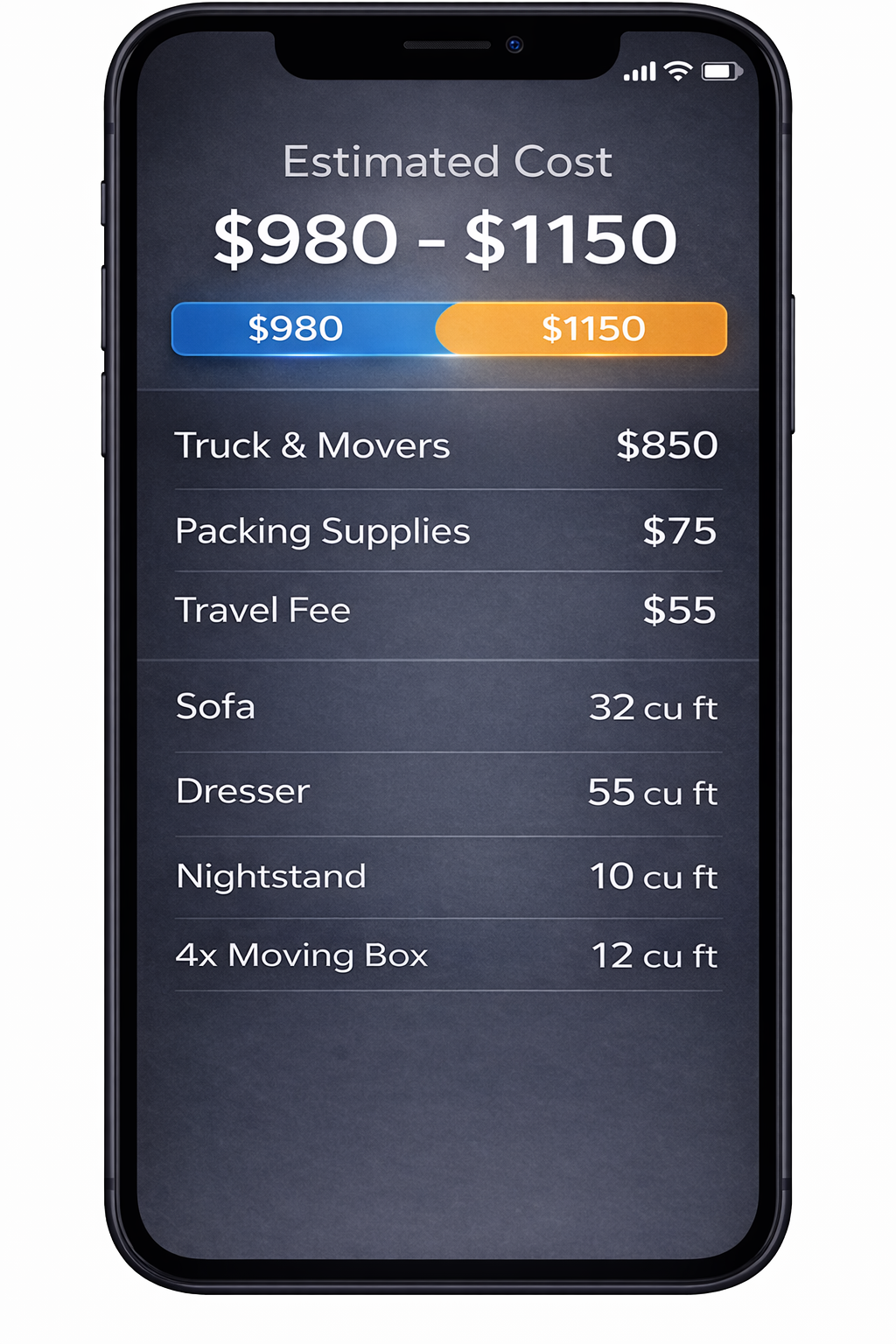
We identify your items and calculate volume for a clearer estimate.
3. Compare Multiple Quotes
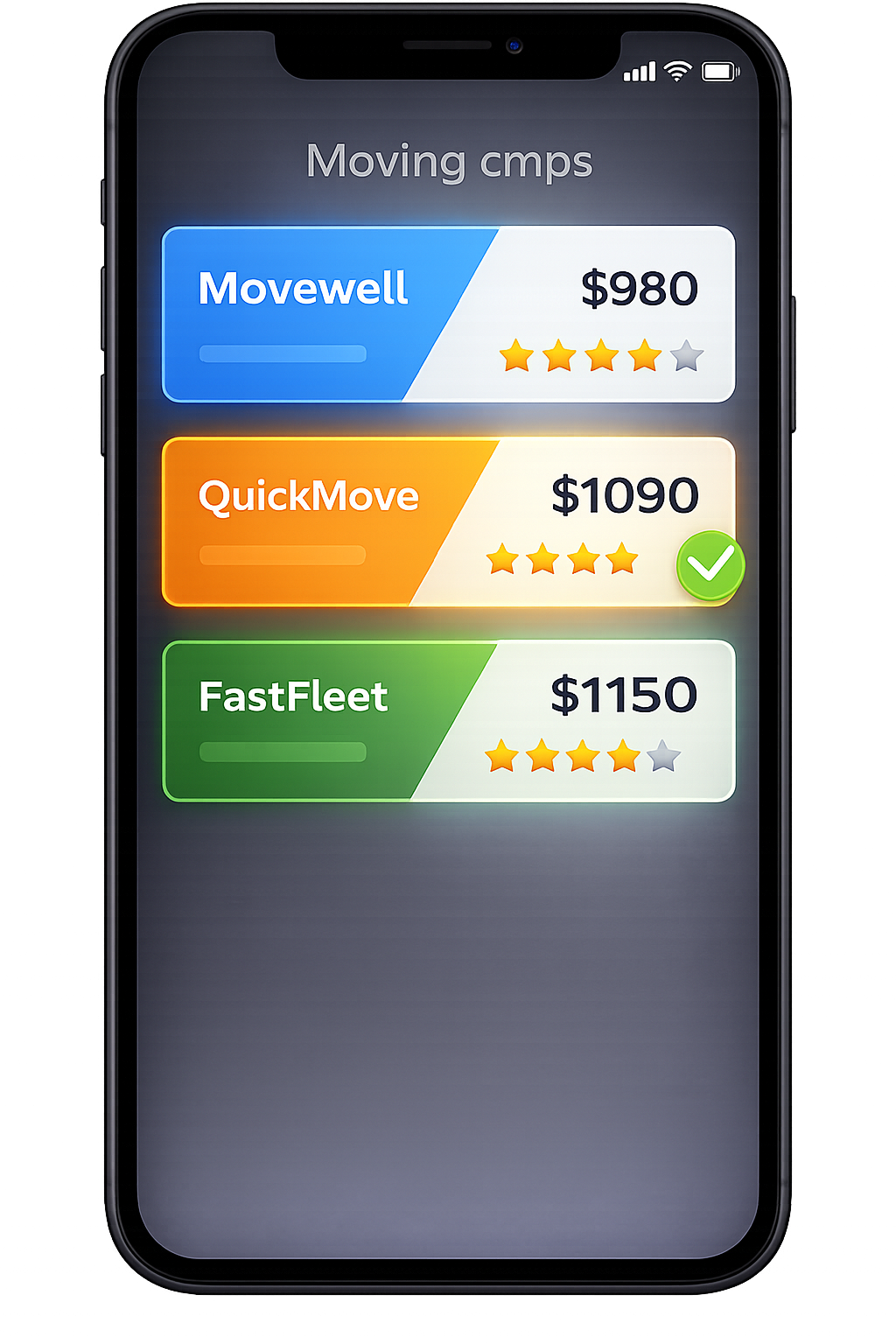
Compare mover quotes for Las Vegas, NV from the same scanned inventory.
Frequently Asked Questions
How do I compare multiple moving quotes for a Las Vegas move in one place?
On MoveCost, you enter your pickup and drop‑off addresses, pick your dates, and either build a quick inventory or use the AI scan to record your rooms. Once that’s done, you can request quotes from multiple movers who service the Las Vegas area. Their quotes—pricing style, what’s included, and access notes—appear together so you can compare side‑by‑side instead of juggling separate emails and phone calls.
Do moving quotes differ between the Las Vegas Strip area and suburbs like Henderson or Summerlin?
They often do. Moves near the Strip and in nearby high‑rises may need extra time for loading docks, elevators, and complex parking, which can affect labor and access fees. Suburban moves in places like Henderson, Summerlin, or Centennial Hills may have easier truck access but longer driving distances. When you request quotes, include your neighborhood and building access details so movers can adjust their pricing assumptions for your specific route and building type.
How do Strip events and big Las Vegas weekends affect my moving quotes?
Major events, fight nights, and holiday weekends on or near the Strip can slow traffic, limit loading access, and make parking more complicated. Some movers avoid certain time windows on those days or build extra buffer time into their quotes if your building is close to Las Vegas Blvd or major venues. When you request quotes, share your exact addresses and dates so movers can flag potential event conflicts and price the timing realistically.
How should I handle HOA or condo rules when requesting Las Vegas moving quotes?
Before you request quotes, check with your HOA or building management about any move‑in or move‑out rules: required move times, elevator reservations, truck size limits, or proof of insurance. When you fill out your MoveCost request, mention these requirements or add them as notes. Movers can then build that time into their schedule and reflect any building or HOA‑related costs directly in the quote, instead of discovering them on moving day.
Can I use the AI scan if I’m moving from a Las Vegas suburb to another city or state?
Yes. The AI scan is designed for both local and long‑distance moves. If you’re moving from somewhere like Henderson, North Las Vegas, or Centennial Hills to another state, scanning your home helps movers understand how much volume they’re transporting. That inventory can be used for both your local pickup work in the Las Vegas area and the longer route beyond Nevada, so you don’t have to rebuild your list for each mover.
What if my Las Vegas apartment complex has strict move‑in or move‑out windows?
Many Las Vegas apartment and condo buildings set specific move hours, especially in high‑traffic or high‑rise properties. When you submit your MoveCost request, include those allowed windows and any instructions your leasing office gave you. Movers can then propose crews and start times that fit those windows in their quotes and let you know how schedule limitations might affect the total time or cost.
How can I spot missing services or hidden limitations when comparing Las Vegas moving quotes?
When you look at quotes side‑by‑side, check more than just the total. Compare line items and notes about: Whether furniture wrapping and basic protection are included. How movers handle stairs, long walks from parking, or garage‑to‑unit distances. What happens if your move takes longer than expected because of building access or traffic. If one quote looks much lower but leaves these points vague, that usually means it’s based on more optimistic assumptions. A slightly higher quote that clearly explains how it handles Las Vegas‑specific logistics may be easier to plan around.
What’s the difference between a Las Vegas moving quote and what I’ll actually pay?
A moving quote is based on the information you share today: your inventory, addresses, dates, and access details. Your final cost can change if the crew encounters extra items, very long walks, stairs that weren’t mentioned, or elevator delays on move day. Using the AI scan and answering the Las Vegas‑specific access questions on MoveCost makes it easier for movers to issue quotes that stay close to your final bill, because they’re not guessing about how your building or neighborhood works.