
Get a Real Moving Estimate in Chicago — Without Five Different Home Visits
Use an AI scan to capture your actual furniture, boxes, stairs, elevators, and parking in Lakeview, Logan Square, the Loop, and beyond. Share one detailed profile with multiple Chicago movers and compare written estimates side by side.

moving estimate in Chicago, IL
What a Moving Estimate in Chicago Really Means
When you ask a Chicago mover for a moving estimate, you’re asking for a written expectation of how much your move is likely to cost based on what you’re moving and how hard each building is to work in. That’s different from: • A quick quote — often a fast price range based on rough room counts and zip codes. • A moving cost calculator — a tool (like other MoveCost.ai pages) that shows price patterns for typical inventories and routes. On this page, the focus is on estimates built from your real inventory and building access in Chicago — the kind movers can put in writing once they understand your stuff, your stairs or elevators, and your parking. MoveCost.ai helps you skip most in‑person walk-throughs by giving movers what they usually drive out to see: • A line-by-line list of what you’re moving, by room. • Access details for your current and new place (stairs, elevator, alley, long walks). • Timing factors like building move windows and likely parking conditions. You still sign a final agreement directly with your mover, but your estimate starts from a Chicago-specific, AI-backed inventory instead of a guess.
A Chicago Moving Estimate Has to Match Your Building — Not Just Your Zip Code
Two Chicago moves with the same number of rooms can be priced very differently. A third-floor walk-up in a Lakeview three-flat, a vintage courtyard building in Logan Square, and a Loop high-rise with a freight elevator all create different labor and time needs. That’s why generic online quote forms often miss the mark. They rarely account for: • Narrow back staircases in classic three-flats where sofas need to be carefully maneuvered. • Freight-elevator reservations in the Loop, Streeterville, South Loop, or River North. • Alley loading zones in neighborhoods like Bucktown, Wicker Park, and West Town. • Long carries from the truck on dense residential streets in Lincoln Park, Lakeview, or Uptown. MoveCost.ai focuses on these Chicago-specific details first. Instead of asking you to guess how many boxes you might have, the tool helps you build a real inventory and pair it with the conditions movers actually care about — stairs, elevators, distance to the truck, and building rules. That’s the foundation for a more realistic Chicago moving estimate, whether you’re going a few blocks or out to the suburbs.
What Chicago Moving Estimates Typically Look Like by Bedroom and Neighborhood
Every move is different, but most Chicago movers build estimates around how much there is to move and how hard each building is to work in. The same inventory can take more or less time depending on stairs, elevator access, and parking. Here’s how estimates often vary by home type and neighborhood scenario. These aren’t quotes or price guarantees — they’re the inputs movers think about when turning your inventory into a written estimate. Studios and Convertibles in Chicago • Loop / River North / Streeterville elevator studio • Typical profile: Smaller footprint, elevator on both ends, loading dock or alley access. • Movers can often plan a smaller crew and a shorter time window because elevator access makes loading predictable. • Your AI scan clarifies whether this is a minimalist studio or packed with books, instruments, or gym gear. • Logan Square, Pilsen, or Uptown walk-up studio • Third- or fourth-floor walk-up with narrow back stairs. • The same number of items can take noticeably longer because of slow trips up and down the stairs. • Movers may build extra stair time into the estimate — which is easier to justify when you’ve logged stair count and hallway width. One-Bedroom Apartments • Lakeview / Lincoln Park 1BR in a vintage walk-up • Origin often has tight turns, limited parking, and possibly no alley for the truck. • Destination might be similar or an elevator building in a different neighborhood. • Estimates typically allocate more time on the walk-up side of the move. • South Loop / West Loop 1BR in a high-rise • Freight-elevator reservations and loading docks make access clearer but less flexible. • Movers need your elevator window and move rules to estimate crew timing accurately. • An AI-based inventory plus your building rule notes make it easier for movers to commit to a realistic time block in writing. Two-Bedroom Apartments and Small Condos • Wicker Park / West Town 2BR in an older building • Larger furniture (sectionals, king beds) may need more maneuvering through narrow halls. • Parking can be tricky; if the truck parks halfway down the block, movers factor in longer carries. • Estimates can differ significantly depending on how far they expect to walk from truck to door. • Hyde Park / Bronzeville 2BR condo with elevator • Freight-elevator access and a small loading area can make heavy items easier to move. • If both origin and destination have elevators and reasonable parking, a mover may write a tighter estimate window, assuming fewer surprises. Across all of these, movers also look at: • Approximate box count and how densely they’re packed. • Whether you’re moving within the city (Logan Square to Lakeview) or adding some drive time to a suburb like Oak Park, Evanston, or Skokie. • Seasonal load on their crews and traffic patterns. MoveCost.ai doesn’t guess these details. Your AI scan and quick questions about your building help Chicago movers understand what to expect before they send a written estimate.
Use AI Scanning Instead of an In‑Person Chicago Moving Estimate Visit
Traditional Chicago moves often start with someone driving across town to walk your apartment. That’s time you may not have — and it usually still relies on rough notes. With MoveCost.ai, you can request a moving estimate in Chicago with no in‑person visit for most apartments and condos: 1. Walk your home with your phone in Lakeview, Logan Square, Hyde Park, or the Loop. 2. Let the AI inventory scanner identify furniture and visible items, then quickly confirm or edit the list. 3. Add building details that matter in Chicago: stairs vs elevator, freight-elevator reservations, alley access, long walks from truck to unit, or back-stair-only access in three-flats. 4. Share that complete picture with multiple movers at once. If a mover wants to refine your estimate further, they can request: • Extra photos of tricky spaces (like a tight entryway in a vintage Lincoln Park building). • A short video walkthrough to understand freight elevator size or basement storage. • A brief call if you’re moving a larger home or have unusual items. For many studio, 1BR, and 2BR moves, this combination of AI scan + photos + building notes provides enough detail for movers to send a thorough written estimate without an in-person visit, especially for typical Chicago apartments and condos.
Local, Suburban, and Long-Distance Chicago Moves — How Estimates Are Structured
Your moving estimate will be structured differently depending on whether you’re staying in the city, heading to the suburbs, or moving out of state. Local Chicago moves (within the metro) Examples: Lakeview to Lincoln Park, Logan Square to Pilsen, West Loop to Hyde Park, or South Loop to Evanston. • Many movers price these by crew size and hours, plus travel time and any stair or long-carry fees. • Your AI inventory and building info help movers estimate how long loading and unloading will take at each address. • Three-flats with narrow stairs and no driveway access can take longer than elevator-to-elevator moves, which shows up in your written estimate as more hours. City-to-suburb or suburb-to-city moves Examples: Wicker Park to Oak Park, Bridgeport to Berwyn, Lincoln Park to Skokie. • Distance is usually still manageable, but traffic patterns (Kennedy, Eisenhower, or Dan Ryan delays) can matter. • Movers factor in drive time plus load/unload conditions on both ends — such as a Loop high-rise with a freight-elevator window paired with a suburban house with driveway access. • Written estimates may break out travel time separately from labor so you understand what you’re paying for. Long-distance or interstate from Chicago Examples: Chicago to Minneapolis, Detroit, New York, or the West Coast. • Estimates are more influenced by total weight or volume of your inventory plus the route distance. • Your AI-generated inventory helps movers approximate load size and plan the right truck and crew. • If you’re moving between buildings with elevators, loading docks, or three-flats on either side, those details can still affect loading time and thus your overall estimate. If you want to explore how different routes affect costs before you request mover estimates, you can also use the AI Moving Cost Calculator Online Free or the Moving Cost Calculator by State and City on MoveCost.ai. Those tools show typical cost patterns, while this page is focused on getting Chicago movers to respond with written estimates based on your scan.
Chicago Weather, Parking, and Building Rules Can Change Your Estimate — We Capture Them Upfront
Chicago moves are shaped by local realities that don’t show up on basic quote forms. Your estimate is more reliable when movers know about these factors beforehand. Weather timing • Winter moves (January, February, early March): Snow, ice, and slush can slow walking speed, require more floor protection, and make stairs more cautious. • Summer moves (May through September): Late-month weekends are particularly busy as leases turn over around the 1st and end of the month. Parking and permits • Many neighborhoods — Lakeview, Lincoln Park, Logan Square, Wicker Park, Hyde Park — have limited free street parking or tight residential blocks. • Some streets may need a temporary no-parking permit for moving trucks, which you arrange through the city; movers often plan timing around when that permit is active. • Alleys may allow closer access but can be narrow or shared with other deliveries. Building rules and COIs • High-rises in the Loop, Streeterville, Gold Coast, or South Loop often require: • A Certificate of Insurance (COI) listing the building. • Reserved freight-elevator time slots. • Protective measures like elevator padding or lobby floor coverings. • Some condo and apartment associations limit moves to weekdays or specific hours. In MoveCost.ai, you can: • Mark whether you’ll likely need a truck parking permit and where the truck can realistically park. • Enter your building move rules and whether a COI is required. • Note freight-elevator reservation times and any restrictions. Chicago movers can then factor these conditions into your written estimate, so extra time or constraints are understood from the start instead of added later as surprise line items.
How Your Chicago Moving Estimate Works on MoveCost.ai
The goal is to give movers a clear, consistent picture of your move so they can send estimates that closely match your actual job. 1. Scan and confirm your inventory • Walk through your Chicago home with your phone — studio, 1BR, 2BR, or larger. • The AI tool spots couches, beds, tables, chairs, dressers, TVs, visible boxes, and more. • You quickly confirm, remove, or add items (like bikes in the basement, storage on the back porch, or seasonal totes in a hall closet). 2. Add Chicago-specific access details • Choose your building type: three-flat walk-up, elevator mid-rise, high-rise, townhouse, or single-family. • Mark whether you have: • Stairs only, with how many flights. • A passenger or freight elevator, and whether it must be reserved. • Alley access, driveway access, or street parking only. • Basement or attic storage that also needs to be moved. 3. Choose the kind of estimate you want to request • Some movers may offer non-binding estimates (based on expected hours or weight that can change). • Others may be willing to provide binding or “not-to-exceed” style estimates if your inventory and access details are specific enough. • You can indicate your preference so movers know how to structure their responses. 4. Share with multiple Chicago movers at once • Your standardized inventory and access details go out to Chicago-area movers who can service your dates and route. • Instead of repeating the same info on multiple calls, you manage everything in a single dashboard. 5. Compare written estimates side by side • See what each mover includes, such as loading/unloading, travel time, basic protection, and how they handle stairs or long carries. • Filter or prioritize movers based on date availability and experience with high-rises or three-flats. 6. Update your inventory if plans change • If you sell a couch, add a crib, or clear out a storage unit in Rogers Park or Bronzeville, you can update your inventory and ask movers to refresh their estimates. • That keeps your pricing aligned as your move details evolve.
Chicago Moving Estimate Examples, Estimate Types, and Pitfalls to Watch For
Understanding how estimates can shift helps you use your AI scan more effectively. Example 1 – Lakeview studio to Lincoln Park studio • Third-floor walk-up to elevator building, both with alley access. • If your inventory is mostly standard furniture, movers may focus on stair time at the origin and an easier unload at the destination. • A complete inventory helps them decide whether a smaller or larger crew makes sense and whether your estimate should assume a shorter or longer move window. Example 2 – Logan Square 2BR to Avondale 2BR three-flat • Both buildings with narrow back stairs and limited street parking. • Longer carries from the truck and repeated stair trips can extend the job. • Including stair count and typical parking distance in MoveCost.ai helps movers set realistic timing so your estimate reflects the likely hours. Example 3 – Loop 1BR high-rise to Oak Park bungalow • Origin requires COI and freight-elevator reservation; destination has driveway access. • Movers may plan the schedule around your elevator window and then expect a faster unload in Oak Park. • Entering elevator rules and driveway access details in your profile clarifies why the estimate might allocate more time at pickup than at drop-off. Common Estimate Types You Might See Movers can label their written estimates in different ways. Depending on the mover and your inventory clarity, you may encounter: • Non-binding estimates: A projection of cost based on expected hours or weight that can change if the job takes longer or the shipment is heavier. Common for Chicago local moves priced by the hour. • Binding-style estimates: A set price based on your described inventory and access. These usually require a very accurate list of items and clear building conditions. • Hourly estimates with ranges: A written estimate that outlines an expected time window (for example, a certain number of hours) and an hourly rate, plus any known fees like stairs or long carries. MoveCost.ai does not choose or enforce which estimate type a mover uses, but a detailed Chicago inventory makes it easier for movers to be specific and transparent in writing. Pitfalls That Can Change a Chicago Estimate After the Fact • Several unlisted items from storage units, basements, or off-site garages. • More stairs or tighter turns than originally described. • Unexpected parking issues that force the truck to park farther away. • Extra packing requested on move day for items that were supposed to be boxed. • Building move rules or COI requirements that weren’t shared before estimate day. Using an AI scan and clearly documenting your building access gives movers fewer unknowns, which can reduce the chances of major differences between your initial estimate and the final bill.
More Chicago Moving Tools to Dial In Your Estimate, Quotes, and Cost Ranges
Once you’ve built your Chicago inventory for a moving estimate, you can use other MoveCost.ai tools to understand how your estimate compares with typical price patterns and when to shift from an estimate to a quote or calculator. Use this Chicago estimate page when you want written estimates from movers who can see your full inventory. Use the tools below when you want to explore cost ranges or compare prices across companies:
How It Works
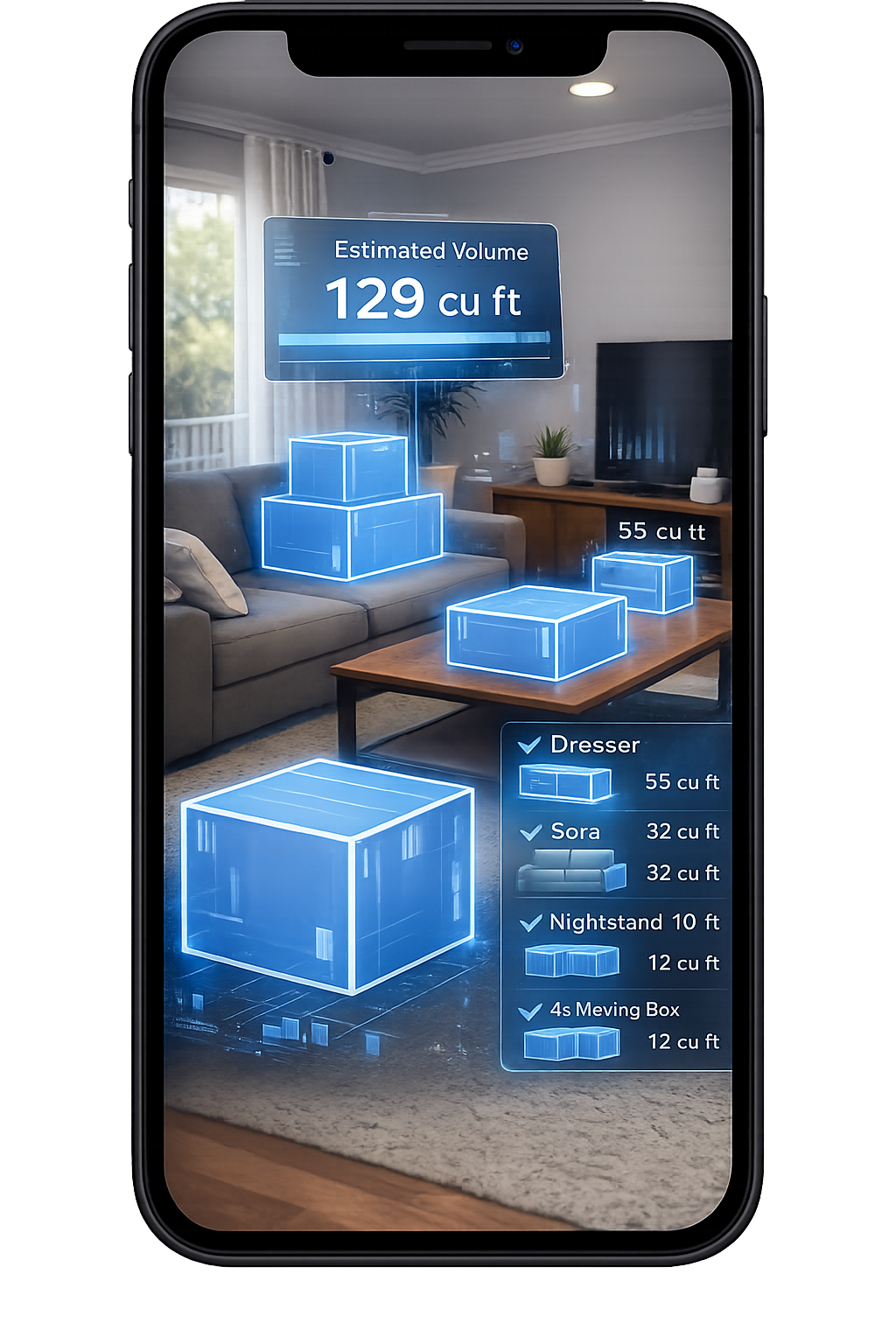
1. Scan Your Room With Your Phone
Walk around your space and scan your items in seconds.
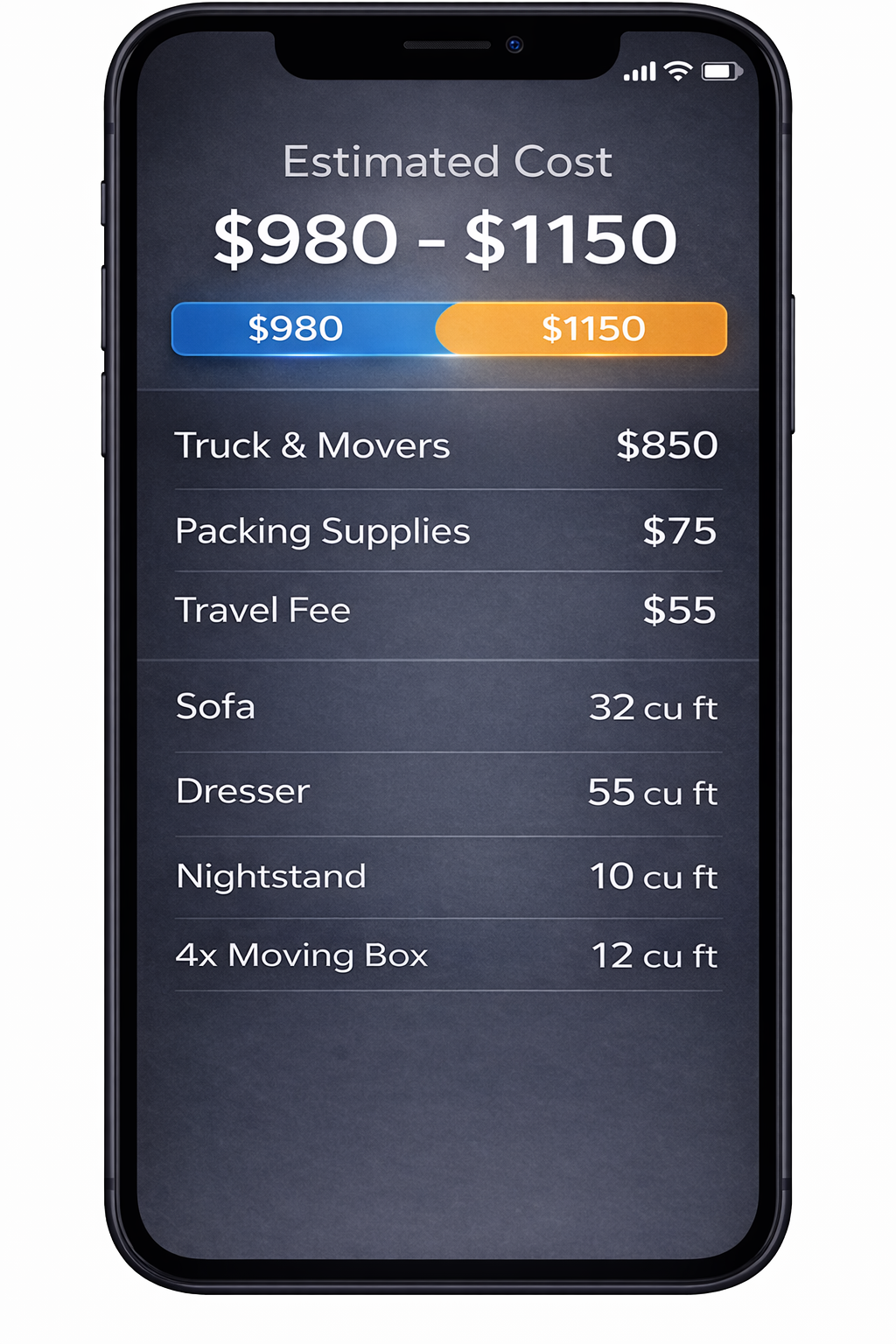
2. AI Detects Your Items
We identify your items and calculate volume for a clearer estimate.
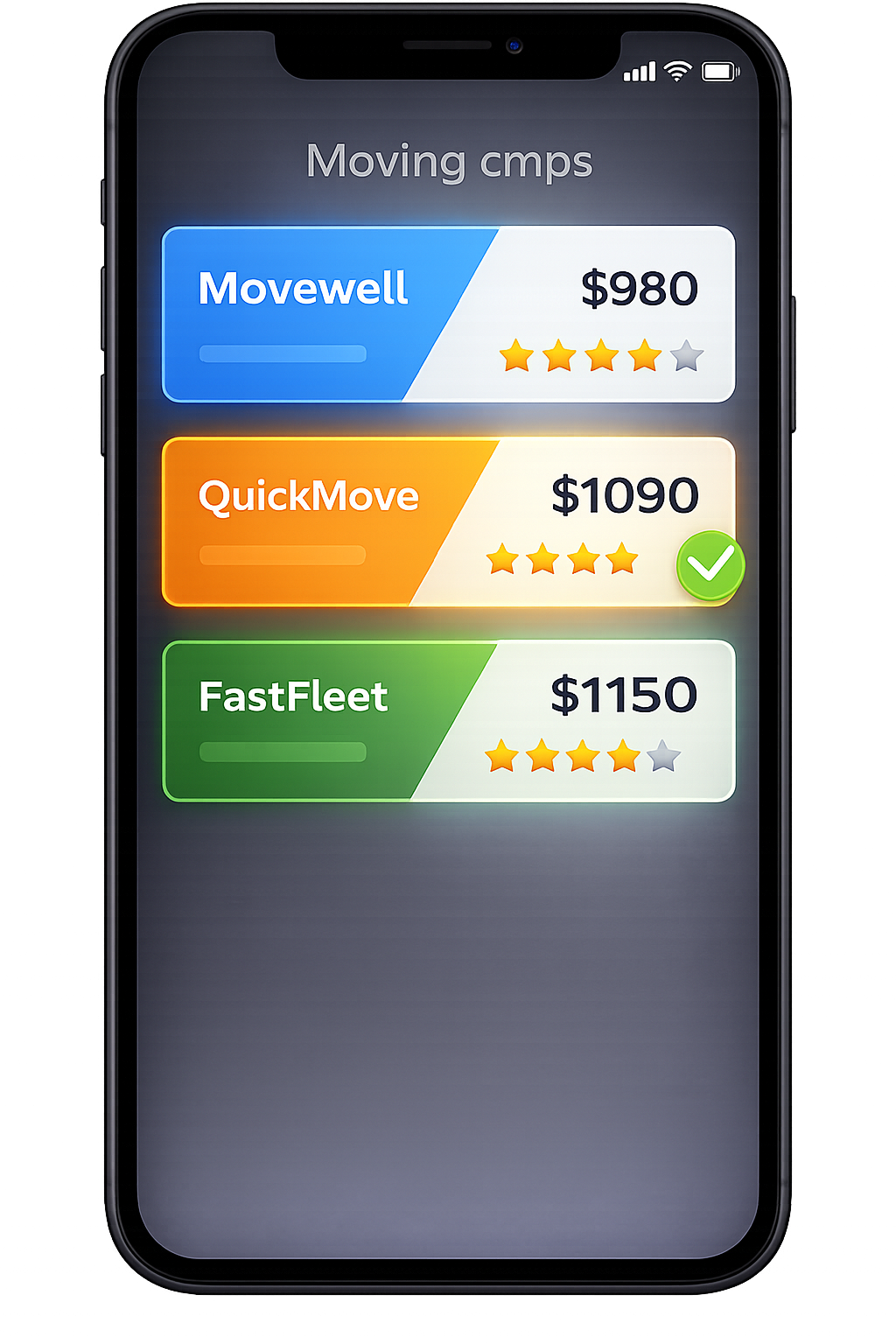
3. Compare Multiple Quotes
Compare mover quotes for Chicago, IL from the same scanned inventory.
Frequently Asked Questions
How is a moving estimate in Chicago different from a quick online quote?
A moving estimate in Chicago is usually a written document from a mover that reflects your specific inventory, building access, and route. A fast quote or price range might be based only on your zip codes and number of rooms. On this page, MoveCost.ai focuses on helping you build the level of detail movers typically need for a real estimate: a room-by-room inventory of your belongings, the number of stairs or presence of elevators, parking conditions, and building rules like COI or elevator reservations. Movers then use that information to prepare written estimates you can compare, instead of broad ballpark figures.
Can I get a Chicago moving estimate without an in-person visit?
For many Chicago apartments and condos — especially studios, 1BRs, and 2BRs in neighborhoods like Lakeview, Logan Square, Pilsen, Hyde Park, or the Loop — movers can often prepare a detailed estimate using an AI-generated inventory, photos, and your building details. With MoveCost.ai, you walk through your home with your phone, confirm your inventory, and add local details like stairs, elevators, parking, and building rules. If a mover feels they still need a video walkthrough or in-person visit, they can ask for it after reviewing your profile, but the goal is to reduce the number of home visits needed for a solid estimate.
What information should I include to get a more accurate Chicago moving estimate?
The more specific you are, the easier it is for Chicago movers to write an estimate that matches your actual move. Helpful details include: a complete inventory of furniture and large items in each room; an honest estimate of box counts (and whether they’ll be packed before move day); the number of stair flights or whether you have a passenger or freight elevator; typical parking conditions on your block or alley; and any building move rules such as COI requirements, move windows, or elevator reservations. MoveCost.ai walks you through these prompts so you can send a single, consistent set of details to every mover you invite to estimate your move.
What’s the difference between binding and non-binding moving estimates?
Terms can vary by company, but generally a non-binding estimate is an educated projection of cost based on the inventory and access details you provide. If the actual job is larger or takes longer, the final amount can change. A binding-style estimate sets a specific price for the work described, usually based on a very detailed inventory and clear building conditions. Some movers may also offer hourly estimates with time ranges. MoveCost.ai itself does not set or enforce these terms; it provides a structured, Chicago-specific inventory so each mover can explain what kind of estimate they’re offering and what could cause it to change.
What happens if my inventory changes after I receive Chicago moving estimates?
Moves evolve — you might sell a couch, add a crib, or decide to empty a storage unit in Rogers Park or Bronzeville. In MoveCost.ai, you can update your AI-generated inventory and access details as your plan changes. Once updated, you can notify movers that your inventory has changed and invite them to refresh their estimates. Keeping your profile current gives movers a better chance to keep your initial estimate and final charges aligned, especially for hourly or weight-based estimates.
How do Chicago parking rules and permits affect moving estimates?
Parking has a direct impact on how long loading and unloading take. On narrow streets in Lakeview, Lincoln Park, Wicker Park, or Hyde Park, a truck may need to park farther away, increasing the time spent walking between your home and the truck. Some customers arrange temporary no-parking signs or moving-truck permits through the City of Chicago so movers can use a reserved curb space. In your MoveCost.ai profile, you can describe where the truck is most likely to park and whether you’ll seek a permit. Movers can then include realistic load/unload time in your Chicago moving estimate instead of adjusting later on move day.
Can I use this Chicago moving estimate page if I’m moving to or from the suburbs or another state?
Yes. The same AI-generated Chicago inventory can be used whether you’re moving from Logan Square to Oak Park, from Hyde Park to Evanston, or from Chicago to another state. For local and nearby suburban moves, estimates often emphasize crew size and hours; for longer routes, movers may estimate based on shipment weight or volume plus distance. If you’re mainly exploring what different routes cost before you talk to movers, you can also use other tools on MoveCost.ai, like the Local Moving Cost Calculator Near Me or the Moving Cost Calculator by State and City, alongside the estimates you request from movers here.
Does MoveCost.ai act as my moving company or guarantee my Chicago estimate price?
No. MoveCost.ai is not a moving company and does not guarantee prices, availability, or service quality. It’s a tool for building a detailed, Chicago-specific inventory and sharing it with professional movers, so they can send written estimates based on the same information. Each mover sets its own pricing, estimate type (binding, non-binding, or hourly), and final billing practices. A clearer inventory and access profile usually make it easier for both you and the mover to see why an estimate looks the way it does and to understand what might cause it to change.