
Compare local movers in Seattle without long forms or phone tag
Scan your Seattle apartment with AI, get accurate hourly estimates, and compare local movers who understand elevators, tight parking, and steep hills. Your scan connects directly to MoveCost’s main AI moving cost calculator so you can reuse the same inventory for other routes and tools.

local movers in Seattle, WA
Scan your place, share with movers, compare local quotes
MoveCost uses AI to turn a quick walk around your apartment into the details Seattle movers need for realistic hourly estimates. The same scan plugs into our main AI Moving Cost Calculator, so you can reuse your inventory beyond this Seattle page if your plans change. 1. Scan your Seattle home with your phone 2. AI builds your moving inventory & volume 3. Compare quotes from local Seattle movers
Local movers for Seattle apartments, condos, and tight buildings
From Capitol Hill walk-ups to South Lake Union high-rises, find movers who work these routes every week. Moving a few blocks in Seattle can feel like a big production when you’re juggling elevators, loading zones, and narrow stairwells. MoveCost is built for how people actually move in the city. Instead of explaining your place over and over on the phone, you scan once, add a few notes about your building, and share everything with multiple local movers in a single request. If you later decide to move out of the metro, that same scan can be reused in the AI Moving Cost Calculator or state-to-state tools without starting from scratch. AI-scanned inventory Shared with movers automatically Details that matter
Elevators, hills, and tight parking—handled before moving day
MoveCost focuses on the building and street details that make or break a local Seattle move. In Seattle, the hardest part of a local move often isn’t the distance—it’s access. Elevators that need reservations, steep streets when it’s wet, loading zones that fill up early. MoveCost walks you through quick questions and photos so movers understand your exact situation before they quote or show up. Those same access details can also feed into our stairs-and-elevator calculator if you explore other MoveCost tools later on. Reduce surprises and last-minute delays caused by tricky building access. Help movers bring the right equipment for hills, rain, and narrow staircases. Get more realistic time ranges so your final bill is closer to the original estimate.
Turn your AI scan into realistic hourly quotes across Seattle
See how different crews, days, and start times affect your local moving cost. Most Seattle locals aren’t filling a huge truck—they’re moving a one-bedroom from Fremont to Wallingford or upgrading from a shared spot in the U-District to a place in Queen Anne. With MoveCost, you see how your scanned inventory translates into hours and crew sizes, then compare local movers side by side. If you want a broader cost view beyond Seattle, you can send the same inventory into the AI Moving Cost Calculator or our moving cost by state and city tools. Avoid vague "it depends" quotes that don’t reflect your actual items. Quickly spot which movers are better for small, fast jobs vs. full-day moves. Easier cost splitting with roommates when you know realistic hour ranges. Short hops within the city End-of-month & weekends Time ranges that match reality
From quick apartment hops to cross-town and near-metro moves
Use the same AI inventory whether you’re just changing neighborhoods or heading just outside Seattle. Not every move is a simple few-block change of address. You might be shifting from a downtown studio to a bigger place in Ballard, or moving from an in-city apartment to a house just outside the metro area. MoveCost keeps everything in one place so you can reuse your scan and easily compare different local moving setups. If your plans expand, that scan can also help power state-to-state estimates without repeating any of your Seattle details. Full-service local moves Heavy-items only Final-mile help
Why Seattle renters and homeowners use MoveCost to compare local movers
One scan, multiple quotes, fewer surprises on moving day. Cut down on back-and-forth and phone tag with multiple moving companies. Quickly see which local movers are a better fit for your building access and timing. Keep all your move info organized in one place until you’re settled in your new home. One scan, many movers Better estimates, fewer surprises Built around Seattle realities Fast, self-serve experience
Find local movers in Seattle, WA that fit your building, budget, and timeline
MoveCost helps you compare local movers in Seattle, WA using an AI-based home scan instead of guesswork. Whether you’re in a high-rise near South Lake Union, a walk-up in Capitol Hill, a townhouse in Queen Anne, or a smaller place in Ballard, you can quickly see which local movers are suited to your type of building and neighborhood. By focusing on real moving volume, building access, and short city distances, MoveCost makes it easier to estimate your Seattle moving costs, choose a realistic crew size, and book movers who understand the city’s traffic, hills, and parking rules. You can also treat this Seattle page as a local branch of the broader MoveCost network: your AI inventory can be reused in the central AI Moving Cost Calculator Online Free, state-to-state tools, stairs-and-elevator calculators, and comparison hubs if your move grows beyond a simple in-city hop. Use MoveCost when you need: • Local movers for Seattle apartments, condos, or townhomes • Short-distance moves between Seattle neighborhoods • Better hourly estimates for city moves that involve elevators, stairs, or tight loading spaces • A simple way to compare multiple local movers without filling out the same form again and again.
Use this Seattle local movers page with the main AI hub and comparison tools
This Seattle URL is your local movers page—it focuses on short-distance, in-metro moves and hourly quotes, not on long-distance pricing or national averages. If you want to go deeper than local: • Start or update your scan in the AI Moving Cost Calculator Online Free hub to keep your inventory in sync across the site. • Use Compare Moving Company Quotes Instantly Online if you want a general explanation of how to line up multiple movers fairly using the same inventory. • Use Instant Moving Quotes Without Phone Calls if avoiding phone calls is more important than location. • Use Moving Cost Calculator by State and City or State to State Moving Cost Calculator Online if you turn your Seattle move into an interstate route later on. Those pages link back to this URL when they talk about “local movers in Seattle” so that search engines understand this as the Seattle-specific local movers page, while the AI hub and comparison hubs stay national.
How It Works
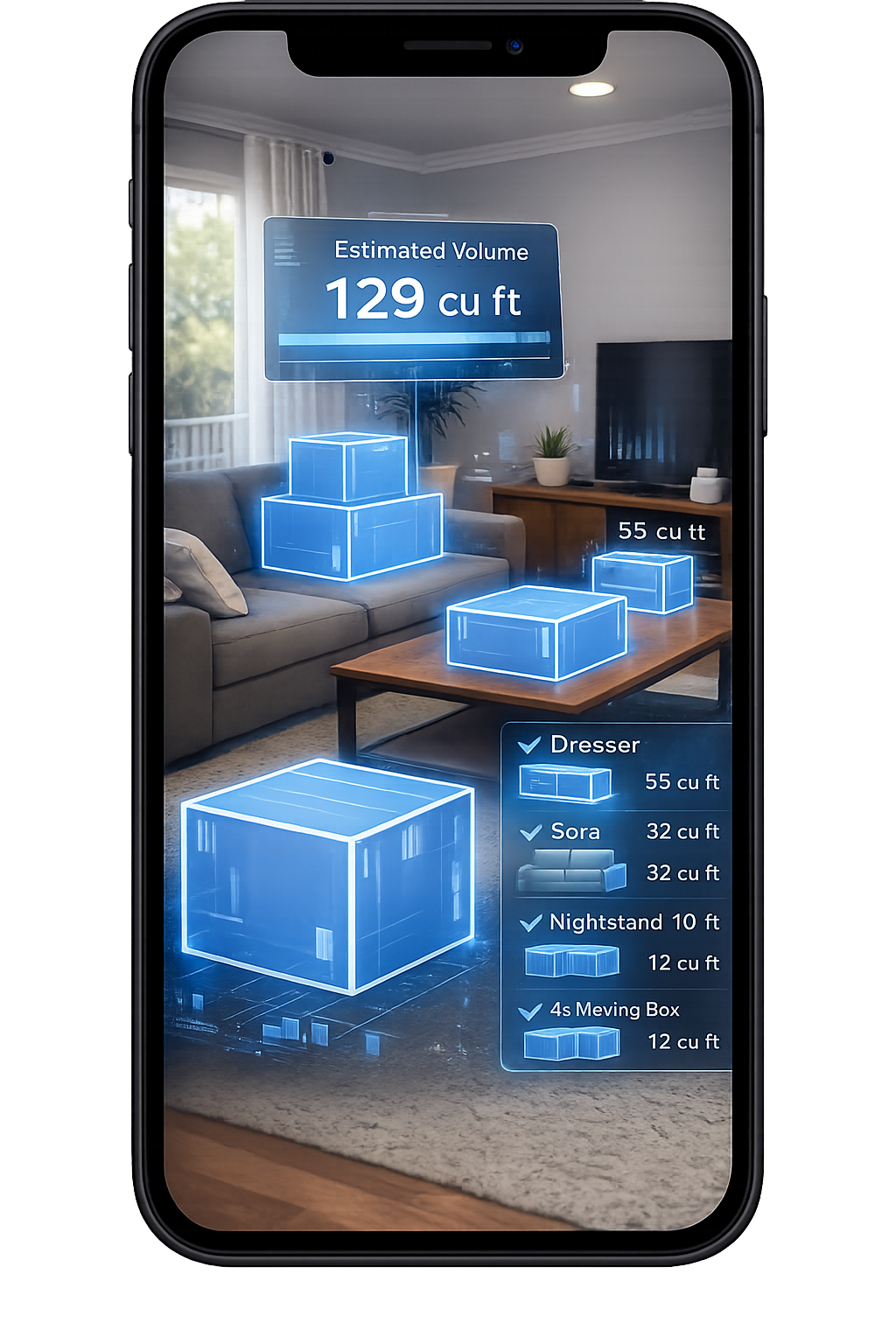
1. Scan Your Room With Your Phone
Walk around your space and scan your items in seconds.
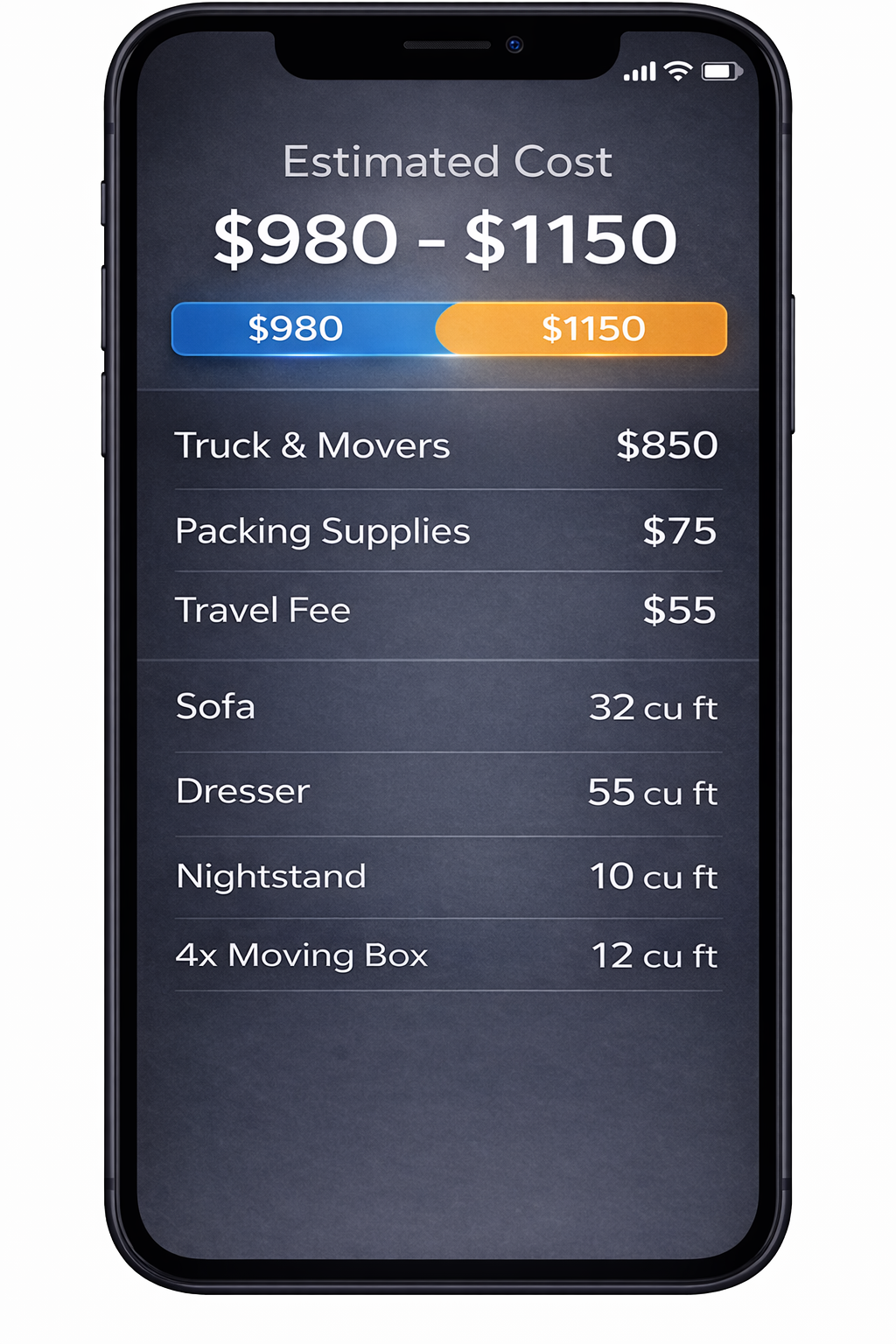
2. AI Detects Your Items
We identify your items and calculate volume for a clearer estimate.
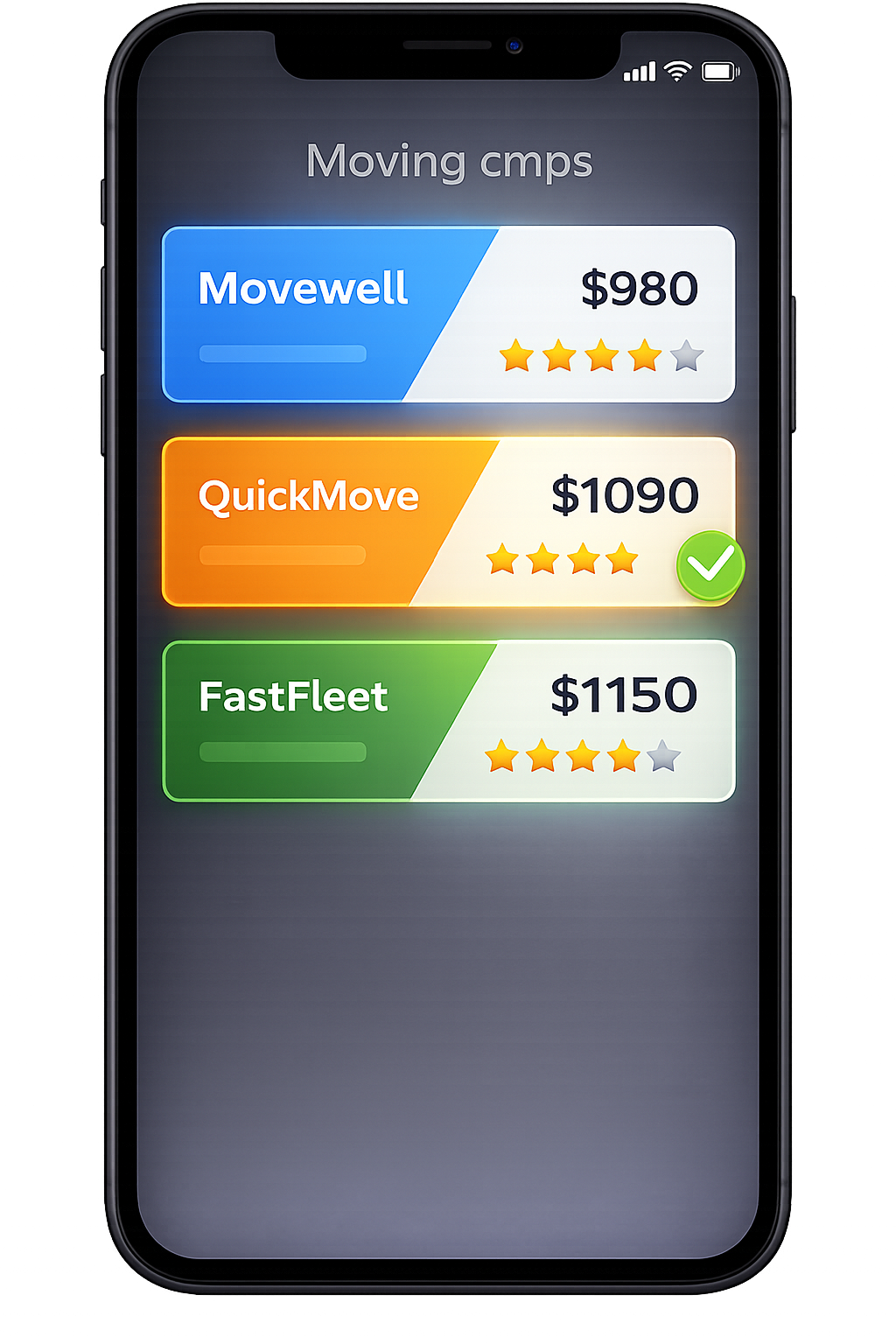
3. Compare Multiple Quotes
Compare mover quotes for Seattle, WA from the same scanned inventory.
Frequently Asked Questions
How far in advance should I book local movers in Seattle?
For most local Seattle moves, booking 2–3 weeks ahead is usually enough. However, the last weekend of the month, popular lease dates, and summer weekends tend to fill up fastest. If your building requires a freight elevator reservation or a certificate of insurance, try to book at least three weeks out so movers can coordinate with your property manager. With MoveCost, you can still compare options for sooner dates and see which local movers have availability.
How does MoveCost help with parking and loading in Seattle?
When you request quotes through MoveCost, you’ll answer a few quick questions about parking and loading at both addresses: driveway, alley, or street only, plus anything like loading docks or shared garages. You can also upload photos of the front of your building. Local movers then use that information to plan where to park the truck, how far they may need to walk with items, and how much time to add for steep hills, tight parallel spots, or limited loading zones common in neighborhoods like Capitol Hill, Belltown, and Queen Anne.
Can I get an accurate estimate if my Seattle building has a small or slow elevator?
Yes. MoveCost pairs your AI inventory with a few simple access questions so movers can estimate time for elevator waits and multiple trips. A small or slow elevator—especially on higher floors—can easily add 30–60 minutes. Sharing the floor you’re on and photos or notes about the elevator size helps movers who regularly work in similar Seattle buildings give a more precise range, such as “3–4 hours with this elevator,” instead of a rough guess.
What if I’m only moving a few blocks in Seattle?
Short hops, like moving from one building in Capitol Hill to another nearby or from a place in Fremont to Wallingford, are common Seattle moves. You may not need a large crew or an all-day booking. Through MoveCost, you can request quotes tailored to short local moves, including options where movers focus on heavy items only while you handle lighter boxes. Once your AI inventory is scanned, local movers can recommend the smallest crew and time window that makes sense for such a short distance.
How does the AI scan reduce surprise fees for Seattle moves?
Surprise costs often show up when movers arrive to find more items, extra stairs, or challenging access they didn’t know about. With MoveCost, the AI scan visually captures most of your furniture and boxes, and you can add extra notes for storage units, bikes, or balcony items. Combined with details about floors, elevators, parking, and hills, movers can quote more accurately up front. That lowers the chance of big changes to your final bill and makes time estimates more realistic for your specific Seattle move.
Does MoveCost work if I’m moving into Seattle from another city?
Yes. If you’re arriving in Seattle with a rental truck or another service, you can still use MoveCost to find local movers for the “final mile.” Scan your inventory at your starting point, then use that same list when requesting quotes for unloading, navigating steep streets, handling elevators or stairs, and setting up furniture in your new Seattle home. This is especially helpful if you don’t want to rely on friends to carry heavy items up several flights.