
Moving Cost in New York, NY: What People Actually Pay in 2026
See real New York City moving prices for studios through three-bedrooms, from local borough hops to interstate moves. Then scan your apartment with MoveCost to get AI-powered quotes from movers who understand NYC buildings and streets.

moving cost in New York, NY
Typical Moving Cost Ranges in New York City
In New York, moving cost isn’t one flat number. It depends heavily on your borough, building rules, and how much you’re actually moving. Here are realistic price ranges many New Yorkers see when hiring professional movers: • Studio / alcove studio, local within NYC (for example East Village to Bushwick or LIC to Midtown): often $500–$1,200 with a small crew, truck, and basic furniture protection if access is straightforward. • One-bedroom, local move within a borough or nearby boroughs (Astoria to Park Slope, UWS to Williamsburg): commonly $700–$1,500, with higher prices when there are long walks from the truck, tight stairs, or strict building time windows. • Two- to three-bedroom apartments or small brownstones (Upper West Side to Long Island City, Cobble Hill to Jersey City): frequently $1,200–$2,500+ depending on how fully furnished the place is, how many flights of stairs there are, and whether either building requires a Certificate of Insurance (COI) or elevator reservation. • Long-distance moves out of New York (NYC to Boston, DC, or cross-country): often several thousand dollars, with a lean one-bedroom to Boston starting in the $1,800–$3,000 range and full two-bedrooms to the West Coast costing substantially more. These ranges are not quotes from MoveCost or any particular mover. They’re directional anchors to help you sanity-check the estimates you receive. The exact price for your move will depend on inventory, stairs/elevators, street access, and timing — which is why our platform starts with an AI inventory scan of your New York apartment instead of a generic form.
Why Two Similar NYC Apartments Get Very Different Moving Quotes
In New York, two people with the same size apartment can get very different prices. Movers care less about the square footage on your lease and more about the logistics and volume. 1. Distance and route within or beyond NYC A move from Midtown to Astoria is not the same as Midtown to Chicago. Even within the five boroughs, crews think about: • Bridge and tunnel traffic • Tolls and likely congestion • Where they can legally park and how far they have to carry items A short move from SoHo to the Lower East Side can still take longer than you expect if the truck can’t park near the building and the crew has to walk everything around the block. 2. How much you actually own A minimalist one-bedroom with flat-packed furniture and light decor may be quick. A similar-size place filled with books, records, artwork, and bulky dressers can nearly double the labor time. That’s where MoveCost’s AI inventory scan helps in New York: • You walk through your apartment with your phone. • The system detects furniture and approximate box counts. • Movers see a realistic snapshot of your home instead of a vague list. When movers can see that you have three bookshelves, five bikes in the basement, or a big sectional in a narrow living room, they can price the job more accurately up front. 3. Building access and NYC-specific hurdles Walk-ups with tight staircases, brownstones with narrow stoops, and prewar elevators that only fit one piece at a time all slow crews down. Many co-op and luxury rental buildings on the Upper East Side, FiDi, and Long Island City require COIs and limited freight elevator windows. If the crew has a strict three-hour elevator slot, they may send extra movers, which shows up in your quote. 4. Season, day of week, and time of day End-of-month Saturdays in June look very different from a random Tuesday in February. When you compare quotes on MoveCost, you can test different dates or times and see how NYC movers adjust pricing around traffic, demand, and building rules.
Local vs. Long-Distance Moving Costs from New York
A move from the West Village to Bushwick is priced very differently from a move from the West Village to Atlanta. Understanding how movers think about each type of job helps you judge whether a quote is fair. Local New York City moves Within the five boroughs (and nearby areas like Jersey City or Hoboken), many movers: • Charge hourly rates with minimum hours, or • Offer flat rates once they see a detailed inventory and building info. For example: • A two-bedroom going from Park Slope to Prospect Heights with elevator access on one end and a ground-floor brownstone on the other might qualify for a predictable flat rate. • A move from Washington Heights to Forest Hills with multiple flights of stairs, double-parking, and tight freight elevator windows is riskier to estimate, so crews may stick to hourly pricing. Long-distance and interstate moves from NYC For interstate routes (NYC to Philadelphia, Boston, Charlotte, or beyond), pricing usually shifts to volume- or weight-based formulas plus mileage. Movers look at: • How much space your belongings take up on the truck • Total driving distance and tolls • Whether pickup or drop-off streets can handle a large truck, or if they’ll need a smaller shuttle A narrow West Village block that can’t fit a full tractor-trailer might require a shuttle truck, which adds an extra line item. If you’re specifically comparing state-to-state routes from New York, you can pair this city guide with MoveCost’s state-to-state moving cost tools to see how your NYC pickup interacts with route-based pricing. Our AI inventory tool makes both local and long-distance estimating easier. Instead of guessing how many boxes you’ll have, you scan each room. Movers see tricky items (Peloton, king bed, large sectional) and can propose options such as: • Shared trucks for lower cost but more flexible delivery windows • Dedicated trucks for faster, more predictable delivery This lets you compare prices for different service levels, not just different company names.
How Timing, Traffic, and Building Rules Change NYC Moving Cost
Timing can change your moving cost in New York more than most people expect. The city has clear busy seasons and quiet stretches, and movers plan their schedules around them. Busy vs. off-peak seasons From late May through early September, demand spikes with lease changes, graduations, and family moves. A one-bedroom from Harlem to Crown Heights in July will often draw higher quotes than the same move in November. End-of-month and weekends The last week of the month and the first weekend of the next are especially congested. Saturdays book quickly; weekday mornings in the middle of the month are usually less competitive. Using MoveCost, you can adjust your preferred date and time and see how those choices influence the estimates you receive. Traffic and parking A move from the Upper East Side to the Financial District at 8 a.m. on a weekday hits rush hour and Midtown congestion. Crews may budget extra time just to get between addresses. In dense neighborhoods like the West Village, Brooklyn Heights, or busy parts of Queens, finding legal parking can be a project in itself. When you set up your move in MoveCost, you can: • Note loading dock requirements • Flag streets that don’t allow large trucks • Mention if there’s a driveway or private loading area These details help movers estimate realistic labor time instead of assuming best-case parking. Building rules and COIs Many doorman and high-rise buildings only allow moves during specific freight elevator hours and require a COI. If your pickup and drop-off buildings both have strict windows, crews may need more staff or a longer day. By adding your building’s rules into your MoveCost profile, you help movers plan the right size crew for your situation and price it accordingly.
How MoveCost’s AI Scan Helps New Yorkers Avoid Surprise Fees
One of the biggest reasons people in New York feel blindsided by moving costs is that the original estimate was based on a guess. A quick phone call — “it’s just a one-bedroom and a couch” — rarely captures: • The heavy bookshelf full of records • The bikes on the fire escape • Storage bins under beds and in closets • Tight, turn-heavy hallways and staircases MoveCost starts your quote process with an AI-based home scan designed for urban apartments: 1. Walk your place with your phone Open closets, pan across furniture, and include storage areas. The scan works for studios up through multi-bedroom apartments and small houses. 2. Automatic inventory detection The system detects major items and approximate box counts and creates a structured list that movers can use. 3. NYC-specific questions You add: • Floor number and elevator or walk-up details • Building move-in/move-out rules • Notes about street access, loading docks, or narrow stoops 4. Comparable quotes from movers Multiple moving companies see the same inventory and building notes, so you can compare like-for-like offers instead of juggling different assumptions. From there, you can tweak your plan and see price implications before you commit: • Add or remove items from a storage unit in Queens • Switch from self-packed boxes to full packing service • Indicate that you’re okay with weekday daytime moves instead of weekends The goal is simple: give New Yorkers a clearer, inventory-based view of what their move is likely to cost before crews ever show up with a truck.
NYC Moving Cost Checklist: Details to Gather Before You Scan
To get the most accurate New York moving cost estimates through MoveCost, it helps to collect a few details ahead of time. You don’t need exact measurements for everything, but the more specific you are, the more reliable your quotes will be. Address and building basics • Pickup and drop-off neighborhoods (for example, Astoria to Bed-Stuy, or UES to Jersey City) • Floor number at each location • Whether each building has a passenger elevator, freight elevator, or is a walk-up • Any building move-in/move-out fees or deposits Access and parking information • Whether the street can accommodate a box truck or larger vehicle • If there’s a driveway, loading dock, or garage height restriction • Approximate distance from the curb or loading area to your front door Inventory highlights • Number of beds and size (twin, full, queen, king) • Large or fragile items (TVs, artwork, mirrors, pianos, aquariums) • Heavy furniture (solid wood dressers, bookshelves, dining tables) • Bikes, exercise equipment, or unusually bulky items Timing preferences • Ideal move date and backup options • Flexibility on weekday vs. weekend • Whether you’re willing to consider delivery windows for long-distance moves Once you have this information, the AI scan and question flow in MoveCost will feel much smoother. You’ll end up with quotes that reflect real New York logistics instead of generic averages from other cities.
How It Works

1. Scan Your Room With Your Phone
Walk around your space and scan your items in seconds.
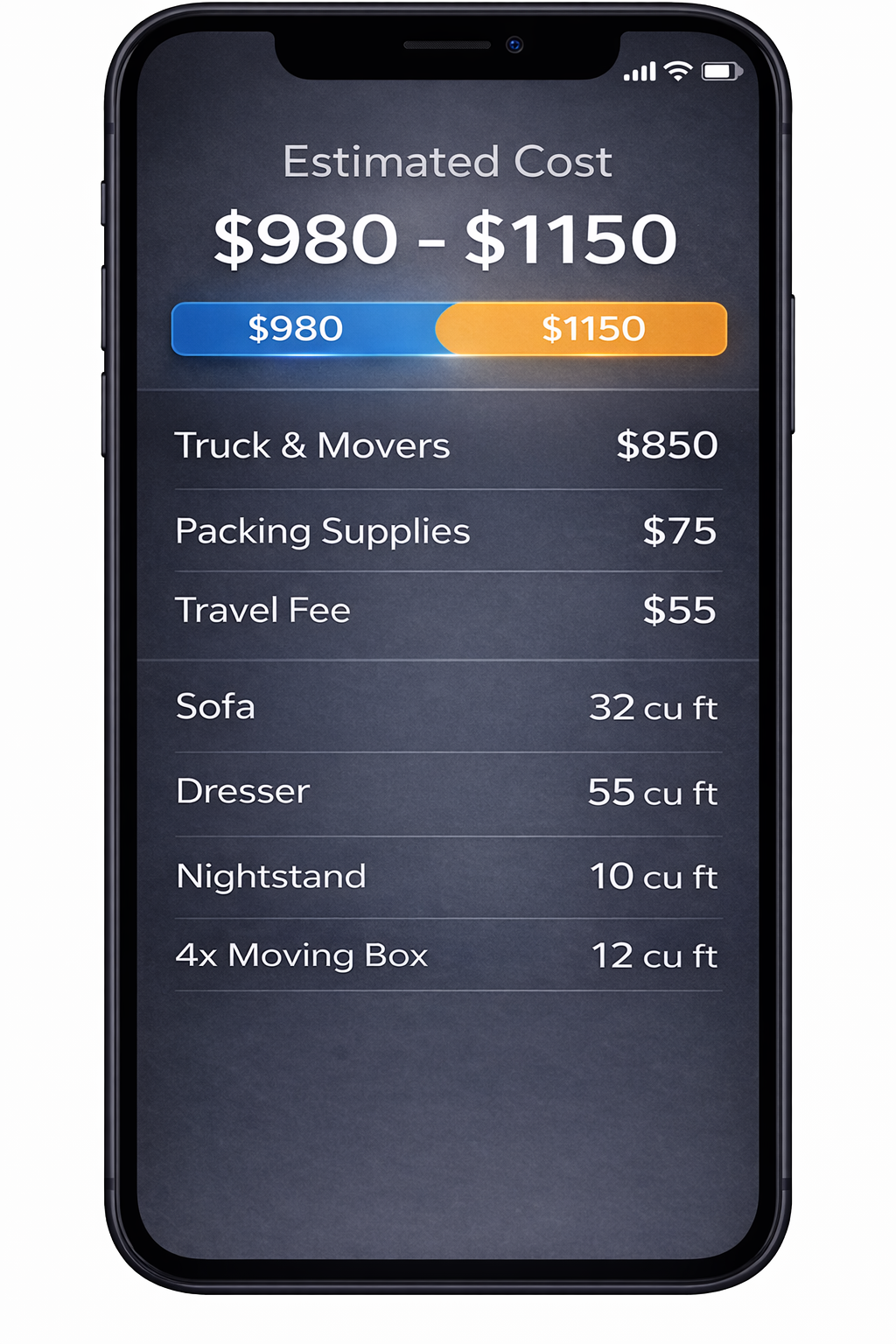
2. AI Detects Your Items
We identify your items and calculate volume for a clearer estimate.
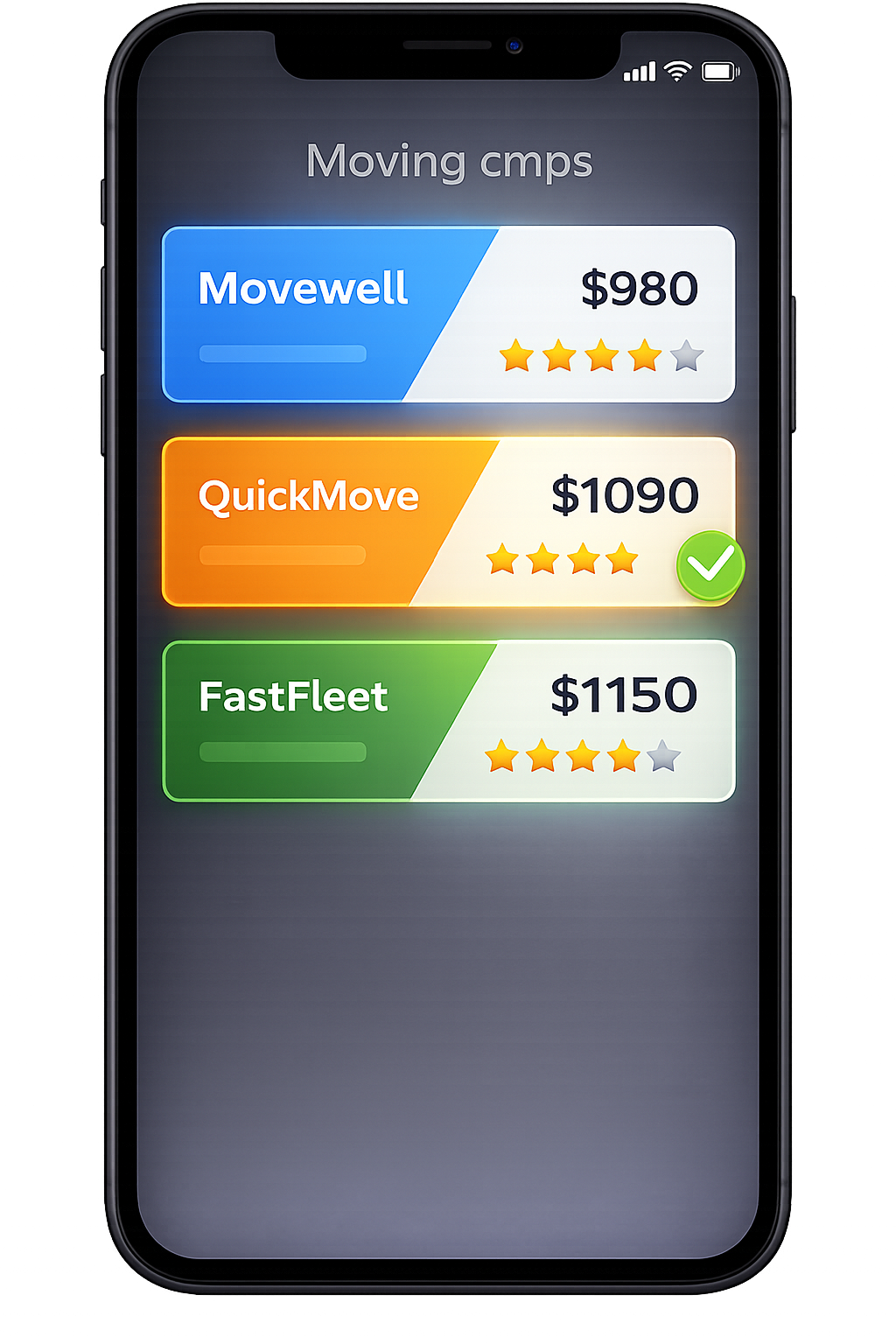
3. Compare Multiple Quotes
Compare mover quotes for New York, NY from the same scanned inventory.
Frequently Asked Questions
How much does it usually cost to move a one-bedroom apartment within New York City?
For a standard one-bedroom moving within New York City, many people see quotes between about $700 and $1,500, depending on how much they own and how complex the buildings are. A simple elevator-to-elevator move from, say, Long Island City to Midtown with light furniture tends to fall on the lower end. A one-bedroom in a fourth-floor walk-up in Brooklyn with lots of books, artwork, and narrow stairs can take much longer and push the price higher. Using the AI inventory scan on MoveCost gives movers a clearer view of your exact setup so the estimates you see are closer to what you actually pay.
Do walk-up buildings in NYC really make my moving cost go up that much?
They can, especially above the third floor. In a walk-up, movers carry every box and piece of furniture by hand, often through tight staircases with sharp turns. That slows the crew down and sometimes requires an extra mover. A fifth-floor walk-up in the East Village or Bushwick can take significantly longer than a similar apartment with a decent freight elevator, and quotes usually reflect that time difference. When you create your move in MoveCost, you can specify floor numbers, walk-up vs. elevator, and long hallways so movers can price the job honestly up front.
Why are summer and end-of-month moves more expensive in New York?
Demand and scheduling pressure. From roughly late May through early September, movers in New York book up with lease changes, graduations, and family moves. The last week and first few days of each month are especially busy because many leases flip then. With limited trucks and crews, prices tend to rise and the best slots go first. If your dates are flexible, MoveCost lets you compare quotes for different days—like a mid-month Tuesday instead of a Saturday at the end of the month—so you can see how much you might save without changing anything else about your move.
How is a long-distance move priced if I’m moving from NYC to another state?
Long-distance moves out of New York are generally priced based on a mix of distance, inventory volume or weight, and how complex pickup and delivery will be. Movers look at how much space your belongings will take on the truck, how far they need to drive, and whether they’ll need shuttles or special equipment for tight streets or loading docks. For example, moving from a West Village apartment to a house in Philadelphia is usually simpler than moving from a high-rise in Midtown to a narrow street in Boston that can’t handle a large truck. With MoveCost, you scan your home once, interstate movers see the same inventory, and you can compare different options—such as shared versus dedicated trucks—in one place.
Can I get an accurate moving estimate in NYC without having someone come to my apartment?
Yes. Many New Yorkers prefer not to schedule in-person walkthroughs. On MoveCost, you use your phone to scan your home with AI. As you move from room to room, the system identifies major furniture and approximate box counts and turns that into a structured inventory. You then add key details like floor number, elevator access, any building move-in/move-out rules, and special items such as a piano or large TV. Movers use this information to create written estimates, so you get much of the accuracy of an on-site walkthrough without hosting multiple companies in your apartment.
Is it cheaper to move within New York City on a weekday?
Many movers in New York offer more favorable pricing or better crew availability on weekdays, especially mid-month. Weekend moves, particularly at the end or beginning of a month, are in higher demand and often come with higher minimums or less flexibility. When you set up your move in MoveCost, you can request estimates for both weekday and weekend dates to see how much you could save by shifting your move by a day or two.
How does MoveCost differ from a regular online moving cost calculator for NYC?
Most basic moving cost calculators ask for an apartment size and a rough box count, then apply broad averages. MoveCost uses an AI-based home scan plus NYC-specific questions about stairs, elevators, streets, and building rules. Movers see a much more accurate picture of your home and logistics, which leads to more realistic estimates. You also get to compare offers from different movers who all looked at the same detailed inventory instead of guessing from a short description.