
Book Local Movers in New York the Smart Way
Scan your apartment with AI, see your New York moving volume, and compare local mover quotes in minutes—no calls, no long forms, and fewer surprises on moving day.

local movers in New York, NY
Local Apartment Moves in New York, Done Around Your Building’s Rules
From pre-war walk-ups to Midtown high-rises, MoveCost uses AI to match you with local movers who actually understand your building and block. Moving a few blocks in New York can feel harder than moving to another state. Tight elevators, co‑op rules, doorman schedules, and loading zones that disappear at 7 a.m. matter more than distance. MoveCost is built around how local moves really work in New York City: • Scan your apartment with your phone – walk each room once and let our AI detect couches, wardrobes, bookcases, boxes, plants, bikes, and more. • Get an approximate inventory automatically – no typing long lists. Your moving volume is estimated for a realistic local quote. • Share real details with local movers – from a 5th‑floor walk-up in Brooklyn to a doorman building on the Upper West Side, movers see your actual layout and items. Because movers see your furniture, volume, and building type, they can plan crews and timing more precisely. If you’re in a narrow East Village walk-up or a Long Island City high‑rise with a service elevator, those details are factored in before you book—reducing surprise add‑ons and last‑minute stress. This page is specifically for local movers in New York, NY. It connects the MoveCost AI scan with the realities of New York buildings, so you can go from a rough cost idea on our national calculators to actual NYC local mover quotes based on your apartment. If you’re early in research, you can open tools like the AI Moving Cost Calculator Online Free or the Local Moving Cost Calculator Near Me in a new tab. When you’re ready to act on a specific New York move, come back here to turn that research into a building‑aware local move profile. Skip repetitive calls and inventory forms—your scan does the heavy lifting. Better-aligned estimates because movers see your real space and items. Local movers matched to your neighborhood and building style.
Scan Your Home, Share Details, Get Local NYC Quotes in Minutes
MoveCost turns a quick phone scan into clear, comparable offers from New York local movers. Instead of describing your place over and over on calls, you create one detailed move profile for New York local movers to react to. Our AI-based home scanning is designed for typical New York apartments: studios carved out of brownstones, shared three‑bedrooms, compact one‑bedrooms with lofted beds, and everything in between. The aim is a realistic, room‑by‑room picture of what you’re moving so local movers can give a quote that matches your actual volume and layout. The same scan can later be reused in our moving cost calculators if your New York local move turns into a longer relocation, so you don’t have to repeat work. Avoid guessing on volume—your scan backs up the estimate. Movers see the same, consistent information for cleaner comparisons. Fast enough to do on a weeknight after work in the city. 1. Scan Your New York Apartment 2. Add Addresses & Building Details 3. Request Multiple Local Mover Quotes 4. Book the Mover That Fits You
Elevators, COIs, and Building Rules: Plan Your New York Move Properly
Many New York moves break down at the elevator schedule, not the truck. MoveCost keeps movers and buildings on the same page. Local moves in New York often revolve around building logistics more than mileage: • Certificates of Insurance (COIs) • Service elevator reservations • Weekday‑only move windows • Loading dock access and timing When you add your pickup and drop‑off addresses, MoveCost prompts you for the details New York movers expect: • Elevator access – service vs. passenger elevator, or walk‑up only. • Move windows – weekday‑only, no weekends, or specific hours your super allows. • COI requirements – whether your management company needs to be listed as additionally insured. These notes are passed directly to movers with your request. Many New York movers on the platform are already familiar with common management companies and co‑op boards and can work within typical requirements. You can also upload any move‑in or move‑out guidelines, so movers can confirm crew size and timing against your building’s rules instead of discovering restrictions at the front desk on move day. If you’d like a deeper explanation of how stairs and elevators influence pricing before you complete your New York profile, you can open the Moving Cost Calculator Including Stairs and Elevator in another tab, then return here to add your specific building details and request local quotes. Fewer last‑minute building conflicts on move day. Movers plan around your actual building rules—not assumptions. Easier coordination with supers, doormen, and management offices.
Hourly Local Moving Rates in New York You Can Actually Compare
See rates, minimums, and fees from multiple New York movers side by side—based on your scanned inventory and building details. New York local movers often charge by the hour—but comparing offers can be confusing without a consistent format or a shared understanding of your apartment. After you scan your place and add your addresses, MoveCost standardizes how movers present your quotes so you can quickly see: • Hourly rate and minimum hours suggested for your job • How many movers are included at that rate • Whether travel time or fuel charges are added • Any extra fees for walk‑ups, long carries, or heavy items • If there’s night or weekend pricing that may affect your preferred date Because each mover is quoting based on the same AI‑generated inventory and New York–specific logistics, they’re not relying only on a vague description over the phone. A studio from the Lower East Side to a one‑bedroom in Brooklyn with one elevator and street parking will be priced differently than a one‑bedroom in Downtown Brooklyn to a high‑rise in Hudson Yards with elevator coordination at both ends. The platform helps you see these differences clearly. You can sort offers by total estimated cost, hourly structure, availability, or other factors that matter to you, then choose the combination of price and conditions that fits your move. To understand how your New York local quotes compare to wider patterns, you can pair this page with: • AI Moving Cost Calculator Online Free – for a high‑level, AI‑generated estimate before you share your exact addresses. • Local Moving Cost Calculator Near Me – to see typical local bands and then line them up against your NYC‑specific quotes. Those tools give broader ranges; this page turns your specific New York inventory into move‑ready quotes. Avoid misleadingly low hourly rates that hide higher minimums. Understand how New York‑specific add‑ons might affect your price. Pick the right balance of price, timing, and building fit. See the full structure Compare by what matters to you Adjust and re-check
Street Parking, Loading Zones, and New York Traffic Reality Checks
Plan your New York move around real curb space, enforcement, and traffic—not a perfect driveway that doesn’t exist. Getting a moving truck reasonably close to your building can be the hardest part of a local New York move. Bus lanes, bike lanes, hydrants, and strict “No Standing” signs are everywhere, especially in Manhattan and busy Brooklyn corridors. MoveCost asks about curb access at both ends of your move so movers can plan: • Curbside and loading options – legal loading zone, double‑parking only, garage entrance, or narrow side street. • Ticket‑prone blocks – spots where enforcement is especially active or where construction compresses lanes. • Typical congestion windows – school drop‑off, rush hour near bridges and tunnels, or street cleaning schedules. New York movers use this information to choose truck size, suggest start times, and estimate carry distance and duration. Many will recommend early weekday starts to avoid the FDR Drive, BQE, Major Deegan, or heavily trafficked crosstown streets with a full truck. Weather and season matter too—slow, slushy lobbies in winter or hot, long stair carries in older walk‑ups in summer. By connecting with movers who regularly work your neighborhood, you get planning grounded in real blocks and real traffic, not generic assumptions. Because the same inventory and curb details are saved in your MoveCost profile, you can reuse them if you need a follow‑up run to storage, a later move out of New York, or another local move within the city. Fewer surprises around where the truck can legally stop. More accurate time estimates tied to real New York traffic patterns. Clear expectations about how movers will handle your specific block.
Across-Town Moves or First Step of a Bigger Relocation
Use a single, accurate AI inventory for local New York moves now and bigger relocations later. Even if you’re eventually leaving New York, your first move is often local: a roommate split, a short‑term sublet, or a temporary place while you plan your next city. MoveCost supports both straightforward local moves within New York and the early legs of longer relocations: • Simple local apartment moves – clearer hourly pricing based on your scanned inventory and building details. • Apartment‑to‑storage or staging moves – plan local runs to storage or temporary housing as a first step. • Split moves – decide which items go to a new address and which stay behind or move later. Because your AI scan creates a detailed inventory, you can reuse and adjust that same list for future legs of your move. If a local New York mover is handling the apartment portion and another provider later handles a longer relocation, you start with the same core inventory instead of rebuilding everything. To explore options beyond city limits while staying anchored in your New York inventory, you can: • Use the Moving Cost Calculator by State and City to model routes if New York is your starting point. • Open the Cheapest States to Move to From New York guide to explore where your next step might be, using the same inventory you set up here. That consistency helps keep your estimates aligned across each phase of your move, so you have a clearer picture of how your New York local movers fit into your overall relocation plan. One scan powers multiple stages of your move. Easier planning if you change addresses or timing mid‑process. Keeps your inventory and estimates organized across different move legs.
Why Use MoveCost to Find Local Movers in New York?
AI-driven inventory, real New York logistics, and streamlined quotes in one place. MoveCost combines fast AI scanning with New York–specific move planning, so you spend less time chasing quotes and more time getting settled. The platform is focused on helping you understand your volume, share accurate details with movers, and make side‑by‑side comparisons. You stay in control of which mover you choose and how you schedule your move, while your AI scan and building details keep everyone informed. For people moving within New York City, this page acts as the local movers hub in the wider MoveCost ecosystem: national tools give you broad ranges, and this page turns your specific NYC apartment into an inventory that local movers can actually use. Designed around the realities of New York apartment moves. Quick enough to set up between work, commuting, and packing. Helps you avoid last‑minute fees and timing surprises. AI-Based Home Scan Built for NYC Logistics Multiple Local Quotes Less Day-Of Stress
Plan Your New York Move from First Scan to Final Route
Use these tools and guides alongside this New York local movers page for a complete picture of your move. This page focuses on local movers in New York, NY and how to use an AI scan to get clear, building‑aware quotes. To help search engines and people understand where it fits, this section connects your NYC local move to the broader MoveCost toolkit: • AI Moving Cost Calculator Online Free – start here if you want a fast, AI‑driven cost idea before picking a specific New York move date. • Local Moving Cost Calculator Near Me – check typical local mover cost ranges, then compare them to the actual quotes you get for your New York addresses. • Compare Local Movers Prices in My Area Online – learn how to think about local mover pricing structures before you filter New York movers on this page. • Moving Cost Calculator Including Stairs and Elevator – understand how your walk‑up or elevator affects time and cost, then apply those insights directly to your New York move profile. • Moving Estimate Guide for First-Time Movers – if this is your first move, read a plain‑language explanation of estimates and then come back here to set up your NYC inventory. • Moving Cost Calculator by State and City and Cheapest States to Move to From New York – when your current move is local but you’re also researching a possible relocation out of New York, these pages help model next steps using the same inventory. Across these tools, this New York local movers page is the place where your NYC apartment scan, building rules, and local mover quotes all come together. Connects your New York local move to national cost calculators without duplicate content. Gives Google a clear internal link pattern around New York and local movers. Helps you move from rough cost ranges to specific, building‑aware quotes.
How It Works

1. Scan Your Room With Your Phone
Walk around your space and scan your items in seconds.
2. AI Detects Your Items
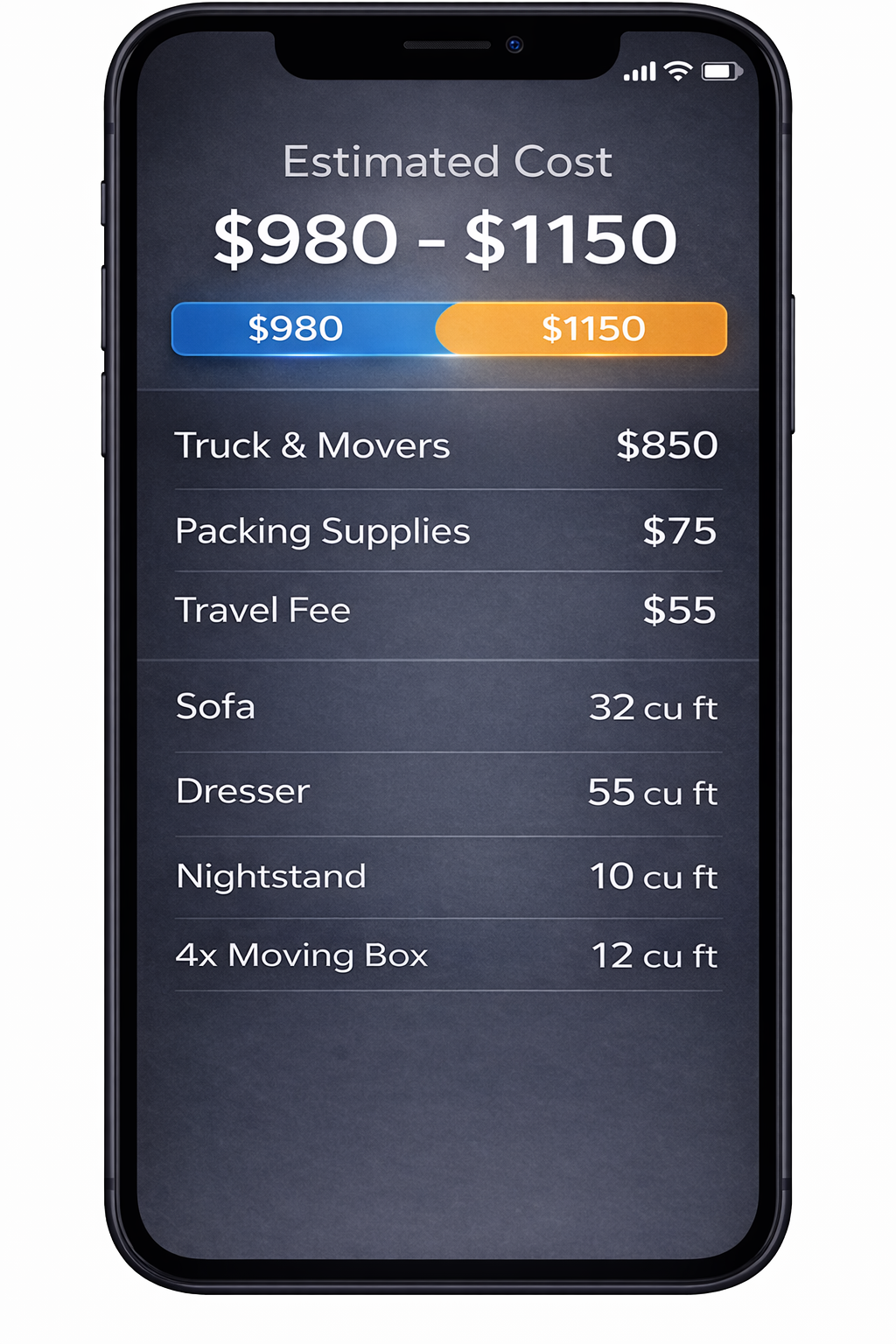
We identify your items and calculate volume for a clearer estimate.
3. Compare Multiple Quotes
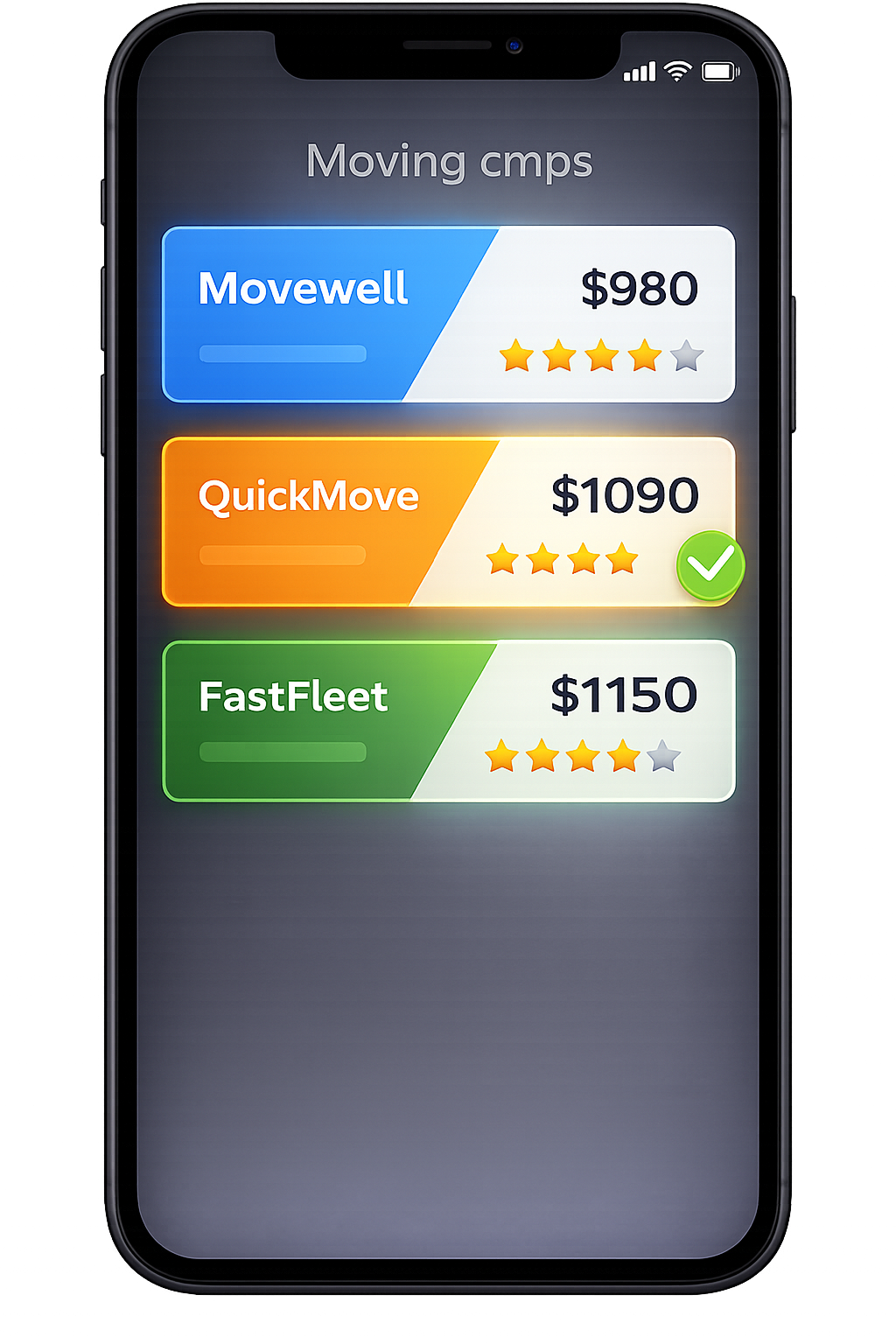
Compare mover quotes for New York, NY from the same scanned inventory.
Frequently Asked Questions
How far in advance should I book local movers in New York?
For most local apartment moves within New York City, booking 2–3 weeks in advance is usually enough to find options. If you’re moving at the end of the month, on a weekend, at the start of a school term, or around major holidays, aim for 3–4 weeks so you can reserve elevators or loading docks. The sooner movers know your move date and building rules, the easier it is to coordinate your old and new New York buildings around the same time window.
Can movers on MoveCost handle New York walk-ups and no-elevator buildings?
Many New York movers work in walk-ups every day. When you set up your move in MoveCost, you’ll be asked how many flights of stairs there are at each address and whether any items are especially heavy or bulky. Movers factor that into their crew size and time estimates. For a 5th‑floor walk‑up or tight, turning staircases, expect recommended time and crew adjustments so your move is less rushed and your quoted hours better reflect the actual work.
Do New York buildings really need a Certificate of Insurance (COI) for local moves?
Many co‑ops, condos, and rentals in New York require a Certificate of Insurance before movers can use the elevator or loading area, even for short local moves. In MoveCost, you can note that your building needs a COI and upload any sample forms or building instructions your management company provided. Movers familiar with New York buildings can usually issue a COI within a reasonable time frame, but it’s best to confirm your building’s requirements with your super or management before you lock in a date and time.
How do local movers deal with street parking and no loading zone in front of my New York building?
It’s common for New York moving trucks to rely on legal double‑parking or short‑term curb use during loading and unloading, especially on side streets where there’s no formal loading zone. When you request quotes through MoveCost, you can describe your block’s parking situation—bus lanes, hydrants, construction, garage access, or a tight one‑way street. Movers then plan truck size, arrival time, and carry distance from truck to door around the realities of your specific street, and they can build likely timing into their estimates.
Is the AI inventory scan accurate enough for New York moving estimates?
For most New York apartment moves, the AI scan provides a more consistent starting point than a quick phone description. It gives movers a visual sense of your furniture, number of boxes, and rough layout. You can also edit your inventory—add items the scan didn’t capture well, remove anything you’ve sold, or flag fragile or oversized pieces like wardrobes or sectionals. Movers then use this combined information to estimate hourly time and crew needs so your final cost is closer to the initial estimate, subject to their own policies and any changes you make before move day.
Does MoveCost work for local moves between New York boroughs, not just within Manhattan?
Yes. MoveCost supports local moves across all New York City boroughs—Brooklyn, Queens, Manhattan, the Bronx, and Staten Island—as well as nearby routes where local New York movers commonly operate. When you enter your addresses, we use your route, inventory, and building details to help match you with movers who regularly handle similar New York local moves, whether that’s Queens to Brooklyn, Manhattan to the Bronx, or another borough combination.
How does this New York local movers page fit with other MoveCost tools and guides?
This page is focused on turning your New York apartment into an AI‑powered inventory and using that to compare local mover quotes. If you’re still researching, you can use tools like the AI Moving Cost Calculator Online Free, Local Moving Cost Calculator Near Me, or the Moving Cost Calculator Including Stairs and Elevator to understand typical patterns. Once you’re ready to share your actual New York addresses, building rules, and inventory, you come back to this page to request estimates from local movers based on that information. It acts as the New York–specific example that the national guides point to.
Can I reuse my New York AI scan if my plans change or I move again locally?
Yes. If your New York move date shifts, you change apartments, or you decide on an additional local move—for example, to or from storage—you can reuse and update the same AI scan instead of rebuilding an inventory from scratch. That updated inventory can then be used again on other MoveCost tools, like the Moving Cost Calculator by State and City, if your next step after a local move is a relocation out of New York.