
Long Distance Movers from Seattle, WA You Can Compare on One Screen
Scan your Seattle home with AI, turn every room, stair, and storage space into a clear inventory, and compare long distance movers from Seattle to any state—without guessing volume or repeating yourself on the phone.

long distance movers in Seattle, WA
From Seattle Apartment Scan to Interstate Moving Quotes in Minutes
Skip back‑to‑back phone surveys. Use your camera and our AI to build one Seattle‑specific inventory that every long distance mover can price around. Built for Seattle renters and homeowners planning interstate moves Uses itemized inventory and access details, not vague weight guesses One scan powers multiple long distance moving quotes from Seattle
What to Expect When You Move from Seattle to Popular Destinations
Seattle sits in the far corner of the country—so understanding realistic route timing and cost bands matters more here than almost anywhere. Long distance movers look at your Seattle‑origin route in distance bands and by corridor. A Seattle→Portland run behaves very differently from Seattle→New York or Seattle→Texas, even if your shipment size is the same. Below are illustrative examples—not offers or guarantees—but they mirror how interstate movers think about timing and bands when you start in the Puget Sound. West Coast & I‑5 Corridor Mountain & Interior Routes Full Cross-Country Moves
Hills, Ferries, and High-Rises: Why Leaving Seattle Isn’t Just About Miles
From steep Queen Anne streets to Bainbridge ferries and downtown load zones, Seattle’s layout affects how long interstate crews spend before they even get on the highway. Two Seattle moves with the same destination can be priced differently because of access: • In‑city hills and tight streets Steep or narrow streets in Queen Anne, Capitol Hill, and parts of West Seattle can affect where a long‑distance truck can park and whether a shuttle truck is needed. • High‑rise and mid‑rise buildings Downtown, South Lake Union, Belltown, and some parts of Bellevue and Redmond use loading docks, freight elevators, and sometimes loading bay reservations—similar to major cities like San Francisco or New York. • Ferry and island access If you’re starting from Bainbridge Island, Vashon, or other islands, movers may need a smaller truck and a ferry leg; sometimes they’ll stage items at a mainland location before loading the long‑haul truck. • Townhomes with stairs and alley access Many Seattle townhomes stack living space over garages and use alleys or tight driveways. That can add stair time on load‑out even if your destination is straightforward. When you use MoveCost from Seattle, you can describe: • Whether your truck can reach your door or needs to park on a hill or side street • How many stair flights are between your main living level and the street/garage • If you’re starting on an island or in a ferry‑dependent area • If you have to coordinate with a loading dock or freight elevator downtown Interstate movers use that combination of inventory + access to decide: • Whether a shuttle from your block to the main truck makes sense • How many crew members are needed on pickup day • How much time to budget before they leave the Seattle area for your destination
Use One AI Home Scan to Compare Multiple Long Distance Movers from Seattle
Everyone prices the same Seattle inventory and access details, so differences in quotes reflect real strategies—not mismatched info. Without a shared inventory, one mover might picture a small 2‑bedroom apartment in Ballard while another imagines a fully furnished 3‑bedroom home in Bellevue. With MoveCost, they’re all looking at the same AI‑generated picture of your move from Seattle. Fewer repeated surveys and walkthroughs Clearer view of why one quote is higher or lower than another Faster shortlisting of long distance movers that fit your Seattle move Same Inventory, Different Offers Local vs National Carriers Easy Re‑Use if Plans Change
Planning a Long Distance Move Out of Seattle: Timing, Weather & Booking Windows
Use your AI inventory and these patterns to choose a Seattle move date that fits your route and risk tolerance. Certain themes show up repeatedly for people moving long distance out of Seattle: • Book earlier for late spring and summer. Many Seattle leases and home sales close in these months. If you’re leaving between May and August, 4–8 weeks of lead time is often more comfortable for long distance routes. • Watch mountain pass conditions in winter. For routes east on I‑90 or south‑east through mountain corridors, winter storms can affect transit time. Movers often build some buffer into delivery ranges or choose alternate routes when passes are closed. • Align building rules with mover availability. If you’re in a downtown tower or dense Capitol Hill/First Hill building, make sure your freight elevator or loading bay slots line up with when long distance movers can realistically be there. • Allow time to declutter. For long‑distance pricing from Seattle, every extra truck foot matters. Using your AI inventory as a visual list makes it easier to decide what to sell or donate before locking in a quote. Planning with these patterns and your AI inventory can help keep your Seattle outbound move on budget and on schedule. Confirm your building’s elevator/loading rules if you live downtown, on First Hill, or in South Lake Union. If you’re in a steep or narrow street area (many parts of Queen Anne, Capitol Hill, West Seattle), ask movers how they plan truck access or shuttles. For winter departures, ask how your mover handles I‑90 or other pass closures and how that affects delivery windows. Use your AI inventory to model two scenarios: bringing everything vs trimming 10–20% of volume, and compare long distance cost ranges. If you’re on an island or rely on ferries, include that in your notes so movers can budget time for the ferry leg and any staging they recommend.
How It Works
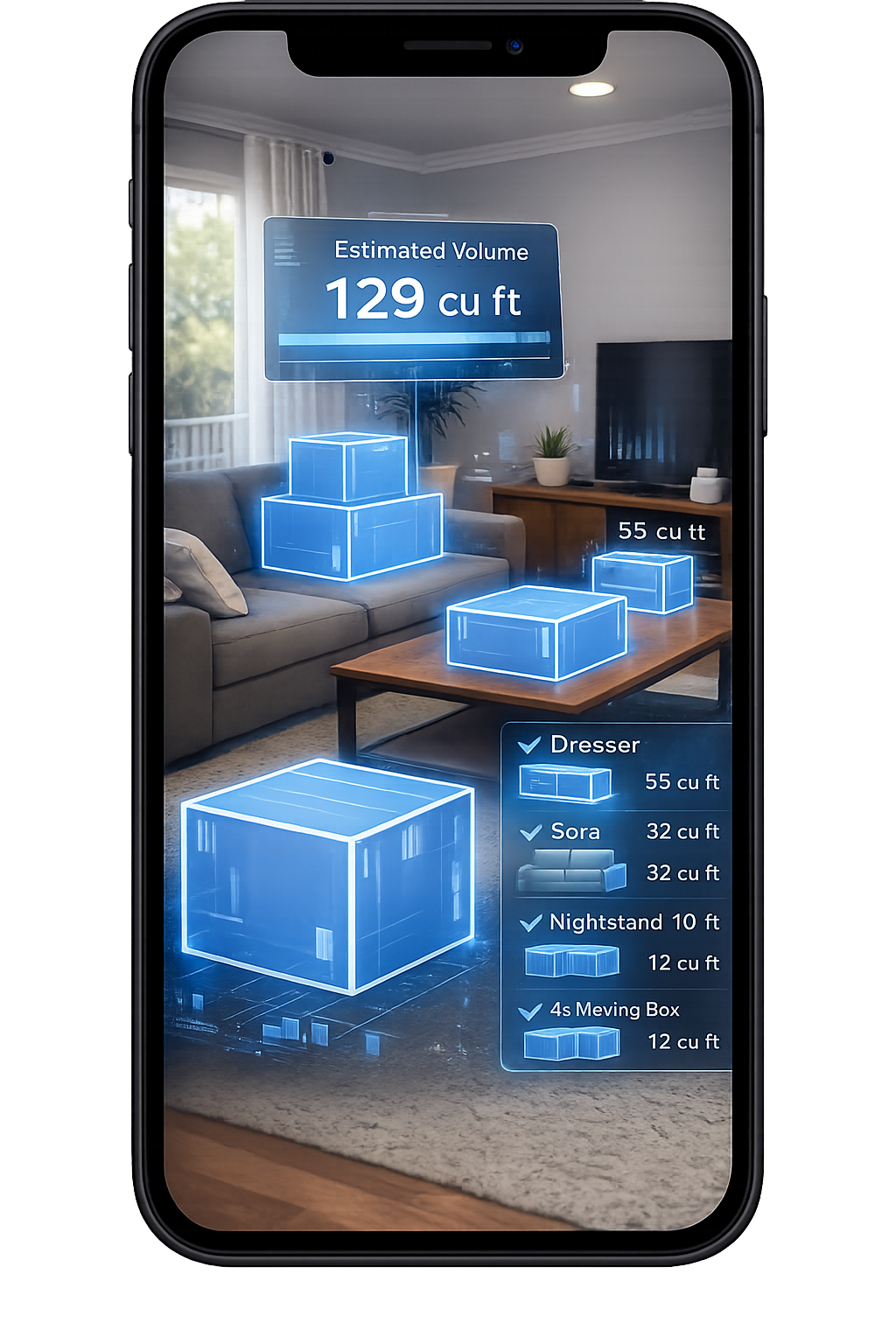
1. Scan Your Room With Your Phone
Walk around your space and scan your items in seconds.
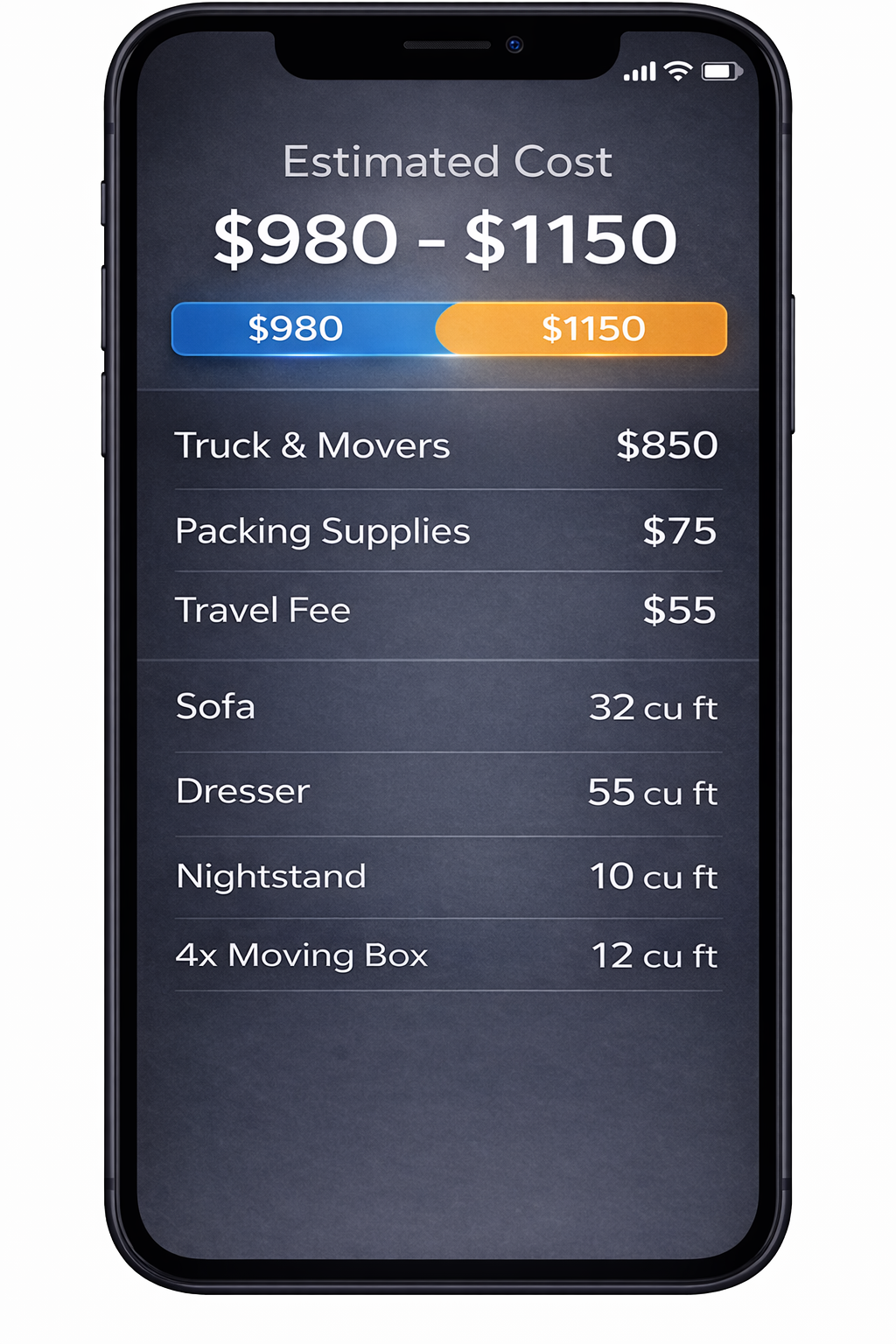
2. AI Detects Your Items
We identify your items and calculate volume for a clearer estimate.
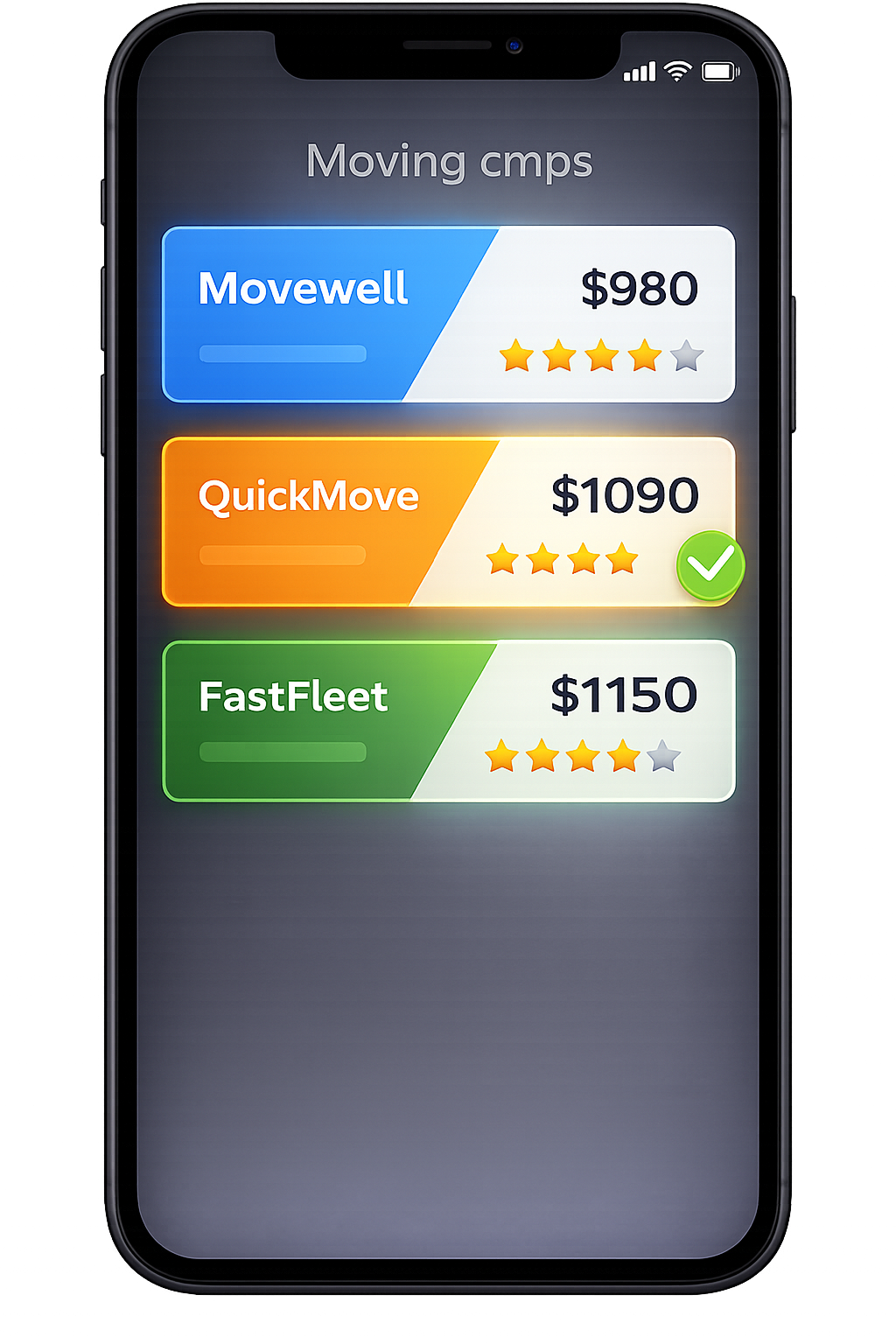
3. Compare Multiple Quotes
Compare mover quotes for Seattle, WA from the same scanned inventory.
Frequently Asked Questions
How does this Seattle long-distance movers page differ from your national state-to-state calculators?
This page focuses specifically on long distance movers from Seattle, WA. It’s built for people starting in the Seattle area—whether that’s Capitol Hill, Ballard, Queen Anne, West Seattle, Bellevue, Redmond, or nearby suburbs—and heading to another state. The national tools handle broader questions: AI Moving Cost Calculator Online Free is the primary scan hub for any move, anywhere. State to State Moving Cost Calculator Online models interstate costs for any origin/destination state pair. Moving Cost Calculator by State and City lets you test specific city pairs. You can use those national calculators to see how Washington→California or Washington→Texas behaves in general. Then you come back here when you want to understand what that looks like from a Seattle apartment, condo, or house with Seattle‑specific access, hills, ferry considerations, and high‑rise rules. In short: national tools answer “what does WA→another state cost?”; this page answers “what does that mean when I actually leave Seattle?”
Which routes from Seattle do long distance movers see most often, and does that affect price?
Common long distance routes from Seattle include: Seattle→Portland/Eugene and other Oregon cities Seattle→Bay Area and Southern California (Oakland, San Francisco, San Jose, Los Angeles, San Diego) Seattle→Denver and Mountain West cities Seattle→Texas metros such as Austin, Dallas, and Houston Seattle→Midwest hubs like Chicago or Minneapolis Seattle→East Coast (New York, Boston, DC, and surrounding areas) Established corridors (for example, Seattle→Bay Area or Seattle→California in general) may have more frequent truck runs and shared‑load options, which can sometimes help keep prices more competitive for 1–2 bedroom shipments. Less common or more remote destinations may offer fewer options and rely more on dedicated or semi‑dedicated runs, which can influence both price and delivery windows. Using MoveCost, you can scan your home once and test several route ideas—Seattle→CA, Seattle→TX, Seattle→CO, Seattle→East Coast—without rescanning. That makes it easier to see which lanes have more mover options and where the cost/benefit feels right for your situation.
Do I need a separate scan if I’m comparing Seattle→California and Seattle→Texas?
No. One of the key advantages of MoveCost is that you only need one AI scan of your Seattle home. Here’s how it works: 1. You scan your apartment, condo, or house in Seattle once and confirm your inventory. 2. That inventory becomes your baseline for all route calculations. 3. You can then plug it into: State to State Moving Cost Calculator Online to compare WA→CA vs WA→TX vs WA→CO. Moving Cost Calculator by State and City to test Seattle→specific cities. This Seattle long‑distance movers page to compare mover quotes on the routes you care about most. If your belongings change significantly—selling furniture, adding a storage unit—you can update your inventory once and reuse it across all your routes and quote requests.
How early should I book a long distance mover when leaving Seattle?
For many Seattle long‑distance moves, booking 4–8 weeks in advance is a comfortable range, especially if: You’re moving in late spring or summer, when local and interstate demand is higher. You need specific elevator or loading dock windows in downtown, South Lake Union, First Hill, or Belltown. You’re heading to a busy destination city with its own move‑in constraints. In less busy times of year, or for shorter interstate routes (Seattle→Portland, Seattle→Spokane, or Seattle→nearby states), some movers may have openings on shorter notice. Using MoveCost early lets you see who still has capacity for your dates and what delivery windows they’re offering, before you start turning down or accepting apartment leases and closing dates.
How do Seattle hills, tight streets, and parking affect my long distance estimate?
Seattle’s topography and street layout can shape the load‑out portion of your long distance move: Hills and narrow streets: In parts of Queen Anne, Capitol Hill, and West Seattle, large trucks may not be able to park right at your front door. Movers might plan to use a shuttle truck or van from your block to the main interstate truck, which adds time and handling. Tight alleys and driveways: Townhomes or older neighborhoods with narrow access may slow loading or require creative parking solutions. Paid or time‑limited parking: In busy zones, crews may need to manage meters or move trucks during the job. MoveCost captures those realities in your access notes. Interstate movers then factor them into labor time and, if needed, shuttle plans—so your estimate reflects the real work of getting your belongings from your Seattle home onto the long‑haul truck, not just the highway miles afterward.
What if I’m starting on a Seattle‑area island or relying on ferries?
If you’re moving long distance from Bainbridge Island, Vashon Island, Whidbey, or other ferry‑served areas, movers often plan the job in stages: A smaller vehicle collects your belongings on the island and takes a ferry to a staging or loading point on the mainland, where they’re transferred to a larger interstate truck. Alternatively, some carriers bring an appropriately sized truck onto the ferry on specific sailings, depending on schedules and restrictions. In MoveCost, you can specify: That your origin requires ferry access and from which terminal (for example, Bainbridge–Seattle, Fauntleroy–Vashon). Any timing windows or constraints you already know about ferry schedules. Parking realities at your island home. Long distance movers use this information to estimate extra time and potential costs associated with ferries, so your outbound estimate doesn’t assume flat, direct highway access that you don’t actually have.
How accurate are the estimates if winter weather closes passes like Snoqualmie on I‑90?
Long distance movers that leave Seattle know they may need to cross mountain passes, especially on eastbound routes like Seattle→Spokane, Seattle→Denver, or Seattle→Midwest/East Coast locations. In winter, if passes such as Snoqualmie on I‑90 close or conditions deteriorate, trucks may: Wait for conditions to improve Use alternate routes where practical Adjust schedules to stay safe When you request estimates through MoveCost for winter moves, movers often build some flexibility into delivery windows and may note how they handle weather delays. The AI inventory helps keep your shipment size and expected handling time consistent; weather affects the transit portion of the timeline. If you’re especially date‑sensitive, you can make that clear in your request and compare how different movers respond to that constraint.
Can I use MoveCost if I only want ballpark long distance costs from Seattle and I’m not ready to talk to movers yet?
Yes. Many people use MoveCost early in their planning as a research and budgeting tool. You can: Scan your Seattle home to see your true move size. Use the AI Moving Cost Calculator Online Free and State to State Moving Cost Calculator Online to see rough ranges for several routes (for example, WA→CA, WA→TX, WA→NY). Read through this Seattle page and our national tools to understand timing bands and what typically drives cost. You don’t have to send your inventory to movers or book anything until you’re ready. When you are, your AI inventory is already built—and this page becomes the place where you start comparing long distance movers from Seattle using that same data.
Is MoveCost a moving company, or does it just help me compare long distance movers from Seattle?
MoveCost is not a moving company. It’s an AI‑based moving cost calculator and comparison platform. For Seattle long‑distance moves, MoveCost helps you: Create a detailed inventory of your home using AI scanning. Share that inventory with calculators to estimate costs for Seattle→other state routes. Compare how multiple long distance movers from Seattle price the same shipment and routes. You book and pay your chosen mover directly under their terms. MoveCost’s role is to make the planning, estimating, and comparison steps more transparent and less repetitive, especially for complex Seattle‑origin interstate moves.