
Get a Precise Moving Estimate in Dallas Without a Pushy Sales Call
Scan your Dallas home with AI, build a real item-by-item inventory, and see a moving estimate that already accounts for stairs, elevators, parking, and local traffic—before you start comparing quotes.

moving estimate in Dallas, TX
This Page Is for a Dallas Moving Estimate, Not Just Fast Quotes
When you’re planning a move in Dallas, you’ll see a lot of pages promising “instant quotes” or “cheap movers.” This URL is different on purpose. On MoveCost.ai, this page is the Dallas moving estimate hub: • It’s where you build a detailed inventory of your Dallas home with an AI scan. • It’s where you see a pre-move estimate range that explains what’s driving your cost—rooms, volume, stairs, elevators, parking, and local drive time. • It’s the place other Dallas pages link to when they say things like “get a moving estimate in Dallas” or “use your AI inventory for local/long-distance Dallas quotes.” How it’s different from nearby pages: • A Dallas “moving quotes” page is about collecting offers from multiple movers once your inventory is ready. • A Dallas “moving cost” breakdown is about typical price patterns in the metro (hourly bands, common ranges by neighborhood and home size). • A Dallas “local movers” page is about choosing crews for short, in-metro routes. This page sits one step earlier in your journey: 1. You create a precise inventory with AI and optional virtual walkthroughs. 2. You get a Dallas-specific moving estimate that shows what matters for your route. 3. You click into quote and comparison tools when you’re ready to invite movers. That clear role—estimate and inventory, not generic quotes—is what makes this Dallas URL unique inside the MoveCost network.
How a Dallas Moving Estimate Is Different from a Quote
People often use “estimate” and “quote” as if they mean the same thing, but in Dallas they usually describe different steps in your move. A Dallas moving estimate on this page: • Is built around your AI-scanned inventory and access details. • Gives you a range, not a single locked-in number, for what your move should cost. • Explains which parts of your move drive time and price in Dallas (stairs, elevators, long walks from parking, rush hour on US‑75 or the Tollway, etc.). • Helps you budget and decide what to keep, sell, or donate before you talk to movers. A quote from a specific Dallas mover (usually on another page): • Is a company’s offer to do your move under certain terms. • May be hourly (for many local jobs) or volume/distance-based (for long-distance). • Can be binding (won’t go above a certain number if your inventory and access match) or non-binding (a best guess that can move up or down). On MoveCost, your journey typically looks like this: 1. Estimate stage (this page) You scan your home, see a Dallas-specific estimate range, and understand why a 3rd‑floor walk‑up in Oak Cliff or a high‑rise in Uptown will cost more than a ground‑floor house in Garland. 2. Quote and comparison stage (other pages) You send that same inventory to multiple movers using tools like: • Instant Moving Quotes Without Phone Calls – if you want offers without phone tag. • Compare Moving Company Quotes Instantly Online – if you’re ready to see side‑by‑side quotes based on one inventory. • A future “moving quotes Dallas” page – if you want a city-specific quotes hub. Because you start here with a real estimate and context, the quotes you see later feel less random and more like different answers to the same clearly defined Dallas move.
Build a Dallas-Ready Inventory with an AI Walkthrough
The most accurate moving estimates in Dallas don’t come from guessing how many boxes you’ll have. They come from knowing what’s actually in your home and how it fits through your building. With MoveCost, you don’t need to measure or hand-write long lists. You: 1. Walk your Dallas home once with your phone Start at your front door and move through each area: • Uptown or Victory Park apartments and high‑rises • Townhomes in Oak Lawn, Lakewood, or the Medical District • Houses in Garland, Plano, Richardson, Allen, Frisco, or Mesquite Capture living areas, bedrooms, kitchen, office, patio/balcony, garage, and any storage units. 2. Let the AI detect the big pieces The system spots couches, sectionals, beds, dressers, tables, TV consoles, desks, patio sets, grills, bikes, and box clusters. It uses this to estimate volume and weight, which are the backbone of any serious moving estimate. 3. Add Dallas-specific context You can quickly tag: • Items that are especially heavy or fragile (pianos, gun safes, large mirrors, artwork) • Things that sit in tricky places—like balcony furniture that must come through a narrow slider in a Victory Park tower, or a deep freezer in a detached garage in Garland 4. Review and finalize your inventory Instead of a fuzzy “2‑bedroom with some stuff,” you see a room‑by‑room list that Dallas movers actually understand. That list is what powers your estimate on this page and your quotes on related pages. For most Dallas homes, this scan takes 10–20 minutes and replaces hours of back‑and‑forth calls and retyping.
Layer a Quick Virtual Estimate Walkthrough on Top of AI (Optional)
Sometimes you want a human to sanity‑check what the AI sees—especially if your Dallas home has quirks: • A tight back staircase in an older Oak Cliff or M Streets house • A long walk from a Deep Ellum loft to the only legal truck parking • A freight elevator in Uptown that always backs up around lunchtime On MoveCost, you can optionally: • Schedule short video walkthroughs with movers after your AI scan. • Point your phone at problem areas while a crew lead asks targeted questions. • Confirm things like where trucks can realistically park, how steep your driveway is in certain Plano or McKinney neighborhoods, or how narrow your townhouse stair landings are. This doesn’t replace the AI estimate—it refines it. • The AI gives you a structured, objective starting point. • A quick Dallas‑specific walkthrough adds nuance about tight corners, heavy pieces, or HOA rules that only a human will notice. Because everyone is looking at the same AI inventory and your short video, you’re far less likely to hear, “We need to change the price; we didn’t realize you had two flights of stairs from the garage,” on move day.
Why the Same Inventory Can Get Different Estimates Across Dallas
Two Dallas moves with identical furniture lists can get different estimates when local conditions change. Consider these examples: • Uptown high‑rise → Downtown Dallas • 2‑bedroom condo, freight elevator, loading dock with reservation • Short drive but tight time windows • Movers may estimate extra time for waiting on elevators and sharing the dock with other residents • Ground‑floor house in Garland → House in Richardson • Similar 2‑bedroom furniture list • Driveway parking at both addresses • No elevators or long interior hallways • Movers may expect faster loading and unloading even if the drive is slightly longer • Townhouse in Oak Cliff → Townhouse in East Dallas • Stairs inside at both ends • Street parking that can fill up evenings and weekends • Movers account for how many times they’ll carry items up/down stairs and how far they walk to the truck. Your Dallas moving estimate on this page factors in both: • Inventory (how much you’re moving) – from your AI scan. • Access (how hard it is to move it) – from your answers about stairs, elevators, parking, and walking distance. That’s why your estimate range may look different from a friend’s even if you have the “same number of rooms”—the platform is pricing the reality of your route and buildings, not just the labels on your leases or deeds.
Next Steps After Your Dallas Moving Estimate
Once you’ve run your AI scan and seen your Dallas moving estimate range, you’re in a better position to choose how to move forward. This page is your estimate and planning hub; the tools below are your next steps when you’re ready to go deeper. Turn Your Estimate into Multiple Quotes (No Phone Calls) Compare Movers Side by Side Using This Estimate See How Your Dallas Estimate Fits National Cost Patterns Focus on Local Dallas Pricing and Crews Plan Dallas Moves with Stairs or Elevators in Detail
How It Works
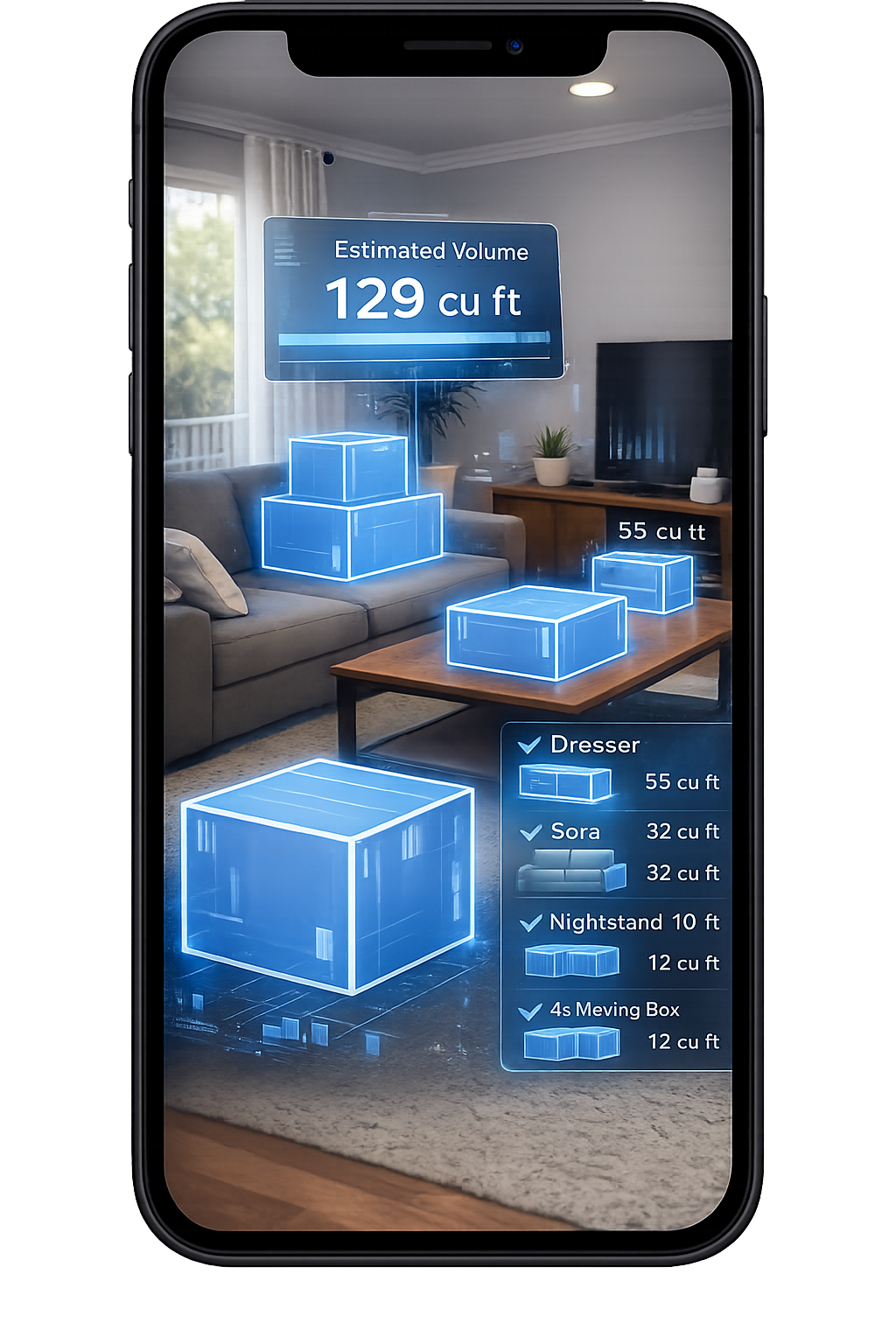
1. Scan Your Room With Your Phone
Walk around your space and scan your items in seconds.
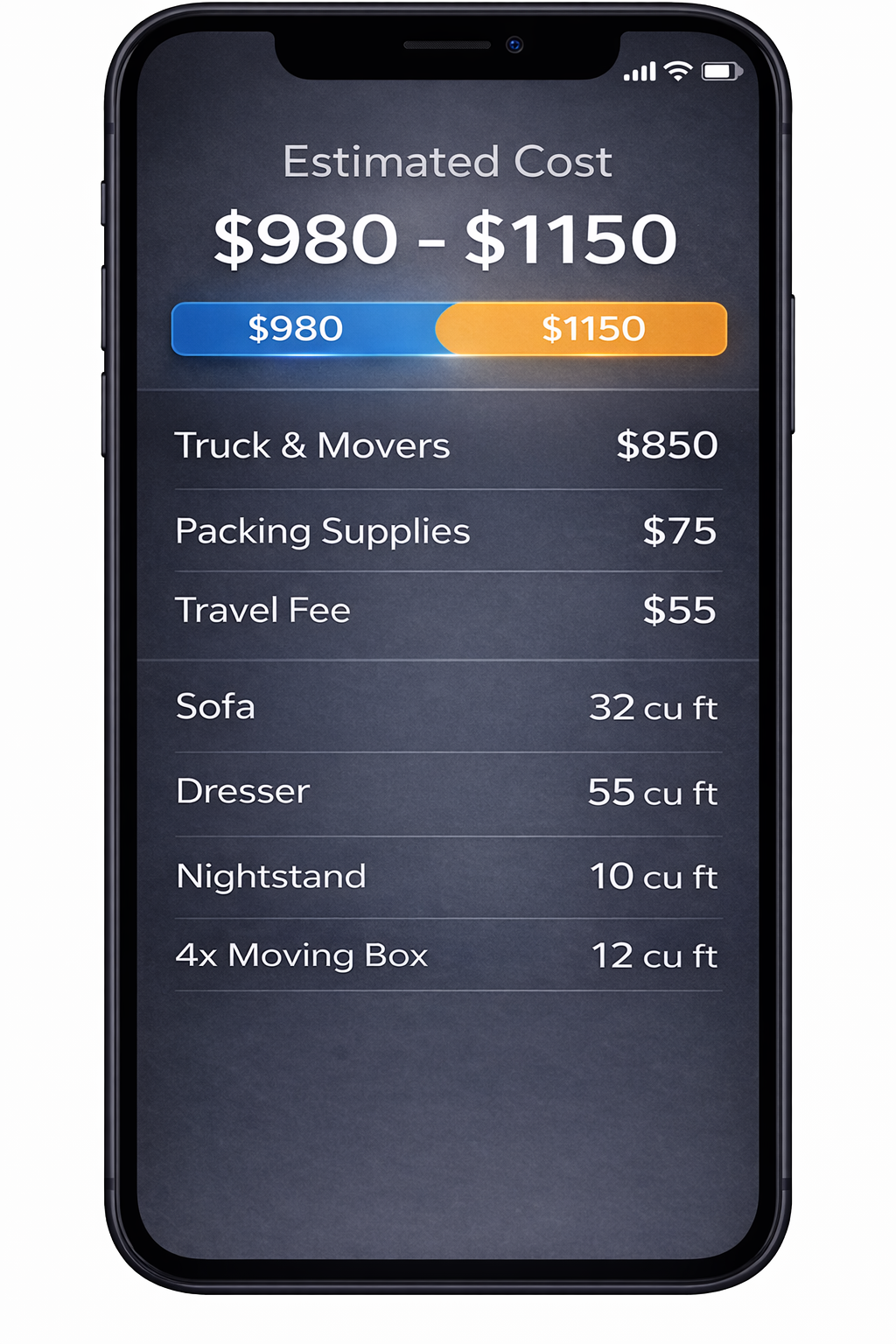
2. AI Detects Your Items
We identify your items and calculate volume for a clearer estimate.
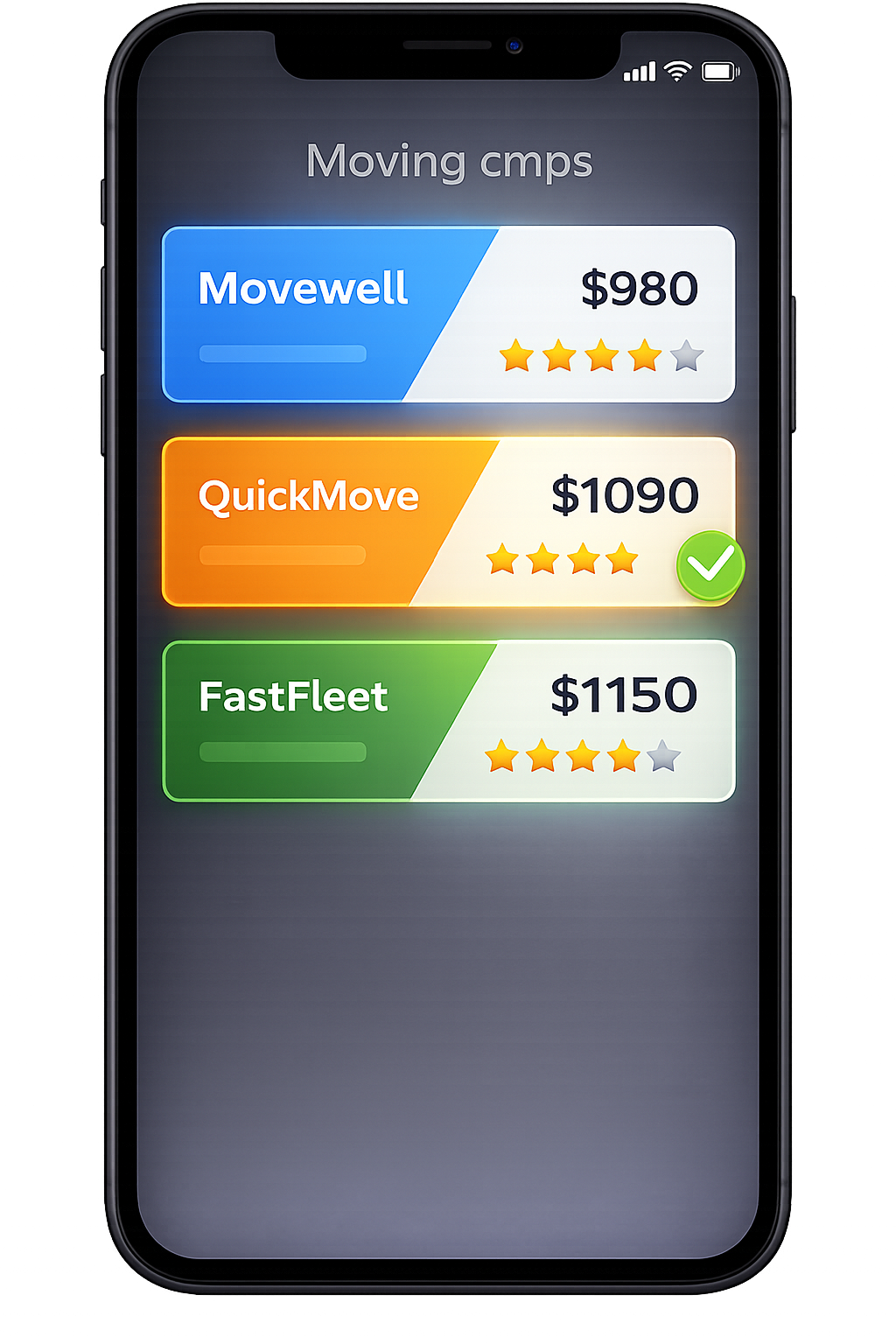
3. Compare Multiple Quotes
Compare mover quotes for Dallas, TX from the same scanned inventory.
Frequently Asked Questions
What makes this a “moving estimate” page for Dallas instead of just another quote form?
This page is designed to help you understand and build a Dallas-specific estimate before you get into quote shopping. Instead of asking you to pick a mover right away, it focuses on: Turning your home into a precise inventory with an AI scan Showing you a Dallas-aware estimate range that reflects stairs, elevators, parking, and likely drive time Explaining how that estimate differs from the formal quotes you’ll get from individual movers later Other MoveCost pages—like the instant quotes hub, the comparison hub, and the local/route calculators—plug into that same inventory when you’re ready to collect offers. This keeps your Dallas moving estimate as the consistent foundation for everything else you do on the site.
How accurate is an AI-based moving estimate for a typical Dallas home or apartment?
For most one- and two-bedroom Dallas apartments and many 3-bedroom homes, AI-based estimates are often close to real-world results—as long as the scan and access details are complete. Accuracy comes from: Scanning all rooms and storage areas (closets, patio, garage, storage units) Being honest about stairs, elevators, long walks from parking, and tight corners Updating your inventory if you sell or add major items before move day The estimate you see here is still a range, not a promise. But when you later ask movers to quote using the same inventory, they’re working from a much more complete picture than a quick phone call can provide, which typically narrows the gap between estimate and final bill.
Will my Dallas moving estimate include elevator time, stairs, and long walks?
Yes—as long as you tell the system about them. When you set up your move, you’ll be asked to note: Which floor you’re on at pickup and drop-off Whether there’s a passenger or freight elevator and if it can be reserved How far the typical walk is from your door to legal truck parking or a loading dock Any known building rules (move windows, COI requirements, loading zones) Those details are built into the time and effort assumptions behind your estimate, so you’re not surprised later when a mover says, “We need extra time for the 3rd-floor walk-up off Greenville Avenue” or “We’ve accounted for the freight elevator wait in your Uptown building.”
Do Dallas movers actually honor estimates built from an AI inventory?
Most professional movers care about having a clear, consistent inventory more than how it was created. An AI-generated inventory that accurately lists your rooms and items is often easier for them to work with than a vague description. Whether a mover “honors” an estimate depends on: How close your final inventory and access are to what was captured in the scan Whether the mover issued a binding or non-binding estimate in their own paperwork If significant changes (new furniture, added storage units, access restrictions) were communicated before move day Many movers will tell you that when the inventory and access notes match what they see on-site, they can keep to their original estimate range far more reliably than when everything was based on a quick phone call.
Can I still get an accurate Dallas moving estimate if I’m not at the home in person?
Yes. If you’re relocating to or from Dallas and can’t be at the home, you have a few options: Ask someone you trust (a friend, roommate, or agent) to run the AI scan on their phone while you’re on a video call Use recent listing photos or a builder’s plan as a reference while you build a guided inventory with a mover Combine partial scans (for example, a remote walkthrough of the main rooms) with a manual checklist for storage spaces It won’t be as strong as a full in‑person scan, but it can still produce a much more grounded estimate than guessing from memory alone.
What should I do after I’ve seen my Dallas moving estimate range?
Once you’ve reviewed your estimate, the most effective next steps are: 1. Tighten your inventory Remove items you know you’ll sell or donate; add any you forgot in the first pass (garage, attic, storage unit). 2. Decide on timing and route Confirm whether your move is local (within the Dallas-Fort Worth area) or long-distance, and outline a realistic date window. 3. Move into quotes and comparison Use tools like Instant Moving Quotes Without Phone Calls and Compare Moving Company Quotes Instantly Online to invite movers to quote based on the same inventory. If you’re staying local, you can also pull in the Local Moving Cost Calculator Near Me for Dallas‑area price context. This page is where you get the clarity and numbers you need to start those conversations with confidence instead of guesswork.