
Compare Local Movers in Chicago Neighborhoods with One AI Scan
Scan your Chicago apartment, condo, or 3‑flat with AI, see how neighborhood access, alleys, and elevators shape your moving cost, and compare local movers for routes like Wicker Park to Logan Square or Hyde Park to West Loop.

local movers in Chicago, IL
A Local Movers Hub for Chicago—From Rogers Park to Hyde Park
This page is built as a local moving hub for Chicago. It’s designed to answer one specific question: how much does it really cost to hire local movers in Chicago when you factor in your exact neighborhood and building type? MoveCost.ai is a consumer moving cost calculator and mover comparison tool that uses AI-based home scanning. For Chicago renters and owners, that means you can: • Scan your apartment, condo, or 2‑flat/3‑flat with your phone • Turn that scan into a detailed, Chicago-ready inventory • Add practical details about alleys, elevators, docks, permits, and parking zones • Share one standardized profile with multiple local movers and compare their quotes Unlike generic “cost of moving” posts, this page is focused only on local movers in Chicago and how short in‑city moves actually behave across different neighborhoods. Other MoveCost guides—for example, the Local Moving Cost Calculator Near Me, the AI Moving Cost Calculator Online Free, and the Moving Cost Calculator Including Stairs and Elevator—link back here when they need a Chicago-specific example. From this hub you can: • See neighborhood-by-neighborhood move scenarios (e.g., Wicker Park to Logan Square, Lakeview to Lincoln Park, Hyde Park to South Loop) • Understand why a 2‑mile move in Chicago can still take half a day • Jump into route-agnostic tools when you want to test price ranges beyond the city If you want a page that’s about local movers in Chicago—and not just generic moving advice—this is the one the rest of MoveCost.ai points to.
Local Chicago Movers Matched to How Your Building Actually Works
Moving a few blocks in Chicago can be as complex as moving across the state—especially when you’re dealing with classic walk‑ups in Wicker Park, freight elevators in the South Loop, alleys in Lakeview, or tight loading docks in River North. MoveCost.ai is built around those Chicago realities. The platform helps you share exactly what local movers care about, without doing a full inventory by hand or repeating yourself on the phone. When you use the scan, you’re giving movers a clear picture of jobs like: • “Freight elevator on Wabash in the South Loop, must be booked with the doorman.” • “Third‑floor walk‑up near Armitage in Lincoln Park, alley access only.” • “High‑rise in Streeterville with a tight loading dock off lower Columbus.” • “Classic 3‑flat in Logan Square with front stairs and a narrow back staircase to the gangway.” Instead of vague phone quotes, the AI tool produces a room‑by‑room inventory—your sofa, beds, dining table, desks, shelves, bikes, and boxes—and attaches building notes to it. Chicago movers who see that profile can: • Estimate realistic hours based on similar local jobs • Decide whether to send 2, 3, or 4 movers • Plan for stairs, elevators, alley access, and long walks You then compare hourly rates, minimums, travel time rules, and any expected add‑ons for your exact route before you pick a crew.
How Local Moves Feel Different by Chicago Neighborhood
A “local move in Chicago” could mean two blocks or twelve miles—but the feel of the job changes dramatically by neighborhood. Here are neighborhood‑specific examples that local movers on MoveCost see often: • Lakeview → Lincoln Park Short distance, but side streets off Clark, Broadway, and Diversey can be narrow and busy. Trucks may need to use alleys lined with garages or work around permit parking. Expect more time spent walking between truck and stairwell or elevator. • Wicker Park → Logan Square Classic 2‑ and 3‑flats with narrow staircases and back porches. Crews might suggest an extra mover to keep things moving if you’re on the 3rd floor and the only access is a tight stairwell off Milwaukee or Western. • South Loop → West Loop Many buildings here are mid‑ to high‑rise with freight elevators and loading docks. Elevators must often be reserved with the front desk, and loading is via alleys off streets like Wabash, State, or Clinton. Even though the distance is short, shared elevators and dock traffic can slow a 1‑bedroom move to several hours. • Hyde Park → Bronzeville or South Loop Mix of older buildings near the University of Chicago and busier main streets like 53rd, 55th, Cottage Grove, and King Drive. Movers pay attention to one‑way grids, school zones, and bus routes that affect legal parking and how far they’ll need to carry items. • Rogers Park → Uptown or Edgewater Courtyard buildings, basement storage, and limited street parking near Sheridan or Broadway are common. Crews expect longer internal walks and sometimes multiple short elevator trips. • Avondale → West Town / Ukrainian Village Many 2‑ and 3‑flats with alleys off streets like Belmont, Diversey, or California. Movers factor in alley clearance, garage overhangs, and where they can legally stage a truck without blocking cross streets. When you enter your addresses on MoveCost.ai, those routes—Lake Shore Drive, the Kennedy (I‑90/94), the Dan Ryan, or surface streets—are baked into your request. Combined with your AI inventory and building notes, Chicago local movers can give more precise time ranges instead of generic “2–3 hour” expectations.
Chicago Local Moving Costs: Hourly Rates, Access, and Traffic
Most local movers in Chicago quote by the hour, but your total bill is really hours × how hard your move is to execute. On MoveCost.ai, Chicago movers that participate can spell out: • Hourly rate and which crew size that includes (for example, 2 vs. 3 movers) • Minimum hours and how partial hours are billed • Travel time rules—whether the clock starts at the shop, at your door, or door‑to‑door • Common add‑ons for stairs, freight elevators, long walks, and extra stops Your AI inventory scan helps movers anchor their estimates to real Chicago scenarios, like: • A 1‑bedroom from a South Loop high‑rise with a reserved freight elevator to a River North mid‑rise with loading dock access • A 2‑bedroom 3rd‑floor walk‑up in Avondale going into a 2‑flat in Logan Square, all via alleys and narrow gangways • A condo move from West Loop into a Loop‑adjacent building with a single morning dock window and downtown traffic Movers consider: • How long they’ll likely wait for elevators in busy buildings along the lakefront or downtown • How much time they’ll spend circling for parking in Lincoln Park, Wicker Park, or Lakeview • Whether they’ll be loading from alleys off streets like Ashland, Western, or Kedzie If you want to stress‑test costs before you even contact crews, you can pair this Chicago page with the broader Local Moving Cost Calculator Near Me and the AI Moving Cost Calculator Online Free. Those tools let you see typical local move price ranges based on volume and distance; this Chicago page shows you how those concepts play out block by block in the city.
Elevators, Alleys, and Parking: The Chicago Moving Logistics That Change Your Day
The hardest part of a Chicago local move usually isn’t the miles between addresses; it’s the dance between your building, your alley, and your block. During or after your scan, you can flag details like: • Elevators: freight‑only elevator in a South Loop tower; mixed passenger/freight use in River North; older passenger elevators in Uptown • Stairs: 2–3 flights in a Rogers Park walk‑up; back stairs off a deck in Bucktown; narrow front stairs in a Lincoln Park greystone • Alleys: whether a truck can fit behind your 2‑flat in Avondale or Irving Park, and if overhead lines or low garages might limit where it can park • Street parking: arterial streets like Milwaukee, Western, Damen, or Halsted vs. one‑way side streets with residential permit parking • Loading zones and docks: common downtown and around Fulton Market, the Loop, Streeterville, and West Loop Parking rules and block layout can affect whether movers: • Need temporary “No Parking” signs from the City of Chicago • Have to avoid bus stops, bike lanes, and loading zones during certain hours • Must park in alleys or on cross streets and walk everything farther If you’re trying to understand how stairs and elevators change cost—not just in Chicago but anywhere—you can dive deeper with the Moving Cost Calculator Including Stairs and Elevator. You’ll see how access details get translated into time and how that time shows up on your estimate, using the same AI inventory you build for this page.
What Winter, Rain, and Festivals Mean for Local Moves in Chicago
Chicago weather and events aren’t small talk—they’re part of your moving plan. Winter moves (snow and ice): • Slower walks between truck and building when sidewalks, gangways, and alleys are slick • More floor protection in common areas to avoid tracking in slush and salt • Tighter street parking if curb space is taken up by plowed snow • Occasional delays if wind or cold cause elevator or entrance issues in older buildings Spring and fall rain: • Extra wrapping and padding for furniture and boxes when loading from open alleys • Preference for loading docks or covered entrances where possible • More careful staging to keep floors dry in high‑rise lobbies and hallways Summer heat and festivals: • Slower pace for crews on long stair jobs in 3‑flats and walk‑ups • Heavy traffic near lakefront events, street festivals, and Wrigley Field on game days • More demand for early‑morning start times to beat both heat and traffic In MoveCost, you can: • Note your time of year and any flexibility around dates • Flag if your move will happen near a major event (for example, Lollapalooza, Pride, Taste of Chicago, or a Cubs game) Chicago movers that know your route—from Hyde Park to South Loop, from Uptown to West Loop, from Pilsen to Logan Square—can then give estimates that account for season and event traffic, not just distance.
Short-Hop Neighborhood Moves vs Cross-City Chicago Routes
Not all “local” Chicago moves look the same on an estimate. MoveCost helps you see the difference between: • Short-hop neighborhood moves Examples: Wicker Park → Ukrainian Village, Pilsen → Bridgeport, Andersonville → Uptown • Lower mileage, but often heavy on stairs, courtyards, and gangways • Often a good fit for 2–3 movers who specialize in quick apartment moves • Cross-city moves that stay within Chicago Examples: Jefferson Park → Hyde Park, Rogers Park → West Loop, Beverly → Logan Square • More driving time, plus different building types on each end • May warrant a larger crew or longer window if one end is a walk‑up and the other is a high‑rise with a tight freight‑elevator slot • City-to-suburb moves that start like a city job Examples: South Loop → Oak Park, Lincoln Park → Evanston, Loop → Skokie or Berwyn • The complex part is often getting out of the city building with its rules and access constraints • Once loaded, the drive leg can feel more like a suburban move On MoveCost.ai, you enter both addresses and then see quotes from movers that do the kind of local work you need: • Some lean into fast, short-hop apartment jobs close to downtown • Others handle cross-city and city-to-suburb routes that cover more miles and mix building types If you’re also considering moves beyond city limits or out of Illinois, you can use the Moving Cost Calculator by State and City to understand how your local Chicago move compares with potential longer routes. The same AI inventory can be reused so you’re not starting over each time.
Let AI Scan Your Chicago Home So Movers See the Real Job
Typing out a full moving inventory from memory is hard—especially in a Chicago place where balconies, storage lockers, and basements can hide a lot of items. Instead, you can: 1. Open the AI scan on your phone 2. Walk through your rooms slowly, including hallways, closets, and storage spaces 3. Scan outdoor spaces that matter for the move, like decks, porches, patios, and garages The AI highlights: • Large sofas and sectionals that might be tight in Logan Square or Lakeview stairwells • Beds, dressers, and desks that must fit in elevators in South Loop, Streeterville, or River North • Bikes, grills, and patio sets stored on porches or balconies • Stacks of boxes in basements or storage units in Rogers Park, Hyde Park, or Albany Park After the scan, you quickly: • Mark items you’re not taking (hand‑me‑down furniture, duplicated items, or pieces you plan to sell) • Flag anything heavy, very fragile, or unusually large • Attach short notes like “storage locker in the basement of my building” or “some boxes in garage off the alley” If you’d like to see this scanning experience in a more general, non‑Chicago context first, the AI Moving Cost Calculator Online Free page walks through the same flow for different home types—studios, 1‑bedrooms, 3‑bedroom houses—and shows how that inventory can be reused across other MoveCost tools.
How to Read and Compare Local Chicago Mover Quotes from One Inventory
Once your AI scan and Chicago building details are in place, movers reply with estimates based on identical information. That makes it possible to compare quotes at a glance. On your quote comparison screen, you’ll typically see for each Chicago mover: • Hourly rate and included crew size (for example, 2 movers vs. 3 movers) • Minimum hours and what happens if the job runs short or long • Travel time or truck fee—how they bill from shop to your address and back • Access assumptions—how many stair flights, whether freight elevators are reserved, approximate carry distances • What’s included—basic pads and shrink wrap, disassembly/reassembly of beds, wardrobe boxes, floor protection To use this page as a Chicago‑specific quote guide, look at how each mover describes: • Time budgeted for freight elevator waits in high‑rises • Handling of alleys, long walks, or tough parking on your blocks • Charges (if any) for stairs beyond a certain floor Because every company is quoting from the same AI inventory, a significantly lower price is easy to spot when it’s missing a service you need (like handling an extra stop, disassembling a large bed, or carrying items up three flights). If this is your first time reading a moving estimate, you can also open the Moving Estimate Guide for First-Time Movers. It explains common estimate formats and fees in plain language, and shows how to use your MoveCost inventory as a reference point when you read Chicago mover proposals.
How It Works
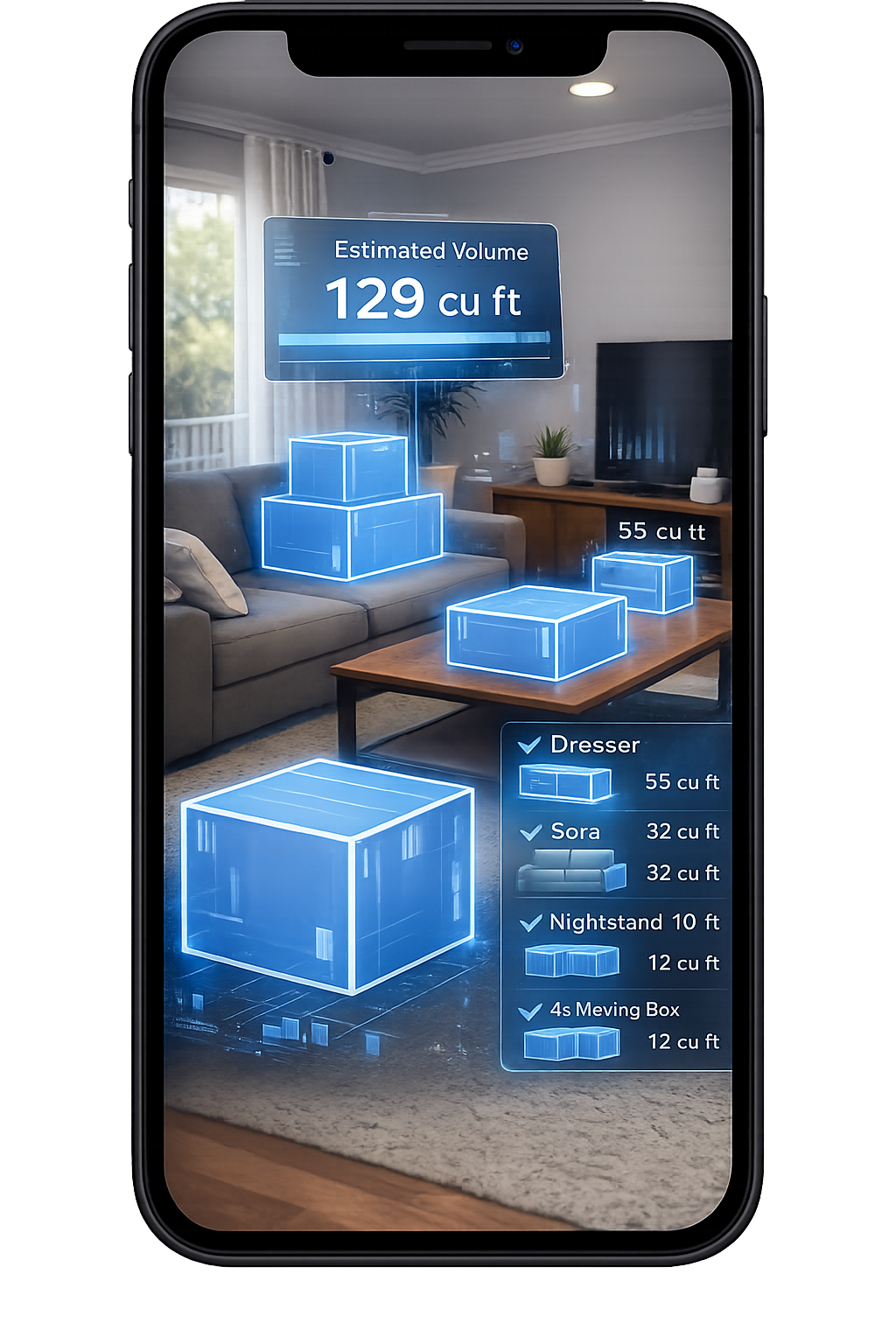
1. Scan Your Room With Your Phone
Walk around your space and scan your items in seconds.
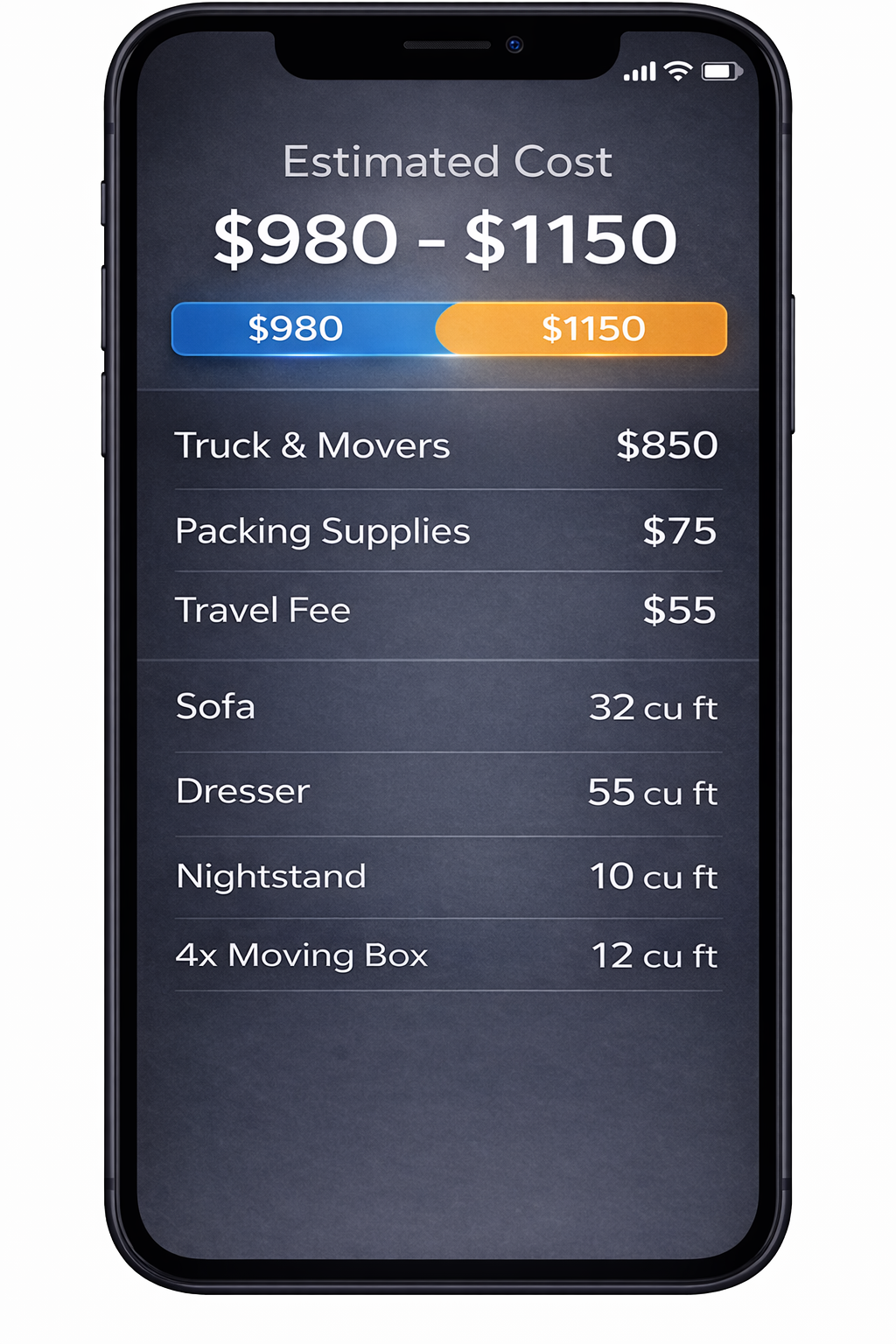
2. AI Detects Your Items
We identify your items and calculate volume for a clearer estimate.
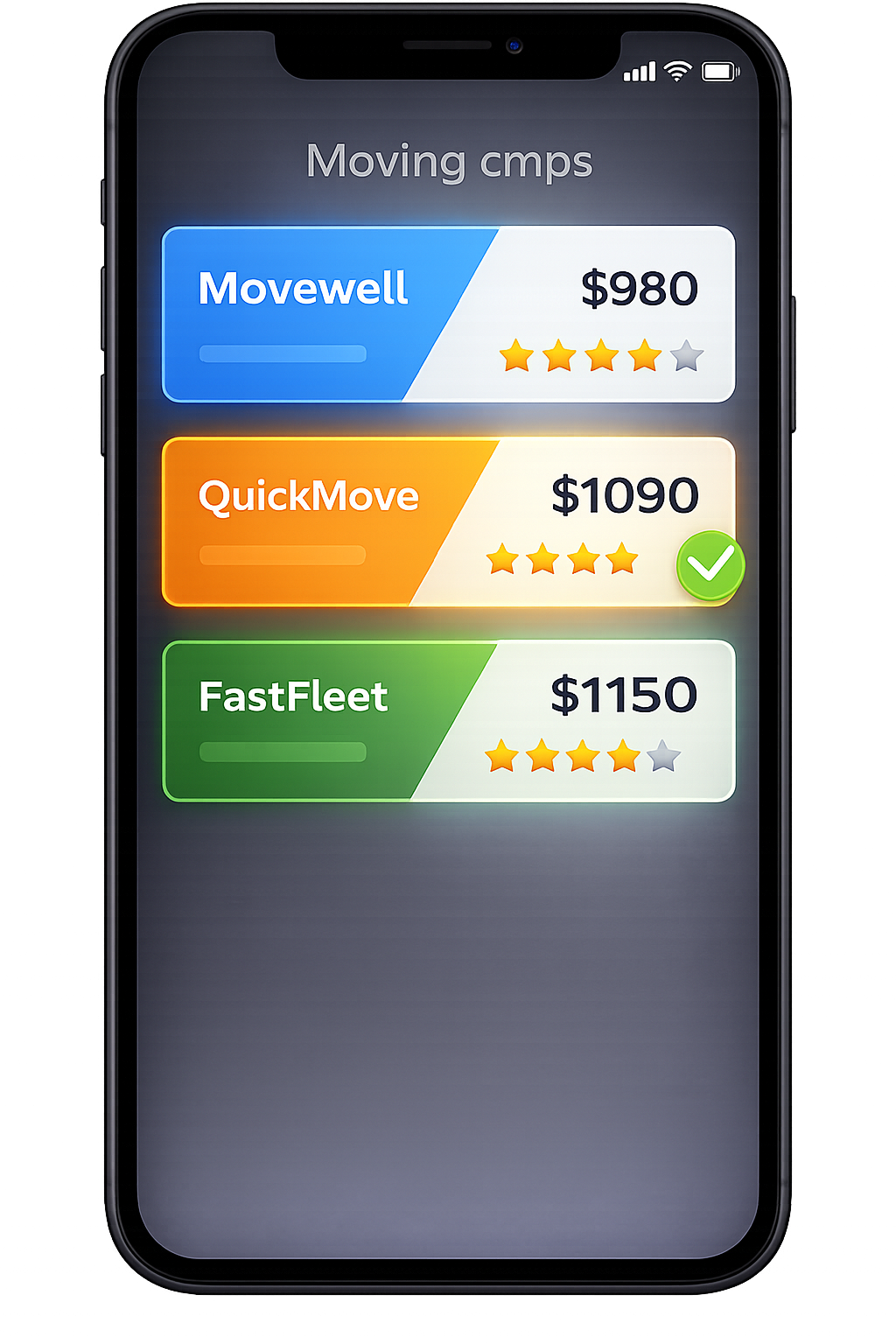
3. Compare Multiple Quotes
Compare mover quotes for Chicago, IL from the same scanned inventory.
Frequently Asked Questions
How far in advance should I book local movers for an apartment move in Chicago?
For many apartment or condo moves within Chicago, booking 2–3 weeks in advance is often enough, but demand spikes around certain times: Last weekend of the month Summer weekends College move‑in and move‑out periods (UIC, DePaul, Loyola, University of Chicago, Northwestern nearby) If your building requires an elevator or loading dock reservation, secure that time window first and then match movers to it. In MoveCost.ai, you can enter your preferred date and any fixed elevator window so Chicago movers only quote times that realistically fit your building’s rules.
Do I or the movers handle parking permits and temporary ‘No Parking’ signs in Chicago?
In Chicago, responsibility for parking logistics is typically split: You or your building: often handle requesting temporary “No Parking” signs or permits from the city, especially on dense blocks or permit‑only streets. Movers: usually advise where they can safely park the truck and how far they’re willing to walk from that spot. On MoveCost.ai, movers can indicate whether they expect you to arrange city signs, whether they provide guidance on where to place them, and how they handle situations where parking ends up farther away than planned. Including a note about permit parking, bus stops, or loading zones on your block helps avoid last‑minute surprises on moving day.
How does alley access in Chicago affect my local moving quote?
Alley access is a big factor in many Chicago neighborhoods—Lakeview, Logan Square, Avondale, Bucktown, Ukrainian Village, and others. If a full‑size truck can: Pull into the alley and park close to your back gate or garage, movers may finish faster and require fewer long carries. Only stage partway down the alley, or if there are overhead lines, tight turns, or low garages, crews may need more time to navigate and carry items farther. When you create your move on MoveCost.ai, you can specify whether a large truck can get all the way to your building via the alley, whether there are tight turns, and whether street parking will be the backup. Local movers that know those alleys can then price and plan more realistically.
What should I know about moving in Chicago during winter?
Winter moves in Chicago can go smoothly, but they’re affected by snow, ice, and cold: Crews may work a bit more slowly on outside stairs and gangways for safety More floor and door protection may be needed in hallways and lobbies Street parking can be limited due to snow piles or unofficial ‘dibs’ markers On MoveCost.ai, you can indicate that your move is planned for winter and add notes about where snow tends to pile up on your block. Chicago movers then estimate hours with typical winter conditions in mind and may suggest extra prep, like clearing stairs and walkways before they arrive.
My building requires a certificate of insurance (COI). Can movers on MoveCost provide that?
Many high‑rises and newer condo buildings in neighborhoods like South Loop, West Loop, Streeterville, River North, and the Loop require a Certificate of Insurance (COI) from your moving company before they allow use of freight elevators or loading docks. Most professional Chicago movers can provide a COI that meets typical building requirements. In MoveCost.ai, movers can note whether they routinely supply COIs and how much advance notice they need. It helps to: 1. Ask your building for their COI sample or written requirements (coverage amounts, wording, listing the association/management). 2. Upload or summarize those requirements in your MoveCost profile. 3. Confirm with the mover you choose that they can meet those requirements before you finalize your date.
Is MoveCost.ai a moving company or a way to compare local movers in Chicago?
MoveCost.ai is not a moving company. It’s a consumer tool that uses AI-based home scanning to build a moving inventory and then lets you compare estimates from local movers who operate in Chicago. You: Scan your home once Share your inventory and building details with movers View and compare their quotes online You still choose and hire the Chicago moving company you prefer. MoveCost’s role is to make the estimating and comparison process faster, clearer, and more aligned with how Chicago buildings and neighborhoods actually work.
Can I use the same Chicago inventory for a local move now and a longer move later?
Yes. The AI inventory you create for a local move—say, Hyde Park → South Loop or Andersonville → Uptown—can be reused if you later plan a longer move out of Chicago or Illinois. Many people: Scan their place before a local move Declutter and adjust the inventory Then reuse that updated list with tools like the Moving Cost Calculator by State and City or the State to State Moving Cost Calculator Online when they plan a move to another city or state. If your belongings change significantly (for example, you sell or buy large furniture), running a quick follow‑up scan keeps your inventory accurate for both local and future moves.
How detailed does my Chicago inventory need to be for an accurate local moving estimate?
The more your inventory reflects what movers will actually carry through Chicago alleys, elevators, and stairwells, the closer your estimates will be to your final bill. The AI scan does most of the work by identifying: Big items in each room (beds, sofas, tables, dressers, desks) Approximate volume of boxes and smaller items You make it more accurate by: Tagging unusual or heavy pieces (pianos, safes, heavy dining tables) Calling out separate storage spaces, like storage locker cages or shared basements Indicating what’s not moving (furniture staying with roommates, items being sold or donated) Movers then translate that cleaned‑up inventory into hours and crew size for specific Chicago routes, instead of relying on generic “1‑bedroom” assumptions.
What’s the difference between using this Chicago page and MoveCost’s generic local moving calculators?
This Chicago page exists to answer questions that generic tools can’t fully capture: How Chicago neighborhoods change local move timing How alleys, permit parking, and ‘L’‑adjacent streets affect where trucks can park How freight‑elevator and dock rules in Chicago high‑rises change estimates The national tools—like Local Moving Cost Calculator Near Me, AI Moving Cost Calculator Online Free, and Moving Cost Calculator Including Stairs and Elevator—focus on the math behind distance, volume, and access. This page plugs those ideas into Chicago‑specific examples and constraints. In practice, many people will: 1. Scan their home from this Chicago page. 2. Review quotes and examples here. 3. Then click into national calculators to see how a similar move would look in another city or for a longer route.