
Get a Precise Moving Estimate in Atlanta, GA Built From Your Real Inventory
Scan your Atlanta home with AI, factor in hills, parking, stairs, elevators, and HOA rules, then compare real moving quotes from professional movers in minutes.

moving estimate in Atlanta, GA
Why Atlanta Moving Estimates Are Often Off – And How to Fix It
When people search for a “moving estimate Atlanta” they often land on the same generic advice: count your rooms, get a rough hourly rate, and hope the final bill is close. In a city like Atlanta, that approach regularly breaks down. Most local movers around Atlanta quote based on a mix of volume (how much space your stuff takes in the truck), weight, and logistics: stairs vs. elevator, the distance from your door to where the truck can park, and how long they expect the job to take in Atlanta traffic. A third‑floor walk‑up off Ponce is priced very differently from an elevator building in Midtown with a loading dock and easy truck access. There’s also the complexity of the metro area. A move from a Virginia‑Highland apartment to Grant Park might look “short” in miles but can involve tight streets, limited parking, and multiple staircases. A move from a house in Smyrna or Decatur into a high‑rise near the BeltLine introduces freight elevator reservations and HOA rules that change how crews plan their day. MoveCost is built around a different approach to a moving estimate in Atlanta. Instead of starting with, “Is it a one‑bedroom or a two‑bedroom?” you start with what you’re actually moving. Our tool helps you create a clear, item‑by‑item inventory so movers can see the sectional sofa, the heavy dresser, the Peloton, the boxes of books, and everything in between. That level of detail matters even more if you’re planning a longer move, like from Atlanta to Charlotte, Tampa, or up to DC. Long‑distance pricing is especially sensitive to weight and space. When your inventory is right, you’re much less likely to see surprise charges once the truck is loaded. Instead of calling multiple movers and repeating the same answers, you build your inventory once, share it through MoveCost, and compare estimate ranges side by side. That’s how you get closer to what you’ll actually pay on moving day in Atlanta, whether you’re crossing town or leaving Georgia entirely.
Use an AI Home Scan to Build a Real Atlanta Moving Inventory
Trying to remember every single thing in your apartment or house before a move is harder than it sounds. You’ll remember the bed, but forget the nightstands. You’ll count the big boxes and overlook the random closet full of shoes and holiday decorations. That’s where the AI inventory scan comes in for your Atlanta move. Instead of filling out a long form, you walk through your place with your phone. Start at the front door and move room by room – living room, bedrooms, kitchen, balcony storage, even that storage cage in the parking garage under your Midtown or Buckhead building. The AI analyzes the video or photos, identifies furniture and common household items, and helps build a detailed list automatically. Live in a high‑rise downtown with tight hallways and a small freight elevator? The scan helps flag oversized items that might need special handling. Got a townhouse in West Midtown with narrow stairs and a big sectional that’s barely making the turn? Those details can be noted in your inventory so movers know what they’re walking into. If your complex off Peachtree Industrial has limited parking, you can add notes about where trucks can reasonably park or if there’s a loading area. The AI doesn’t just count couches. It estimates the volume of your shipment, which is a major driver of your moving estimate in the Atlanta area. That helps movers understand whether this is a partial truckload or will likely fill an entire truck, especially for longer hauls out of Georgia. You stay in control the entire time. After the scan, you can edit the list, add items the AI might not recognize (like a custom aquarium or studio equipment), and remove anything you’re planning to sell or donate. The end result is a realistic inventory that reflects how you actually live today – not how you think you live when you’re rushing through a phone call on your lunch break.
How Our AI Estimates Factor in Atlanta Hills, Parking, and Older Homes
An Atlanta moving estimate shouldn’t look the same as a quote for a flat suburb with wide driveways. The city’s terrain, housing stock, and parking rules all affect how long your move will take and how movers plan their crews. Here’s how those details get captured inside MoveCost when you’re building a moving estimate for Atlanta: • Atlanta hills and driveways: Many homes in neighborhoods like Grant Park, Cabbagetown, and parts of Decatur sit on slopes or have steep driveways. When you scan your home and add notes, you can flag steep walks, long uphill or downhill paths, or stairs leading from the driveway to the front door. Movers use that information to estimate how long carrying furniture will actually take. • Tight parking and loading in the city: Around Midtown, Old Fourth Ward, Downtown, and areas near the BeltLine, trucks often can’t pull right up to the door. In the app, you can describe the street parking situation, loading zones, or garage access – for example, “truck parks on John Portman Blvd, 150‑foot walk to lobby” or “loading dock at back of building, freight elevator reserved 9 a.m.–1 p.m.” Those notes give movers a realistic view of what a local Atlanta move will involve. • Older homes with stairs and narrow hallways: Many Atlanta neighborhoods have older homes with quirky layouts – tight turns, narrow back staircases, or small front porches. During your scan, you can pause to show tricky access points and add a quick note, such as “narrow staircase to second floor” or “basement stairs with low ceiling.” That context helps movers price for the right crew size and time. • Condo, co‑op, and HOA rules: If you’re in a building with an HOA or management company, you can add rules that affect your estimate: required move times, elevator reservations, move‑in fees, or insurance requirements. While those rules don’t change how much your stuff weighs, they do influence how many hours the crew will need. Instead of leaving these Atlanta‑specific issues to chance, MoveCost helps you bake them into the estimate request. Your AI‑backed inventory covers what you’re moving; your local notes explain where and how movers will handle it inside the city. The more accurately you describe these Atlanta details, the more realistic your moving estimate will be.
Virtual Atlanta Moving Estimates vs. In‑Person Walkthroughs
On‑site walkthroughs can be tough to schedule in this city. Between I‑285 delays, storms rolling in off the Chattahoochee, and limited guest parking at many apartment complexes, getting a moving estimator to your door isn’t always practical. That’s why virtual estimates have become common, especially around busy move seasons like July and August. With MoveCost, you can do most of the estimating work virtually. After your AI inventory scan, movers can review your items and, if needed, schedule a short video call to confirm details: how far the walk is from your front door to where the truck can park, whether there’s a working elevator or a third‑floor walk‑up off North Highland, and whether you have to reserve a loading dock, like many buildings near Atlantic Station or in Midtown. Virtual estimates are especially useful if you’re arriving from out of state. Maybe you’re moving into a new‑build townhome in Westside or a condo near the BeltLine that you’ve only seen once. You can send a quick video your agent recorded, or take a walkthrough yourself before move‑in, so movers can understand the layout and access before the truck arrives. If you’re planning a long‑distance move out of Atlanta, virtual estimates help coordinators gauge not just your inventory, but also the timing. They’ll factor in rush‑hour traffic on the Downtown Connector, how long it usually takes to load at your type of building, and typical elevator wait times. That’s how they decide how many movers to send and how many hours to book. Because everything is documented – your inventory, your videos, your notes – you have something to point back to if questions come up later. It’s clearer for you and for the crews who’ll actually be carrying your furniture through the heat, humidity, or occasional winter drizzle.
Compare Atlanta Moving Quotes Side by Side With One Inventory
Once your inventory is ready, you can request estimates from multiple moving companies that regularly work in and out of Atlanta. Instead of chasing down separate quotes and trying to remember what you told each company, you share the same detailed inventory with all of them. You’ll see your options laid out clearly. Some movers might offer a flat‑rate price for a local move within the metro, especially if you’re going from one in‑town neighborhood to another. Others might quote hourly, which can make sense for shorter moves, like from a Virginia‑Highland apartment to a condo near Inman Park, where the travel time is short but the building access can be tricky. For long‑distance moves – say you’re heading to Nashville, Orlando, or up the East Coast – you’ll often see weight‑ or volume‑based estimates. Because those estimates are based on your AI‑backed inventory, they’re typically closer to what you’ll actually pay compared to a quick guess over the phone. You can also think about the underlying “moving company cost Atlanta” question: what actually drives each quote higher or lower? When you compare offers side by side, you can see how different movers treat stairs, elevator time, long walks from the truck, or a required second stop at a storage unit in Sandy Springs, Smyrna, or Duluth. Each quote usually shows more than a single number. You’ll see what’s included (such as basic furniture protection, disassembly of standard beds, or loading and unloading at both addresses), what’s optional, and any potential extra fees that might apply if there are surprises like a broken elevator on move day. The goal is transparency. When you compare quotes side by side, you can see which estimates seem realistic for your situation and which seem too low to account for your real Atlanta logistics. That helps you focus on movers who are prepared to handle your actual inventory and the on‑the‑ground details of moving around the metro area.
Plan Your Atlanta Move Around Traffic, Buildings, and Weather
An accurate moving estimate is only part of the puzzle. In Atlanta, timing and logistics can make the difference between an easy move and a long, expensive day. When you build your moving estimate with MoveCost, you can note the basics – addresses, floors, and parking – but you can also think through timing: • Traffic windows: A 9 a.m. start from a condo downtown on a weekday is different from a 9 a.m. start from a house in Johns Creek. Using your estimate, you can plan around typical rush‑hour patterns on the Downtown Connector, GA‑400, I‑75, and I‑85. • Building rules and elevator reservations: Many Atlanta high‑rises near the BeltLine, Midtown, Buckhead, and Downtown require weekday daytime moves and advance freight elevator reservations. Knowing your estimated move duration helps you request a realistic elevator block instead of guessing. • Weather flexibility: Summers bring heat and humidity, and spring storms can delay loading and unloading. A clear estimate helps you decide whether you want extra buffer time in the schedule or a backup day for complex moves. For people comparing “local movers Atlanta” options, this planning process is also where you can ask movers how they handle tight schedules, elevator rules, or potential delays. With a documented inventory, they can give more specific answers about crew size and recommended start times. Because your estimate is tied to a detailed inventory, it’s easy to adjust if your plans change. If you decide to add a stop at a storage unit, or you realize you’re bringing your washer and dryer after all, you can update the list and request refreshed quotes. That way, you’re not walking into moving day hoping the estimate was close – you’re walking in with a realistic, well‑documented plan tailored to Atlanta.
How It Works

1. Scan Your Room With Your Phone
Walk around your space and scan your items in seconds.
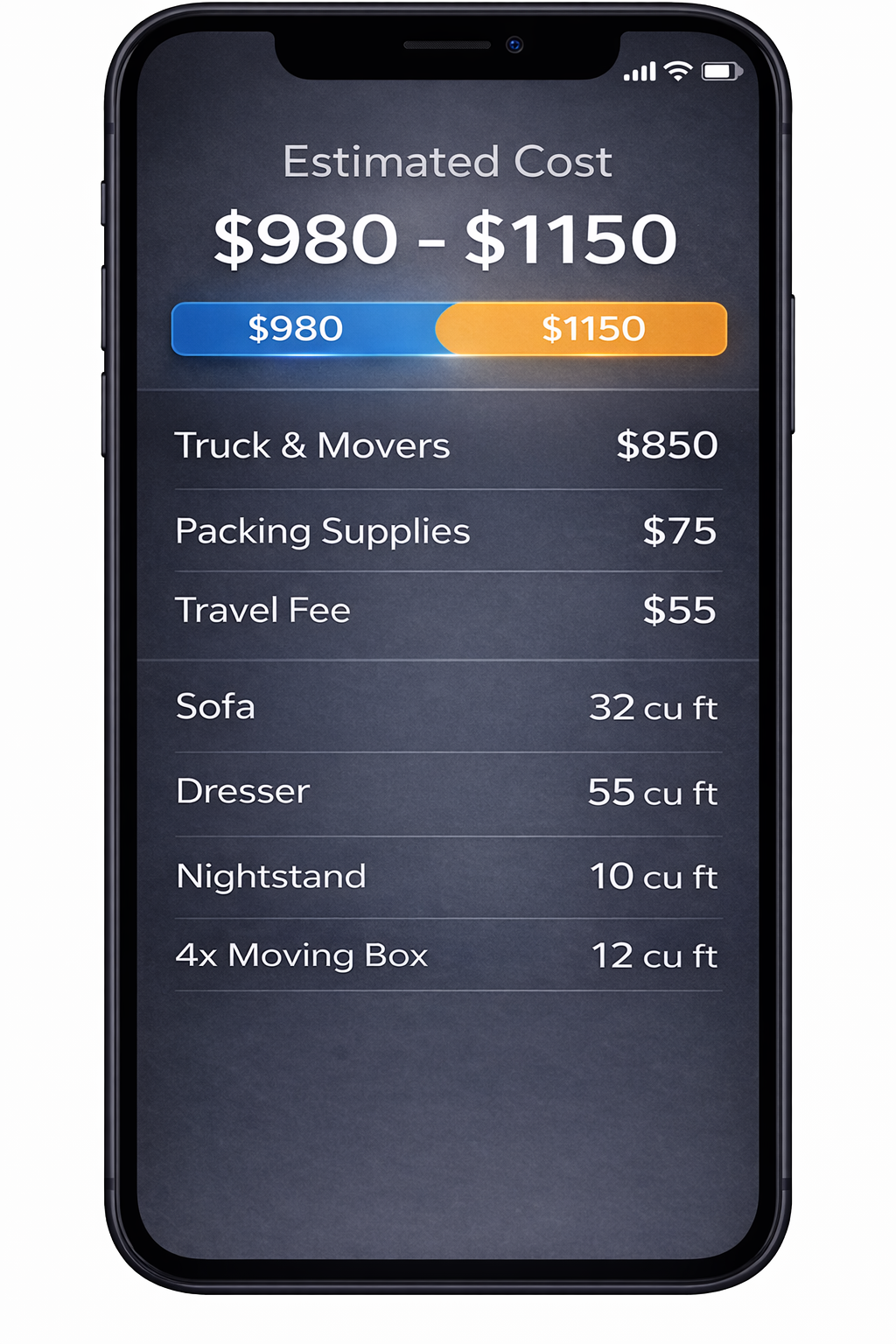
2. AI Detects Your Items
We identify your items and calculate volume for a clearer estimate.
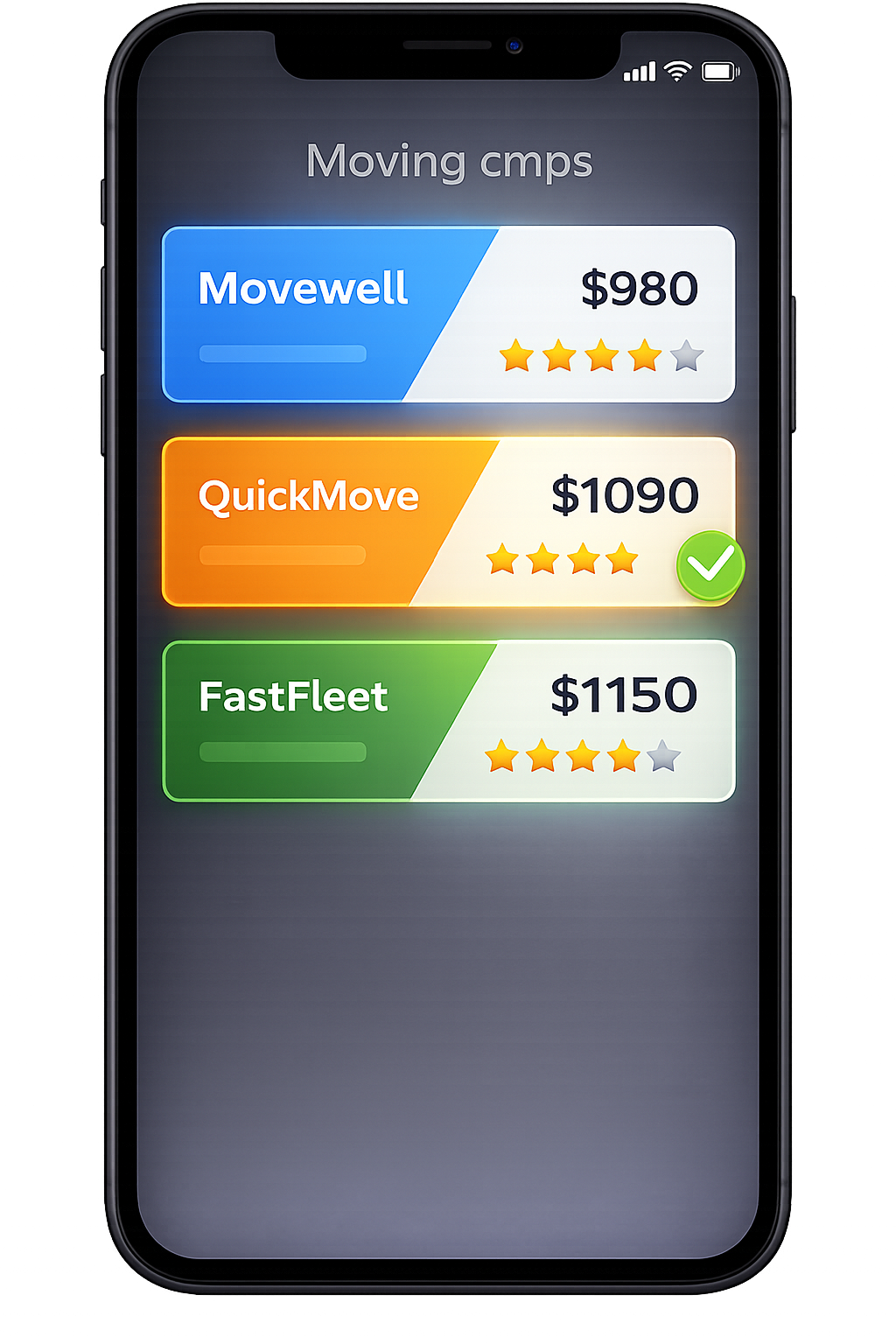
3. Compare Multiple Quotes
Compare mover quotes for Atlanta, GA from the same scanned inventory.
Frequently Asked Questions
How does MoveCost build a moving estimate specifically for Atlanta, GA?
MoveCost builds an Atlanta moving estimate from two layers of information: your AI‑generated inventory and your local logistics details. First, you scan your home so the system can estimate volume based on your actual furniture and boxes instead of just a bedroom count. Then you add Atlanta‑specific context like hills or steep driveways, freight elevator rules in your building, how far the truck will be from your door, and likely traffic or parking constraints. Movers use both the inventory and these local notes to estimate crew size and time, which is what ultimately shapes your Atlanta moving estimate.
Is an AI moving estimate accurate for older Atlanta homes with stairs and tight spaces?
AI is strong at capturing what you own and approximating how much space it will take in a truck. For older Atlanta homes, you improve accuracy by pairing the AI inventory with clear notes and short video clips of your access points. For example, you can show narrow staircases in Grant Park, steep front steps in East Atlanta, or a tight back alley driveway in Cabbagetown. Movers then combine your inventory with those access details when they build your estimate. The result is usually more realistic than a quick phone estimate that doesn’t account for your home’s layout.
Do I still need an in‑home visit if I use your AI inventory scan in Atlanta?
For many Atlanta apartments, condos, and small to mid‑sized homes, you may not need an in‑home visit. An AI scan plus a short virtual walkthrough is often enough for movers to develop a reliable estimate. In‑person visits may still be helpful for very large homes, unusual items (such as heavy safes, large pianos, or workshop equipment), or complex multi‑stop moves that include storage units around the metro. You can start with the AI scan, then decide with the mover if an on‑site visit adds enough value to be worth scheduling around Atlanta traffic and parking.
When should I request a moving estimate for an Atlanta move?
For local moves within metro Atlanta, requesting estimates 3–6 weeks in advance works well, especially if you’re moving at the end of the month or during the summer. That gives you time to complete your AI home scan, compare quotes, and book elevator or loading dock slots in high‑rise buildings. For long‑distance moves out of Atlanta, starting 6–8 weeks ahead is safer because truck schedules and route planning are more complex. If your dates are flexible, you can also ask movers whether shifting a day or two could change the estimate, since some days have lighter traffic or fewer building restrictions.
Can I use the same Atlanta inventory to estimate both local and long‑distance moves?
Yes. The inventory you build in MoveCost is reusable. The same list of items and access notes can be shared with local Atlanta movers and long‑distance carriers. For local moves, the estimate will lean more on time and crew size in relation to Atlanta traffic and building rules. For long‑distance moves, weight and volume become more important. If you change your plan – for example, you decide to keep your local move and later ship a smaller load out of state – you can duplicate and edit your inventory instead of starting from scratch.
What information should I have ready to get the most accurate Atlanta moving estimate?
You’ll get a more realistic Atlanta moving estimate if you have: a complete room‑by‑room inventory (which the AI scan helps with), approximate box counts, notes on stairs and elevator access at both addresses, details on parking or loading zones, any HOA or building rules that limit move times, and whether you’ll need a second stop at storage. Adding these details inside MoveCost gives movers a clearer picture of your specific move rather than a generic “two‑bedroom in Atlanta” label.