
Get a Real Moving Estimate in Los Angeles Without an In‑Home Visit
Scan your LA home with AI, capture your inventory, and send a complete, no‑visit estimate request to movers who understand hills, parking rules, and building restrictions across Los Angeles.

moving estimate in Los Angeles, CA
A Moving Estimate Built for How Los Angeles Actually Moves
When you request a moving estimate in Los Angeles, you’re not just paying for a truck and a couple of movers. You’re paying for time spent dealing with hills, parking, elevators, loading docks, and building rules that look very different from neighborhood to neighborhood. A one‑bedroom walk‑up near Echo Park Lake has a completely different workload than a similar‑sized unit off Ocean Avenue in Santa Monica with an underground garage and freight elevator. Moving from a small bungalow in Highland Park down a narrow street is not the same job as a condo move in Century City where you have to book an elevator window and loading dock. This page is focused on the moving estimate itself in Los Angeles: what LA movers need to see, how AI scanning replaces most in‑person walkthroughs, and how to give enough detail about your place so that your quote is as close as possible to what you’ll pay on move day. Instead of answering generic questions about how much a move “should” cost, this page is about: • Capturing the real volume of your belongings with AI scanning • Describing LA‑specific access issues—hills, driveway angles, long hallways, and curb parking • Using your detailed estimate to compare multiple Los Angeles movers on equal terms You can pair this LA estimate page with MoveCost tools like the AI Moving Cost Calculator and Local Moving Cost Calculator Near Me to see price ranges by route and home size. Once you understand those ranges, come back here to turn your own Los Angeles home into a job‑ready, no‑visit estimate request that movers can actually schedule around.
How AI Moving Estimates Work in LA Neighborhoods With Hills, Tight Parking, and Elevators
Los Angeles has a mix of hillside streets, dense neighborhoods, and sprawling suburbs that directly affect your moving estimate. An estimate that ignores these details is almost guaranteed to be off. MoveCost’s AI‑based home scanning is designed to capture both what you’re moving and where movers have to move it so the estimate reflects real LA logistics. 1. Scan your home room by room Walk through your place in Los Feliz, Westwood, Sherman Oaks, or wherever you live. Slowly pan your phone around each room. The AI detects visible furniture and boxes so you don’t have to count every item by hand. You can mark fragile items and note anything the camera can’t see, like items already packed in closets. 2. Layer in LA access realities After the scan, you add simple notes and photos that matter in this city: • Are you on a steep hill in Silver Lake, Mount Washington, or the Hollywood Hills? • Is there a shared driveway in the Valley where trucks have to back in carefully? • Do movers have to walk a long distance from a loading zone on a busy street in Koreatown or Fairfax? • Do you rely on a freight elevator in Downtown LA, Century City, or Playa Vista with limited booking windows? 3. Flag parking and timing constraints AI can’t see street signs, so your local knowledge fills in the gaps: • Street sweeping days that make curb parking impossible • Time‑limited loading zones near your building • Alleys that are wide enough for a van but not a full‑size truck • HOA rules in places like West LA, Marina del Rey, or Porter Ranch about when moves are allowed 4. Add building rules that affect the clock You can upload screenshots or notes about: • Required freight‑elevator reservations • Move‑in/move‑out time windows • Check‑in procedures with security or front desk 5. AI organizes everything into a mover‑ready estimate request The system packages your inventory, photos, and notes into a structured overview. LA movers see not only how many items you have, but also whether they’re hauling those items up a steep driveway in Studio City or from an underground garage in Glendale. Because the AI scan captures volume and you provide the local access context, movers don’t have to guess whether your “one‑bedroom in Hollywood” is a quick elevator ride or four tight flights of stairs. That combination is what makes a no‑visit estimate realistic in LA and lets you reuse the same inventory later when you compare quotes.
Example: No‑Visit Estimate for a Short Local Move Within Los Angeles
To make the process concrete, here’s what a typical no‑visit moving estimate looks like for a short local move in LA. Scenario: Koreatown to West Hollywood (local apartment move) You’re moving from a one‑bedroom apartment in Koreatown to a similar‑size place in West Hollywood. 1. Scan your current Koreatown apartment You walk through your unit with your phone: • Living room: sofa, TV stand, coffee table, bookshelves, small dining table, 6 chairs • Bedroom: queen bed, dresser, nightstands, desk, chair • Kitchen: boxes for dishes, small appliances • Closet and storage: luggage, a few storage bins, bike on the balcony The AI picks up the major items. You add in the bike, a few extra boxes, and mark your TV and glass coffee table as fragile. 2. Add Koreatown access details You note that: • You’re on the 3rd floor with a small elevator • There’s no loading dock; movers use the front entrance • The truck usually has to double‑park on a busy street • Street parking is tighter after 4 p.m. 3. Add West Hollywood drop‑off details For the new place, you share that: • It’s a 2nd‑floor unit in a small building • There’s no elevator, just one interior staircase • There’s limited curb space, but there’s a back alley where smaller trucks can park 4. Generate and submit your LA estimate request Your AI inventory plus access notes are bundled into a clear request that shows both addresses, stairs/elevator info, and expected walking distances from the truck. 5. Movers respond with structured estimates Instead of a single number, you see quotes that explain: • Approximate hours based on stairs and parking • Crew size estimates (for example, 2 vs. 3 movers) • Notes about possible extra time if the truck has to circle for parking You can then compare which movers seem most familiar with Koreatown/West Hollywood logistics, how they handle tight street parking, and how they break down labor vs. time. All of this happens without anyone visiting your apartment in person and from a single, reusable LA moving estimate.
Example: Hillside Home or Longer Route Starting in Los Angeles
Now consider more complex LA moves where access conditions and route length matter even more. Scenario A: Hillside home within LA (Hollywood Hills to Studio City) You’re moving from a two‑bedroom rental in the Hollywood Hills to a townhouse in Studio City. 1. Scan the hillside home You scan your living areas, bedrooms, and attached garage. The AI captures large items like sectional sofas, a king‑size bed, dining table, outdoor furniture on a deck, and storage shelves in the garage. 2. Describe hillside access clearly You add notes and photos showing that: • The house is on a steep, narrow street with limited turning radius • The driveway is steep and curved, so only smaller trucks can pull in • There are several steps from the driveway to the front door 3. Explain access at the Studio City destination The new place has a shared driveway and direct garage access, so unloading is easier. You upload photos of the driveway and garage entrance so movers can see truck clearance. 4. Submit for a no‑visit hillside estimate Movers who know Hollywood Hills and Studio City can factor in the likelihood of walking items up and down the driveway, using a smaller shuttle truck, or adding extra helpers. Your estimate reflects that extra labor instead of treating it as a surprise on move day. Scenario B: Long‑distance move starting in LA (Valley to another state) You’re leaving a three‑bedroom house in the Valley for a new job in another state. 1. Full‑home scan in the Valley The AI scan helps capture: • Multiple bedrooms and a home office • Garage items like tools, storage bins, and seasonal decor • Backyard items like patio sets, grill, and planters 2. Share Valley‑specific details You note that: • The street is wide enough for a large truck • There’s a long, flat driveway that can fit a moving truck • There are just a few steps into the house 3. Use your LA estimate with long‑distance movers Movers combine: • Your inventory volume • The relatively easy Valley access • The mileage and route out of LA toward your new state You receive a breakdown that accounts for pickup labor in LA plus long‑distance transport. The same LA estimate can be reused to check different long‑distance routes using tools like MoveCost’s State to State Moving Cost Calculator Online or Moving Cost Calculator from California to Florida if that’s your specific route. In both scenarios, movers build a realistic estimate around LA’s geography and logistics without stepping into the home. The AI scan gives them a reliable picture of volume; your photos and notes fill in the nuances of hills, driveways, truck access, and route type.
No-Visit Virtual Estimates vs. In‑Person Walkthroughs in Los Angeles
Los Angeles traffic and work schedules make traditional in‑person walkthroughs hard to coordinate. That’s why many moves here start with a virtual estimate based on AI scanning and photos. On this page, when we talk about a moving estimate in Los Angeles, we mean a quote built from: • A visual AI inventory of your home • Clear notes about parking, hills, elevators, and building rules • Optional quick video calls to clarify tricky areas When a virtual estimate is usually enough in LA: • Studios and one‑bedrooms in areas like Koreatown, North Hollywood, or Mid‑City • Two‑bedroom apartments or condos with normal elevator or stair access • Townhomes and smaller single‑family homes with straightforward driveways and curb parking In these cases, a thorough AI scan plus a few access photos will generally give movers what they need to estimate time and crew size. When LA movers may still suggest an in‑person visit or detailed video walkthrough: • Larger hillside homes in the Hollywood Hills, Laurel Canyon, or Mount Washington where access is especially tight or steep • Houses with multiple levels, limited street width, or unusual driveway angles • Moves involving items that are difficult to move, such as large pianos or oversized artwork In those situations, a mover might review your AI scan, see potential issues, and then ask for a short video call or in‑person walkthrough before finalizing their estimate. The AI inventory still saves time by documenting what you own; the additional step focuses on confirming how everything will get in and out of the property.
Using Your LA Moving Estimate to Compare Local Movers Fairly
Once your AI scan and access notes are complete, you can use the same information to request estimates from multiple Los Angeles movers. This is where a detailed estimate request saves you from apples‑to‑oranges comparisons. Because every mover sees the same inventory and LA access details, differences in their estimates come down to how they staff the job, how they handle travel time, and how they price extras—not because one mover imagined a ground‑floor unit and another pictured four floors of stairs. Your estimate request helps movers answer, in advance: • How many movers are realistically needed for a fifth‑floor move with a small elevator in Downtown LA • Whether a move from Santa Monica to Culver City will require separate parking permits at each building • If a narrow Silver Lake street makes a shuttle or smaller truck more practical You can then focus on questions like: • Which mover has experience with your type of building or neighborhood • How each company explains potential extra time for things like long carries or elevator waits • How scheduling looks around your preferred move window (for example, avoiding big move‑in days near UCLA or USC) If you want to see how your LA estimate lines up with broader local pricing, you can plug the same inventory into tools like MoveCost’s Local Moving Cost Calculator Near Me or compare offers with the Compare Local Movers Prices in My Area Online page. The more complete your estimate request, the easier it is to choose a mover whose quote actually matches what your move in Los Angeles will require.
Turn Your Moving Estimate Into a Concrete LA Moving Plan
A clear estimate doesn’t just tell you what the move might cost—it tells you why and how to plan. Once you have a moving estimate based on your LA inventory and access details, you can: • Spot where time is being spent: long walks from a loading zone in Downtown, elevator waits in a Wilshire corridor high‑rise, or multiple trips up stairs in a Los Feliz duplex • Decide if you want to move certain items yourself ahead of time to shorten the move, like a few boxes from a storage cage in your building’s garage • Coordinate with building management in areas like Playa Vista, Century City, or Marina del Rey to secure elevator and loading dock windows that match the estimated move duration For longer routes starting in LA, your estimate helps you: • Choose a move date that avoids heavy local events near your home that might affect truck access • Understand how pickup time in LA fits into the broader delivery window for your new city • Adjust your inventory before move day (selling, donating, or storing items) and ask movers for an updated estimate if your volume changes You can also revisit your AI scan inside MoveCost to update rooms, mark items you’re leaving behind, or add new boxes. That way, your LA moving estimate stays current as your plans evolve instead of becoming stale the moment you start packing.
What to Do With Your Los Angeles Moving Estimate Next
Once you’ve built a detailed moving estimate for your Los Angeles home, you can use it as the backbone for everything else you do on MoveCost. 1. Check route and home‑size costs with calculators Use your LA inventory and addresses with: • The AI Moving Cost Calculator Online Free to see how your scanned inventory translates into cost ranges. • The Local Moving Cost Calculator Near Me if you’re staying within the LA area and want to see how your estimate stacks up against typical local moves. • The Moving Cost Calculator Including Stairs and Elevator when your LA building has tricky access and you want to understand how those factors show up in pricing. 2. Turn your estimate into instant quotes When you’re ready to talk to movers, you don’t have to start over: • Use your estimate on pages like Instant Moving Quotes Without Phone Calls or Compare Moving Company Quotes Instantly Online to share your LA inventory with multiple movers at once. • For local moves, send the same estimate to tools that help you compare local movers’ prices in your area online so you can see different offers side by side. 3. Learn more about estimate types if this is your first big move If you’re new to moving estimates, the Moving Estimate Guide for First‑Time Movers explains estimate types and common line items. You can read that guide, then come back to this Los Angeles page to refine your own no‑visit estimate with better questions in mind. Your LA moving estimate is the starting point: one accurate, AI‑based picture of your move that you can reuse across calculators, quote tools, and mover comparisons without re‑entering the same details every time.
How It Works
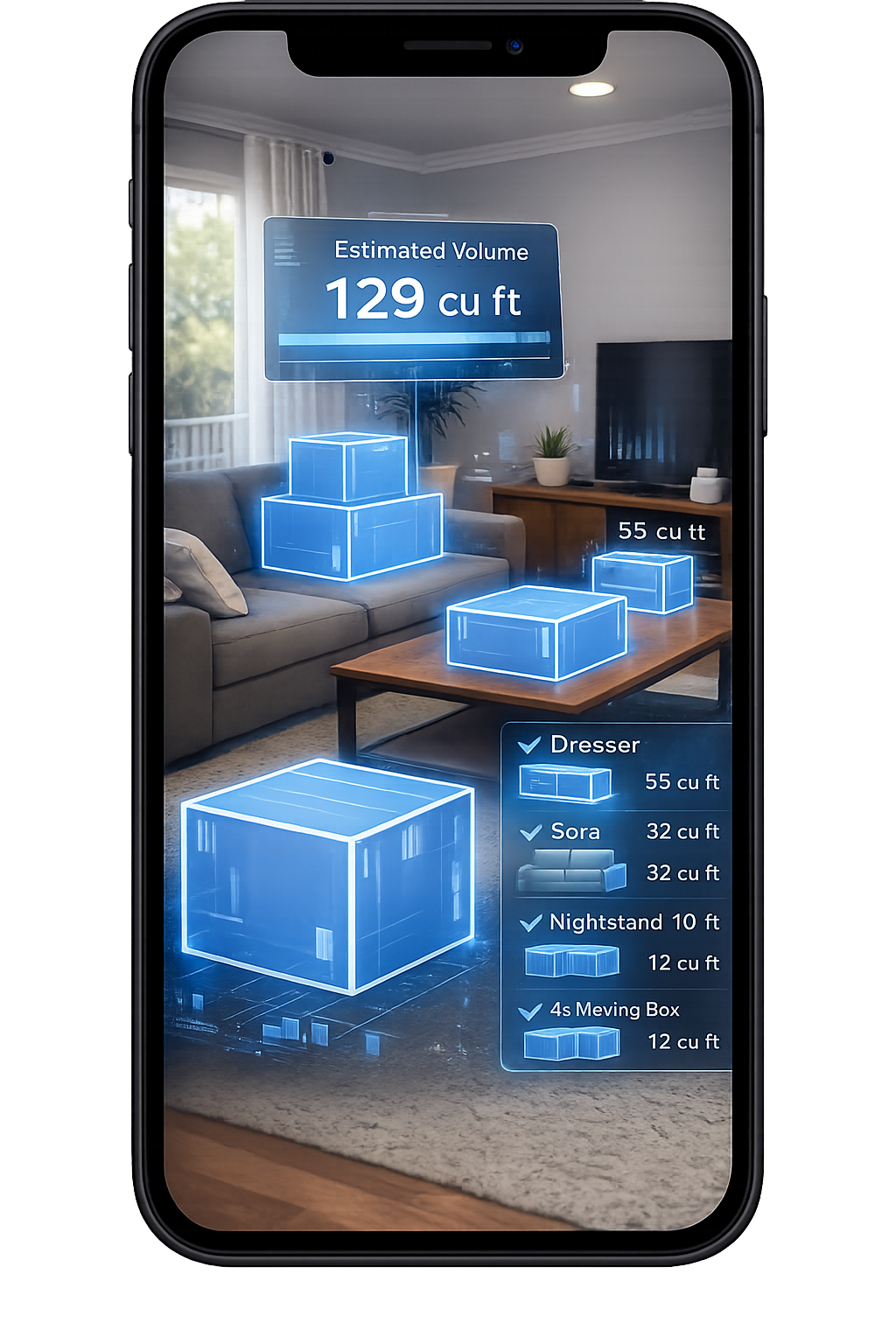
1. Scan Your Room With Your Phone
Walk around your space and scan your items in seconds.
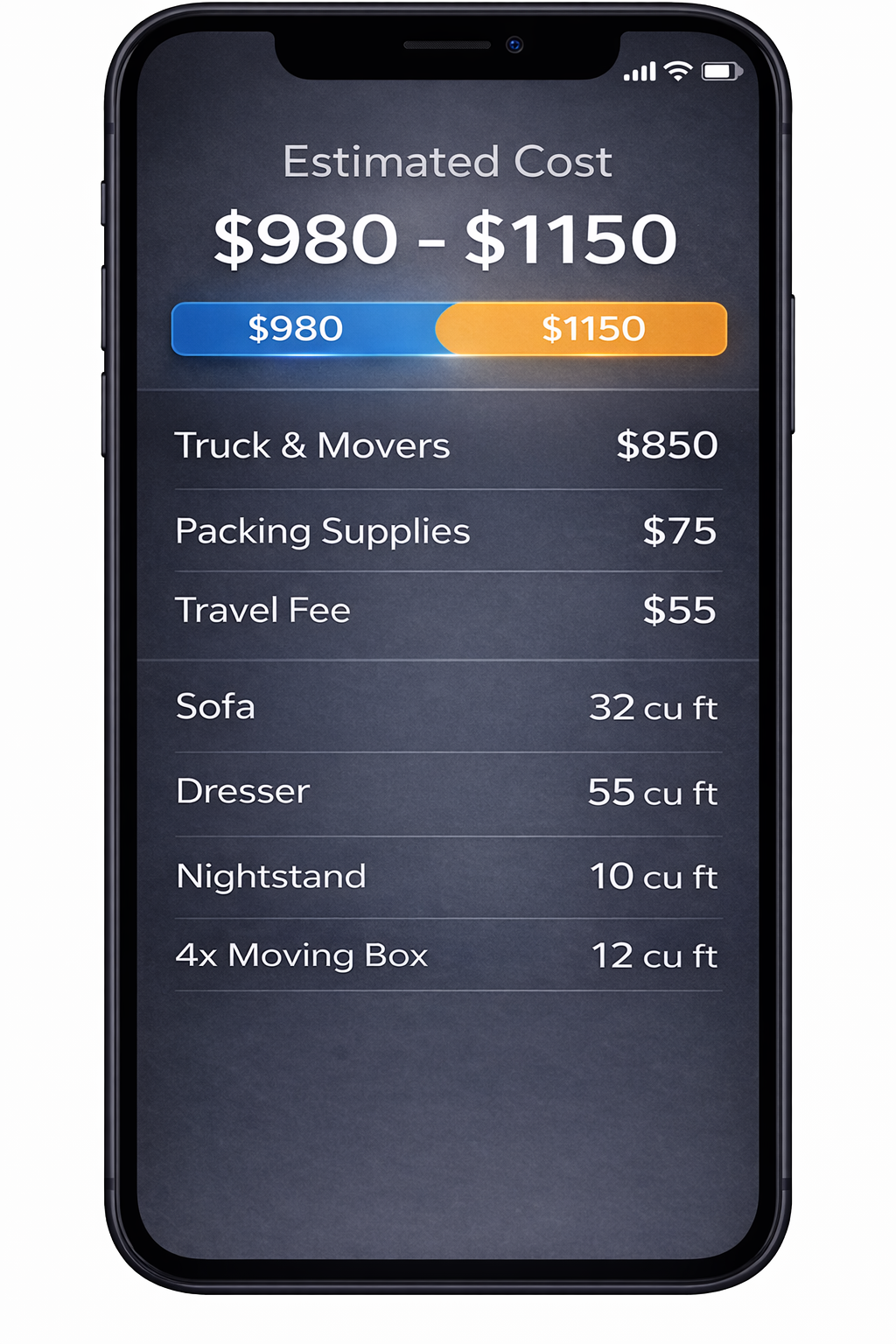
2. AI Detects Your Items
We identify your items and calculate volume for a clearer estimate.
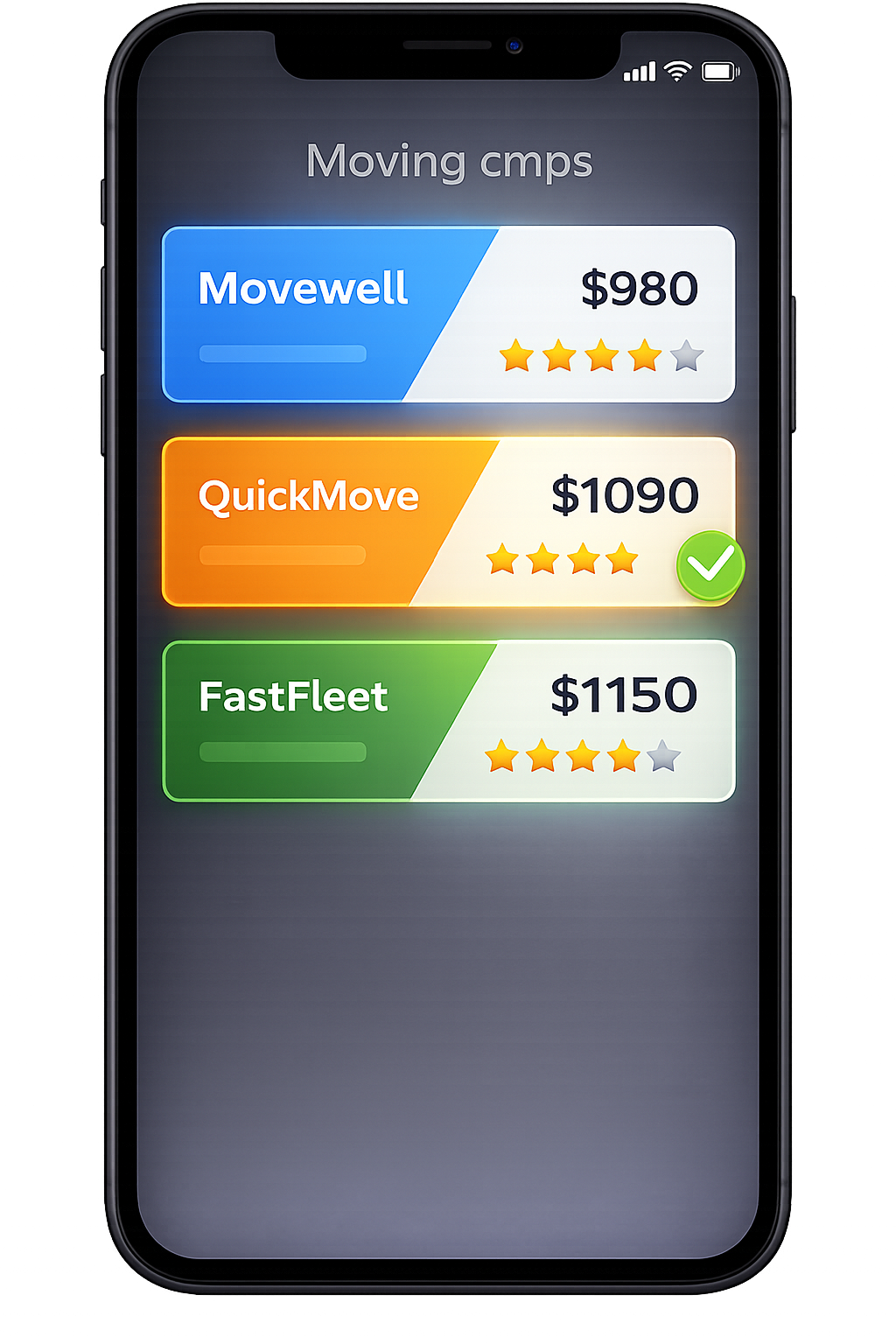
3. Compare Multiple Quotes
Compare mover quotes for Los Angeles, CA from the same scanned inventory.
Frequently Asked Questions
How is a Los Angeles moving estimate different from a generic online quote?
Generic online quotes often ask for your city, move date, and number of bedrooms, then give you a rough price range. A Los Angeles moving estimate that uses AI scanning goes deeper into how this city actually works. It accounts for things like steep streets in the Hollywood Hills, tight alley access in Koreatown, busy curb lanes in Downtown, and elevator rules in newer buildings. Instead of guessing based on bedroom count, movers see your actual inventory plus photos and notes about parking, stairs, and timing limits. That level of detail is what makes a no‑visit estimate much closer to the real conditions of an LA move.
Can I really get a moving estimate in LA without anyone visiting my home?
For many Los Angeles apartments, condos, and smaller homes, you can request a practical moving estimate without an on‑site visit. You use your phone to scan each room so AI can detect major items, then you add photos and short notes about access—like whether movers will park on a hill, use a freight elevator, or walk through a long courtyard. Movers then review this information remotely and build an estimate. In more complex situations, they may suggest a quick video call or, in some cases, an in‑person walkthrough before finalizing numbers, but a full catalog of your belongings and access conditions can still be created without an initial visit.
How do LA hills, driveways, and narrow streets affect my moving estimate?
Hills and street layout affect how easily movers can park and carry your belongings. In hillside areas like the Hollywood Hills, Silver Lake, or Mount Washington, steep roads, tight turns, and limited curb space can slow down loading and unloading or require a smaller truck. Long or sloped driveways may mean movers have to park on the street and carry items farther. Narrow streets and alleys in older neighborhoods can limit truck size. When you request an estimate, including photos of your street, driveway, and entrance helps movers understand whether they need extra time, additional crew members, or different equipment, and they can reflect that in the estimate instead of adjusting prices on move day.
How accurate is an AI‑based moving estimate for a typical Los Angeles apartment?
For many LA apartments and small homes, AI inventory scanning can get closer to the final cost than a simple bedroom‑based quote because movers see what you actually own instead of just a rough size category. Accuracy improves when you scan every room—including balconies, storage closets, and any off‑site storage—and add notes about building access. If your Koreatown building has a slow elevator, or your Echo Park place has two sets of stairs and street parking only, include that. These details often affect labor time more than distance within the city. While no estimate can be perfect, a thorough scan and access description usually reduces the size of later adjustments.
Do I need an on‑site visit, or is a virtual estimate enough for my LA move?
For many Los Angeles moves—especially 1–2 bedroom apartments and condos—a virtual estimate with AI inventory scanning is often enough for movers to prepare an initial quote. You walk through your place with your phone, upload a few access photos, and movers can estimate time and crew size based on that. An on‑site visit or detailed video walkthrough is more likely to be suggested if you’re in a large hillside home, a multi‑level house with complicated access, or if you have items that are especially difficult to move, such as a baby grand piano or oversized artwork. In those cases, movers may use your AI inventory as a baseline and then do a short follow‑up to confirm the trickiest parts before finalizing pricing.
How do parking and permits in Los Angeles affect my moving estimate?
Parking is often one of the biggest variables in a Los Angeles moving estimate. If movers can park near your entrance in a driveway or designated loading area, loading and unloading is faster. If they have to circle for parking, double‑park temporarily, or carry items from a distant curb in areas like West Hollywood, Downtown, or Venice, the job usually takes longer. Some blocks may require temporary no‑parking signs or permits for trucks. When you request an estimate, noting any red curbs, time‑limited zones, or alley access helps movers decide whether extra time or permit costs are likely and include those realities in the estimate instead of treating them as last‑minute surprises.
Can I use this to estimate a long‑distance move starting in Los Angeles?
The same AI‑based inventory and LA access details you use for a local move can be shared with movers who handle routes from Los Angeles to other cities or states. They can combine your item list, pickup logistics (like whether you’re on a hill in Silver Lake or in a ground‑floor Valley house), and the distance to your destination. That allows them to estimate both labor for the LA portion and transport for the long‑distance leg. You only need to scan and document everything once, then you can request estimates from movers that offer long‑distance services on your specific route.
What if my building in LA has strict elevator, HOA, or move‑out rules?
Strict rules are common in Los Angeles, especially in newer high‑rises and managed communities. Buildings in Downtown, Playa Vista, and parts of the Westside often require freight elevator reservations, proof of insurance from movers, and limit moves to specific days or time windows. When requesting a moving estimate, it helps to share these rules up front—screenshots of building emails, PDFs of move‑out guidelines, or a short summary of restrictions. Movers can then schedule crews to match your building’s move window and anticipate any extra time needed to check in with management or use a particular entrance. Including this information makes your estimate more realistic and reduces the risk of schedule changes later.
What’s the difference between this LA moving estimate page and a general moving cost calculator?
A general moving cost calculator usually focuses on giving you a price range based on distance and rough size of your home. This Los Angeles moving estimate page is focused on building a specific, job‑ready estimate request that LA movers can act on. It emphasizes inventory scanning, access photos, and local conditions like hills, parking, and building rules. The goal here is not to give you a single average price, but to help you create enough detail that multiple movers can respond with quotes that fit your exact situation in Los Angeles. Once that estimate is ready, you can plug it into other MoveCost tools to check ranges and compare offers without repeating your information.