
Local movers in Atlanta, GA—matched to your building, your block, and your exact inventory
Scan your Atlanta home with AI, see real local moving quotes, and book pros who already know Midtown elevators, BeltLine parking, Buckhead loading decks, and I‑285 traffic.

local movers in Atlanta, GA
Local Atlanta movers that actually understand where you live
Most Atlanta moves aren’t cross‑country—they’re across town. From a Midtown high‑rise near Peachtree to a newer place off the Westside BeltLine, from a walk‑up in Virginia‑Highland to a high‑rise downtown near GSU, the challenge is rarely distance. It’s elevators, parking, loading docks, and timing your crew around I‑75/I‑85 and I‑285. MoveCost is built specifically for those short, local Atlanta moves: • Midtown & Downtown: freight elevator reservations, loading docks under height‑restricted decks, and tight timing around office traffic. • Buckhead & Brookhaven: condo associations with move windows, COI requirements, and shared parking garages. • Inman Park, Old Fourth Ward & BeltLine neighborhoods: limited street parking, popular restaurant and trail traffic, and long walks from the truck to your unit. • Decatur, Grant Park, Westside & beyond: older streets, narrow driveways, and stair-heavy houses and duplexes. You start by scanning your place with our AI inventory tool. Walk through your apartment, condo, or house with your phone, and the system identifies furniture, boxes, and large or fragile items. No guessing how “big” your one‑bedroom in Midtown really is, and no trying to describe every piece over the phone. Once your inventory is scanned, MoveCost connects you with local movers who already work in your part of Atlanta—crews that know where trucks can legally park, how to use your kind of elevator, and what your building management typically asks for.
How local Atlanta movers price short moves—and how MoveCost makes it transparent
Local movers in Atlanta usually charge by the hour, but the hourly rate alone doesn’t tell you what you’ll actually pay on move day. A crew that’s a little more per hour but faster in Midtown traffic, or better at working around elevators in Buckhead, can end up costing about the same as a cheaper but slower option. MoveCost uses your AI‑scanned inventory plus your exact Atlanta addresses to estimate realistic ranges for each mover. After your scan, you see: • Hourly rate and crew size (for example, two movers vs. three movers) • Minimum hours and what’s included • Estimated total hours based on how much you’re moving and your building type • Drive time between neighborhoods (for example, Inman Park to West Midtown vs. Midtown to Sandy Springs) • Common local add‑ons like long carries from parking decks, elevator use, or stairs Instead of calling multiple companies and trying to compare rough quotes, you can see side‑by‑side estimates for Atlanta movers who actually want your route. That might look like: • A two‑person crew coming from Grant Park for a Virginia‑Highland to Old Fourth Ward move. • A three‑person crew based in Buckhead for a condo‑to‑condo move near Lenox and Phipps. Each estimate includes a realistic range that accounts for things Atlanta locals know slow moves down: a crowded parking deck at lunch, a shared freight elevator in a Midtown tower, or traffic stacking up on the Downtown Connector. If you want to explore numbers in more detail before comparing individual movers, you can open the Local Moving Cost Calculator Near Me for Atlanta‑style routes and then come back to this page when you’re ready to line up specific local movers.
Midtown, Buckhead, Inman Park, Decatur: different Atlanta neighborhoods, different moving quirks
A move inside the Perimeter feels very different depending on where you start and where you’re going. MoveCost’s Atlanta setup is designed around the quirks of specific neighborhoods so movers can plan ahead instead of improvising on move day. Midtown & Downtown Atlanta High‑rises around Peachtree Street, Tech Square, and downtown near GSU often require: • Freight elevator reservations with fixed time windows • Elevator padding and protection before the crew can load • Specific loading dock entrances and security check‑in With MoveCost, you can upload your building’s move‑out letter, note the freight elevator rules, and flag details such as “elevator is shared with other moves” or “loading dock is under 7 ft clearance.” Movers see this next to your AI inventory and can plan crew size and timing accordingly. Buckhead, Brookhaven & North Atlanta Condos and apartments in Buckhead (Lenox, Peachtree, Piedmont areas) frequently have: • HOA rules and set move hours • Shared or gated parking decks • Requirements for certificates of insurance (COI) You can flag COI requirements in your MoveCost request so movers who already service Buckhead towers can step in with the right paperwork and plan for the walk from the deck to your unit. Inman Park, Old Fourth Ward & BeltLine Adjacent Older homes, small apartment buildings, and townhomes near the BeltLine come with: • Tight street parking and heavy evening/weekend foot traffic • Narrow staircases and porches instead of elevators • Long sidewalk pushes from where a truck can legally park In MoveCost, you can add photos of your street, driveway, or alley, and describe whether a truck can back right up to your building or has to stay on a side street. Movers can then estimate extra time for dollies or long carries. Decatur, East Atlanta, Grant Park & Westside These areas mix older single‑family homes, duplexes, and small complexes. That means: • More stairs and fewer elevators • Driveways that may not fit larger trucks • Street parking rules that vary block by block Your AI inventory tells movers how many large items they’ll be carrying up or down those stairs. Combined with a quick description of your driveway and street, they can decide if they should bring a smaller truck or extra help to keep things moving.
AI home scanning that fits Atlanta apartments, condos, and houses
Traditional Atlanta moving quotes often start with a quick phone call: “How many bedrooms?” and “Are there any stairs?” That’s not enough information when you’re moving out of a furniture‑packed Midtown one‑bedroom or a minimally furnished two‑bedroom in Decatur. MoveCost’s AI home scan is designed to capture what matters for local movers: • Furniture and large items like sectionals, king beds, large dining tables, and desks • Box counts so movers can estimate how long packing and loading will actually take • Fragile or awkward pieces like glass tops, big mirrors, or workout equipment • Access constraints you add in notes, like low ceilings, tight turns, or narrow stairwells You walk room‑by‑room with your phone. The system recognizes common items and lets you edit, add, or remove anything so the inventory reflects your real Atlanta home. Local movers see this AI‑generated list before they quote. That helps them: • Estimate loading and unloading time in a Buckhead condo vs. a ground‑level house in Smyrna • Decide whether a two‑ or three‑person crew makes sense for your Midtown walk‑up • Bring the right size truck for Inman Park streets or a shared Decatur driveway You can re‑use or update your inventory if your move date shifts, you sell furniture, or you add items from storage. There’s no need to re‑enter everything or repeat the story for each new mover you contact.
Planning your move around Atlanta traffic, elevators, and events
Two Atlanta moves with the same inventory can feel completely different depending on the day and time. A Friday afternoon truck leaving Midtown for Sandy Springs is not the same as an early‑morning move within Decatur. When you request quotes through MoveCost, you can tell movers exactly what you’re working with: • Building move windows: weekday‑only moves, 9–5 elevator rules, or no weekend moves. • Traffic considerations: if you’re near the Connector, I‑75/I‑85, I‑285, or GA‑400 and want to avoid rush‑hour starts. • Event hotspots: proximity to Truist Park on game days, Mercedes‑Benz Stadium during big events, or major BeltLine festivals. Movers use this context alongside your AI inventory to recommend start times and build realistic schedules. A crew might suggest: • An early weekday morning move for a Midtown to Old Fourth Ward route to avoid Connector backups. • A mid‑morning start for a Buckhead to Brookhaven move to stay clear of school traffic. • Avoiding certain hours entirely if your route passes Truist Park during a big event. By putting this detail directly into your quote request, you give movers enough context to schedule around Atlanta gridlock and reduce the risk of paying for hours spent idling in traffic or waiting on a busy freight elevator while the clock runs.
Short in‑town hops vs. metro Atlanta moves out to the suburbs
MoveCost isn’t limited to moves within a single ZIP code. The same Atlanta‑tuned tools work whether you’re changing floors in a Midtown high‑rise or heading to a house outside the Perimeter. In‑town Atlanta moves (ITP) If you’re staying inside I‑285—Midtown to West Midtown, Inman Park to Old Fourth Ward, Downtown to Grant Park—local hourly movers usually make the most sense. Your quotes focus on: • Load and unload times based on your building and inventory • Short drive time between intown neighborhoods • Access issues like elevators, stairs, long carries, or parking decks Across‑metro or ITP ↔ OTP moves If you’re heading farther—from a BeltLine apartment to Alpharetta, from a Buckhead condo to Marietta, or from Sandy Springs to Decatur—quotes may mix hourly and flat‑rate elements depending on the mover. MoveCost still uses your AI inventory, but also factors in: • Longer drive times on I‑285, GA‑400, I‑75, or I‑85 • Differences between a condo building and a single‑family home driveway • Neighborhood‑specific parking or HOA rules at either end You see all of this laid out in a single view so you don’t have to rebuild your details every time you want another quote. The platform keeps your Atlanta move data in one place and helps you choose the mover that matches your budget, timing, and route.
Where this Atlanta local movers page fits with the rest of MoveCost
This page is focused on local movers in Atlanta—the short, often elevator‑heavy routes between neighborhoods like Midtown, Buckhead, Inman Park, Decatur, and nearby suburbs. It works together with other MoveCost tools so you can go from rough planning to a specific Atlanta mover in a few steps. If you’re still at the budgeting stage, you can start with a general AI moving cost calculator to get a ballpark range for your household size. When you’re ready to look at prices from local movers near your Atlanta ZIP code, you can open the local moving cost calculator or a broader moving cost by state and city view, then come back here to run an Atlanta‑specific AI scan and share your inventory with movers. Once your scan is done, you can also use the same inventory on our pages for instant moving quotes and comparing moving company quotes—you don’t have to re‑enter anything. That way, your Atlanta move details stay consistent whether you’re checking local mover prices, planning a future state‑to‑state route, or just refining your budget over time.
How It Works

1. Scan Your Room With Your Phone
Walk around your space and scan your items in seconds.
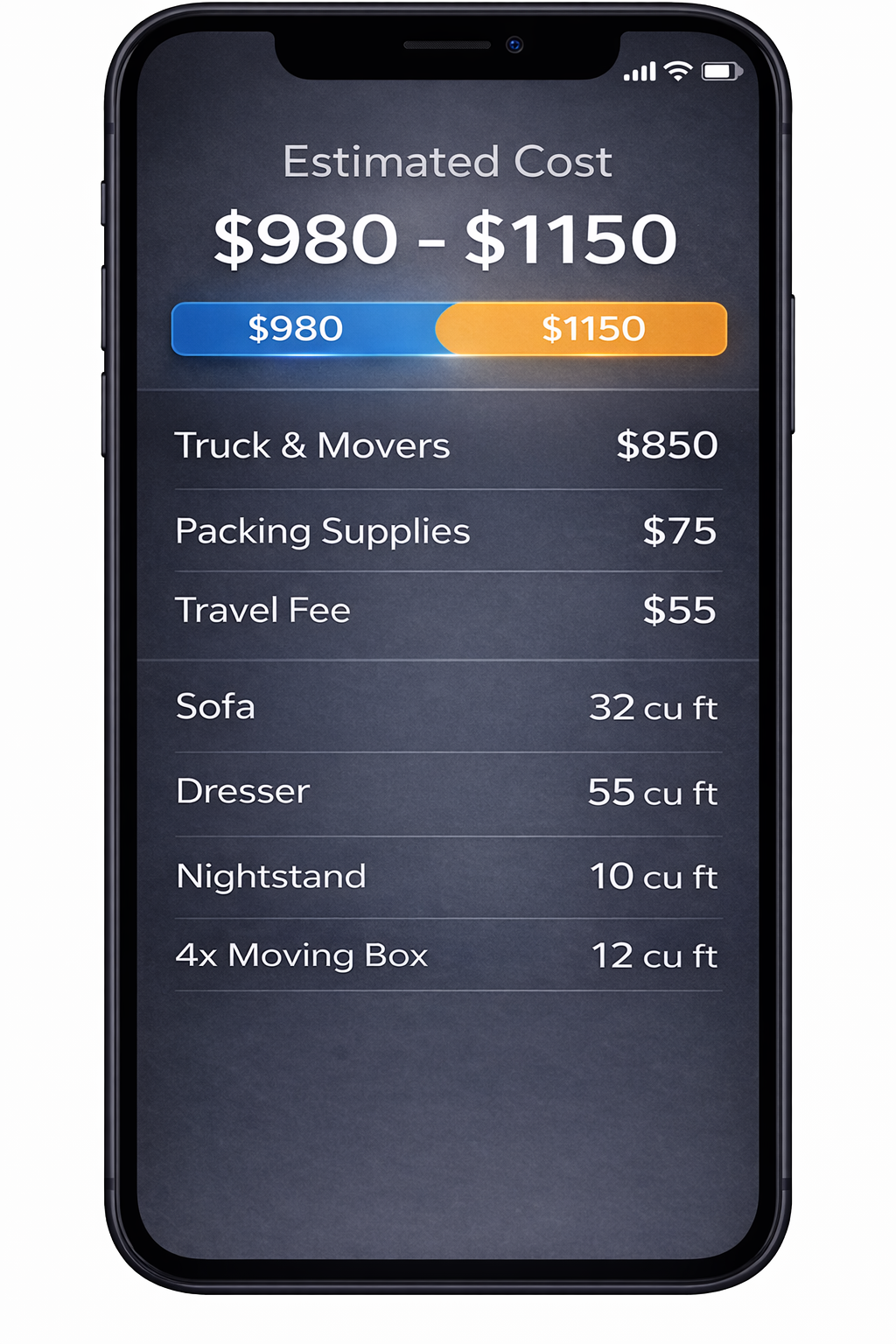
2. AI Detects Your Items
We identify your items and calculate volume for a clearer estimate.
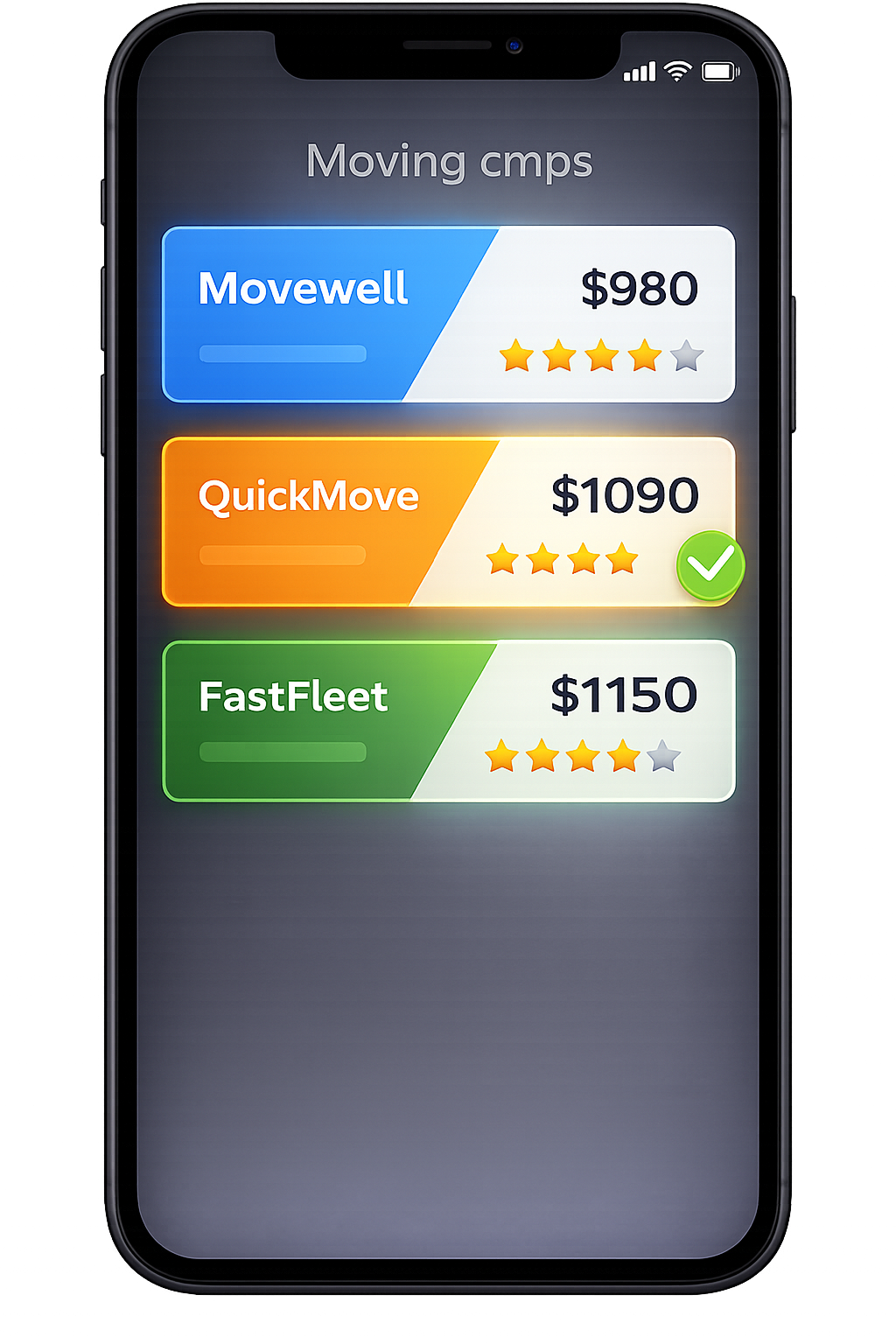
3. Compare Multiple Quotes
Compare mover quotes for Atlanta, GA from the same scanned inventory.
Frequently Asked Questions
How does MoveCost work with local movers in Atlanta specifically?
MoveCost lets you scan your Atlanta home with your phone to build a detailed inventory of what you’re moving. That inventory is shared with local movers who already operate in areas like Midtown, Buckhead, Inman Park, Decatur, and nearby suburbs. Movers combine that item‑by‑item list with your building details—such as elevator rules, parking decks, or street access—to estimate how long your move will take and how many movers they need. You see side‑by‑side estimates and can choose the option that fits your schedule and budget.
When is the best time of day to schedule a local move in Atlanta?
For many Atlanta routes, an early‑morning weekday start helps avoid the heaviest I‑75/I‑85 and I‑285 traffic and gives you the best chance of staying inside your building’s move window. If your building only allows moves during business hours, movers may suggest starting as soon as the freight elevator opens so there’s time to finish before the cutoff. When you request quotes through MoveCost, you can share your preferred date and any building restrictions, and movers will recommend time windows that work for your specific route and neighborhood.
How should I handle parking for movers in places like Midtown, Old Fourth Ward, or near the BeltLine?
Parking can be one of the trickiest parts of a local Atlanta move. In your MoveCost request, you can describe where a truck can park, upload photos, and mention any nearby loading zones, alleys, or decks. For Midtown and Old Fourth Ward, that might mean a loading dock under your building or a nearby street with specific hours. Near the BeltLine, it could be a side street several houses away. Movers use this information to decide on truck size, arrival time, and whether they’ll need dollies or extra time for long walks from the truck to your unit.
What if my Atlanta building requires an elevator reservation or has strict move‑in rules?
Many Atlanta apartments and condos—in Midtown, Buckhead, and Downtown especially—require freight elevator reservations and have detailed move‑in/move‑out rules. With MoveCost, you can upload the building’s instructions, note your elevator reservation window, and mention if your property manager expects a certificate of insurance. Movers who are familiar with Atlanta high‑rises can then plan their crew, timing, and paperwork around those rules so your move fits inside your reserved window.
Are the AI‑based estimates accurate for short local moves inside Atlanta?
The AI estimates are built on your actual inventory and basic access details, which makes them more grounded than a quick phone quote. For local Atlanta moves, the main variables are usually elevators, parking, stairs, and traffic. By telling movers about your building setup and neighborhood alongside the AI inventory, you give them enough information to produce realistic time ranges instead of one rough number. There can still be differences on move day, but the estimates are designed to reflect how Atlanta moves typically play out.
Can I use MoveCost if I’m moving from intown Atlanta to a suburb like Marietta, Smyrna, or Alpharetta?
Yes. The same AI inventory scan and quote comparison process works whether you’re moving a few blocks within Midtown or heading out to a house in Marietta, Smyrna, Alpharetta, or other nearby areas. You’ll enter both addresses, describe access at each home, and scan your inventory once. Movers then price your job based on the distance, driving route, and building or parking conditions at both ends, and you can compare their estimates in a single view.
Do I need to list every single box for my Atlanta move?
The AI scan will recognize many common box shapes and let you adjust the count quickly. You don’t have to label each box individually, but giving movers a realistic count—along with notes about extra‑heavy or fragile boxes—helps them estimate how long loading and unloading will take. This is especially important for elevator buildings in Midtown or Buckhead, where each elevator trip adds time to the move.
Can I reuse my Atlanta inventory if I need more moving quotes later?
You can update and reuse your AI inventory whenever your situation changes. If you sell furniture, add items from storage, or push your move date out, you can adjust your Atlanta home scan instead of starting from scratch. That same updated inventory can be used to compare new local movers in Atlanta or to explore other MoveCost tools like instant moving quotes or state‑to‑state cost calculators.