
Moving Cost in Phoenix, AZ: Local Prices by Neighborhood and Route
See what people actually pay to move in Phoenix and nearby suburbs like Tempe, Scottsdale, Mesa, Chandler, and Glendale—then use an AI home scan to get an estimate based on your exact apartment or house.

moving cost in Phoenix, AZ
What Moving Really Costs in Phoenix (Not Just a Generic National Average)
Phoenix moving costs are highly route- and neighborhood-specific. A short hop between two apartments in Central Phoenix can land at one price, while a slightly longer move into a gated community in Chandler or a walk-up in Mesa can cost something very different. This page focuses on Phoenix moving cost examples you can actually recognize: • Local moves inside Phoenix (Downtown, Midtown, Arcadia, North Phoenix) • Short routes between Phoenix and nearby suburbs like Tempe, Scottsdale, Mesa, Chandler, and Glendale • In-state trips from Phoenix to Tucson, Flagstaff, Prescott, and other Arizona cities Each example is a range, not a quote. Real jobs still depend on your inventory, access, and timing. The point is to give you grounded numbers for Phoenix-area moves and then show you how to replace guesswork with an AI-powered scan of your own home. MoveCost does not operate trucks or sell moving services. Instead, you: • Scan your home with your phone • Let AI estimate your moving volume • Share that inventory with movers who serve your Phoenix route • Compare multiple estimates based on the same, consistent data That way you can see how your own situation compares to the examples on this page and move from a rough neighborhood cost to an address-specific estimate.
Local Moving Cost Inside Phoenix: Downtown, Midtown, Arcadia, North Phoenix
For strictly local moves inside the Phoenix city limits, most people pay based on hourly labor plus a truck or travel fee. The ranges below are typical for many moves but not guarantees. 1. Studio or 1-Bedroom Inside Phoenix Common routes: Downtown → Midtown, Roosevelt Row → Encanto, Arcadia → Biltmore. • Typical range: about $350–$800 with professional movers • Usually includes a 2-person crew and a truck for a few hours • Lower end: easy elevator or ground floor, good loading zone, already packed • Higher end: tight alleys, long walks, or multiple trips on slow elevators Example: • A studio move from a Downtown high-rise to a 1-bedroom in Midtown with elevator access and a reserved loading zone might finish in 3–4 hours of billable time. • The same amount of stuff from a third-floor walk-up near Central Ave with street parking and a long carry can push toward 5+ billable hours. 2. Two-Bedroom Apartment in Phoenix Common routes: North Phoenix → Central Phoenix, Arcadia → Downtown, Midtown → Biltmore. • Typical range: about $700–$1,400 • Often uses a 3-person crew and a larger truck • Costs move up if you have a full dining set, multiple beds, and heavy items like bookshelves or gym equipment Example: • A two-bedroom apartment move from North Phoenix to Central Phoenix with decent parking and an elevator can often be handled in 4–6 hours. • A similar-sized apartment where movers park on a busy street, climb multiple flights of stairs, or navigate a maze-like complex may require more hours and a higher total bill. 3. Single-Family House Moves Within Phoenix Common routes: Laveen → South Phoenix, North Phoenix → Deer Valley, Ahwatukee → Central Phoenix. • Ranges are wider because of garages, yard items, and storage • A smaller home with minimal outdoor furniture can be closer to the apartment ranges • A fully furnished three-bedroom with garage storage, patio furniture, and kids’ gear will be higher because there is simply more to load and protect With any of these local scenarios, the fastest way to see whether your situation is closer to the low, mid, or high end is to scan your actual space. MoveCost’s AI scan converts what you see in these examples into a Phoenix-specific estimate for your address.
Phoenix to Tempe, Scottsdale, Mesa, Chandler, and Glendale: Short-Route Cost Examples
A lot of Phoenix moves are short hops around the Valley rather than cross-town marathons. Distance between cities like Phoenix, Tempe, Scottsdale, Mesa, Chandler, and Glendale is small enough that time, stairs, and access matter more than mileage. Below are illustrative price ranges many people see for these types of routes when using professional movers. They are not offers or guarantees. Phoenix ↔ Tempe Common for ASU students, downtown workers, and renters changing leases. • Small moves (studio/1-bedroom): often land in the $400–$900 range • Two-bedroom apartments: may fall in the $750–$1,500 range depending on access Example route: Midtown Phoenix → apartment near Tempe Town Lake • Easy side: elevator on both ends, short walk from truck → closer to the low/middle of the range • Hard side: a third-floor unit off Rio Salado Pkwy with a long walk from shared parking → more labor hours and a higher total Phoenix ↔ Scottsdale Typical routes: Arcadia → Old Town Scottsdale, North Phoenix → North Scottsdale. • 1-bedroom or compact 2-bedroom: often in the $500–$1,200 range • Gated communities, HOAs, and strict loading rules can add time and cost Local twist: Some Scottsdale complexes require proof of insurance or elevator reservations. If movers must work in a tight window or park farther away, they plan for extra time. Phoenix ↔ Mesa and Chandler Common for people shifting between newer suburban apartments and single-family homes. • Small apartment moves: commonly see $450–$950 ranges • Family-sized apartments or smaller homes: might hit $800–$1,600+ when garages and patio setups are involved Example route: North Phoenix → Chandler single-family home • Ground-floor entry both sides and driveway parking: more efficient loading • HOA-controlled community with limited street parking: could require more walking distance and careful staging. Phoenix ↔ Glendale Popular for moves between central Phoenix rentals and West Valley homes. • Apartment-to-apartment: frequently falls into $400–$900 ranges • House-to-house with garage contents and yard items: varies widely but often starts in the vicinity of higher apartment ranges and increases with extra items All of these routes are close enough that hourly labor dominates the bill. The most reliable way to anchor your own cost is to: 1. Scan your home with MoveCost’s AI. 2. Choose a route like Phoenix → Tempe or Phoenix → Scottsdale. 3. Send that same inventory to multiple movers who run that route. They’ll price your job based on your actual belongings and access instead of a generic “Phoenix-area” average.
In-State Arizona and Long-Distance Moves From Phoenix: Tucson, Flagstaff, and Beyond
Once your route stretches beyond the immediate metro, movers shift from purely hourly pricing to distance plus weight or volume. Phoenix ↔ Tucson • Common for job changes and university-related moves • Moves are often priced using: • Estimated weight or cubic footage • Miles between pickup and drop-off • Crew size and any overnights • A lightly furnished 1-bedroom typically costs much less than a fully furnished 3-bedroom with garage storage and patio furniture. Phoenix ↔ Flagstaff and Northern Arizona • Elevation changes and seasonal weather influence timing • Summer storms and winter ice can affect scheduling, which may change how movers allocate trucks and crews • Narrow streets and hilly driveways in some Flagstaff neighborhoods can slow loading or require smaller vehicles Phoenix to Other States Routes like Phoenix → San Diego, Phoenix → Denver, or Phoenix → Austin often come with more detailed written estimates. Movers consider: • Your itemized inventory (furniture, boxes, appliances, outdoor items) • Pickup access (e.g., driveway in Peoria vs. tight downtown Phoenix alley) • Drop-off access (e.g., urban high-rise vs. suburban home) • Mileage, fuel assumptions, and potential layovers Some movers respond with flat-rate proposals, others with weight-based or volume-based pricing. The more accurate your inventory, the less room there is for surprise cost adjustments later. MoveCost’s AI inventory tool is built specifically for this step: • You walk through your Phoenix home with your phone. • The AI identifies standard items, while you add anything unique. • You then request quotes from long-distance carriers. This gives you cost ranges that are grounded in your Phoenix starting point and your specific destination, instead of relying solely on rough per-mile formulas.
Why Two Similar Phoenix Moves Can Cost Very Different Amounts
Two people can both say they’re moving a “two-bedroom in Phoenix” and still pay very different amounts. The difference usually comes from access, volume, timing, and local rules. Access and Parking in Phoenix and Nearby Suburbs In central neighborhoods like Downtown, Midtown, Arcadia, or along Central Ave, trucks rarely pull right up to your front door: • Street parking and loading zones may limit how close the truck can get • Some complexes funnel everything through a single gate or entry point • Long walks from visitor parking to the unit add many minutes on every load Outside central Phoenix — in parts of Ahwatukee, Chandler, or North Scottsdale — you may have: • Gated entries with keypads and codes • Community rules about where trucks can park and for how long • Shared guest lots that require more walking distance Stairs, Elevators, and Long Carries Access quirks in popular Phoenix-area buildings can add real cost: • Third-floor walk-ups in older Mesa or Glendale complexes require more labor and time • Mid-rise buildings with shared elevators may limit use of freight elevators to certain hours or require reservations • Long exterior breezeways and interior corridors add walking distance, which turns into billed time on an hourly job Volume: How Much Stuff You’re Actually Moving Phoenix apartments and homes vary widely: • Minimalist 1-bedroom in a newer complex near Camelback with basic furniture • 1-bedroom that also includes garage storage, patio furniture, and a separate storage unit in the same complex From a mover’s perspective, these are different jobs, even if both are “1-bedrooms.” The second case means more boxes, furniture, and trips to and from the truck, which affects total hours or the weight/volume charged. Timing: Heat, Peak Months, and End-of-Month Crush Phoenix has specific patterns that influence price: • Peak months: late spring through early fall, especially May–September • Peak days: Fridays, weekends, and the last 3–4 days of each month • Peak hours: early morning slots that avoid the hottest part of the day During heat waves, movers may: • Limit mid-day jobs • Adjust crew scheduling to keep teams safe • Fill popular morning slots early, which can push prices up when supply is tight MoveCost’s AI scan captures the things movers use to adjust pricing — inventory, access notes, and timing — so each quote you receive reflects the type of Phoenix move you’re actually planning, not just a vague description of your apartment size.
Phoenix Heat, HOA Rules, and High-Rise Requirements: How They Affect Your Bill
Phoenix adds extra wrinkles that many generic moving guides never mention: intense heat, HOA communities, and high-rise rules. All three can shift your moving cost. Extreme Heat and Crew Scheduling On 100°F+ days, especially in late spring and summer: • Crews work harder and take more water breaks • Mid-day moves can be slower than morning moves • Some companies prefer starting as early as possible to avoid dangerous temperatures This doesn’t mean every summer move costs more, but labor efficiency changes in the heat, and high-demand dates often carry higher prices. HOA-Controlled Communities Around Phoenix If you’re moving into or out of an HOA community in places like Chandler, Gilbert, North Scottsdale, or Laveen, you may run into rules such as: • No large trucks parked on the street for certain hours • Requirements to keep driveways and shared roads partially open • Restrictions on blocking sidewalks or using certain gates From a cost perspective, this can mean: • Longer walking distances from where the truck can legally park • More planning time to stage items without blocking neighbors • Occasional rescheduling if moving within restricted time windows High-Rise and Mid-Rise Building Policies Many newer Phoenix, Tempe, and Scottsdale apartment communities and condos have: • Freight or service elevators that must be reserved in advance • Set moving windows (e.g., 9 a.m.–1 p.m. only) • Requirements for a certificate of insurance (COI) from your movers If movers are limited to specific hours or must coordinate elevator use with other residents, the job may need: • A larger crew to finish within the allowed window • Extra time for staging items in loading docks When you use MoveCost, you can document these details inside your AI-generated inventory request. That way, movers build cost estimates that reflect actual Phoenix building and HOA conditions, rather than discovering restrictions on moving day and adjusting the bill later.
How MoveCost’s AI Scan Builds a Phoenix-Specific Moving Estimate
Most Phoenix residents do not have time to schedule three separate in-home estimates or fill out long item lists by hand. MoveCost turns this into a simple walkthrough with your phone. Here’s how it works when you’re moving in or out of Phoenix: 1. Scan each room with your camera Walk through your living room, bedrooms, kitchen, patio, garage, and storage spaces. The AI identifies common items — sofas, sectionals, beds, dressers, desks, TVs, tables, and standard boxes. 2. Add Phoenix-specific access notes Within the tool, you can note: • Your floor level (ground, 2nd, 3rd, high-rise) • Whether you have an elevator and if it needs reserving • Approximate distance from your door to truck parking • Gate codes, HOA notes, and loading dock details 3. Generate a detailed inventory and volume estimate The system groups items by room and estimates the volume of your move, which is what movers use to think about truck space and labor. 4. Share your inventory with movers serving your route You can then request estimates from movers who handle routes like: • Phoenix → Tempe, Scottsdale, Mesa, Chandler, or Glendale • Local moves within Phoenix neighborhoods • In-state routes to Tucson, Flagstaff, or Prescott • Longer relocations to other states 5. Compare the responses side-by-side Because all movers are responding to the same inventory and access info, you can see how each company treats your Phoenix move in terms of: • Estimated hours and crew size • Travel or truck fees • Any line items for stairs, long carries, or special items MoveCost is built around this consistent, AI-generated inventory so that the examples you see on this Phoenix cost page translate into clear, route-specific estimates tailored to your home.
Quick Planning Checklist for Phoenix Moves in Heat and HOA Communities
Before you lock in movers for a Phoenix-area move, it helps to double-check a few local details that commonly affect cost and scheduling. For summer and late-spring moves: • Ask about earlier start times to avoid the hottest hours • Have cold water available for crews to help maintain pace • Plan extra time for elevator sharing in busy buildings, since more residents move during peak months For HOA and gated communities: • Confirm whether moving trucks can park on the street, in common areas, or only in driveways • Check if your HOA has any written rules about move-in/move-out times • If you are moving into a new community, ask whether you must reserve a loading area or gate access For high-rise and mid-rise Phoenix apartments/condos: • Ask building management if you must reserve a freight or service elevator • Confirm any requirements for certificates of insurance (COI) from your movers • Clarify where movers are allowed to stage furniture and boxes while loading or unloading These factors do not just affect convenience — they can change how long your move takes. Including them in your MoveCost AI scan gives movers a clearer picture of your Phoenix move so their estimated cost aligns more closely with your actual invoice.
How It Works
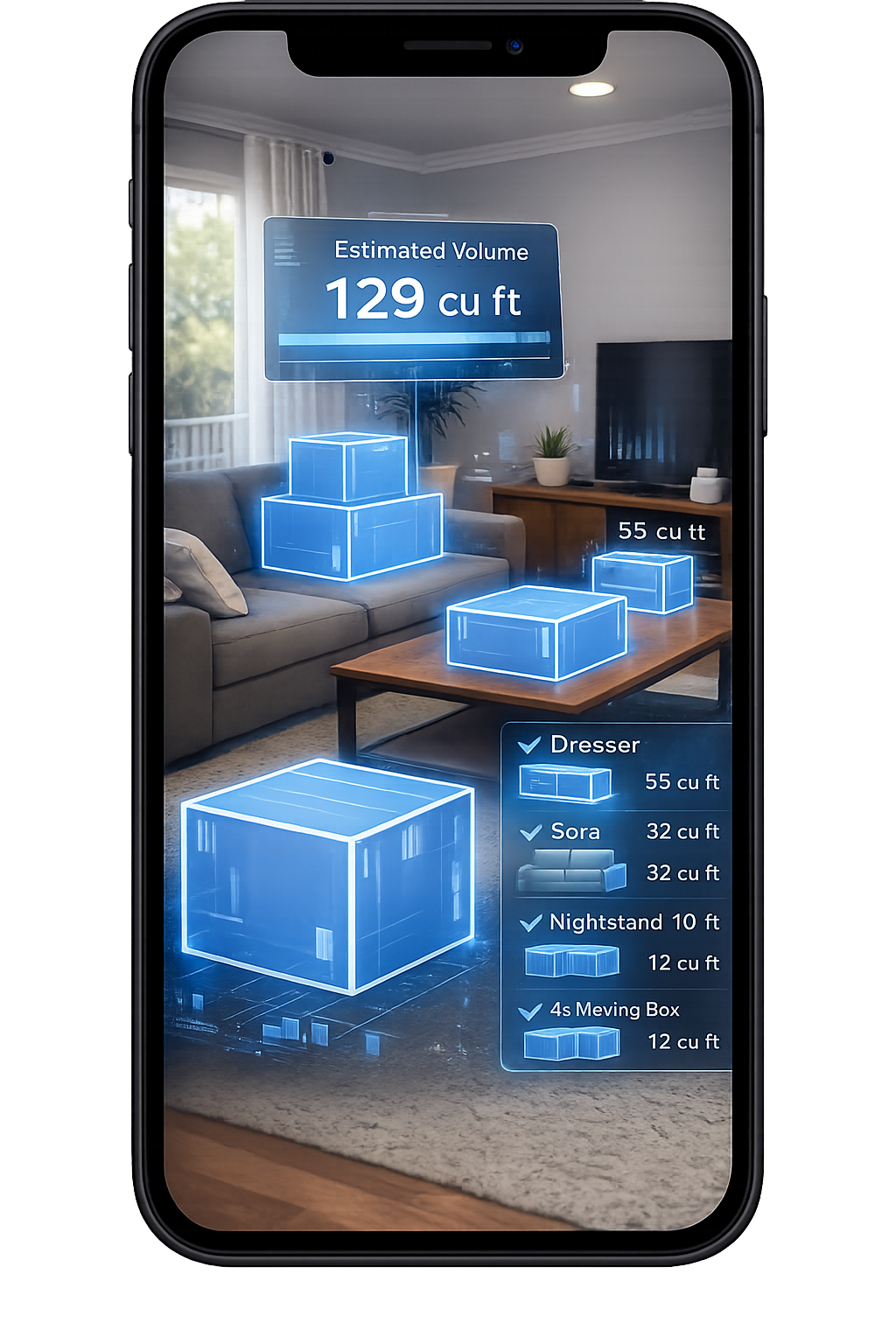
1. Scan Your Room With Your Phone
Walk around your space and scan your items in seconds.
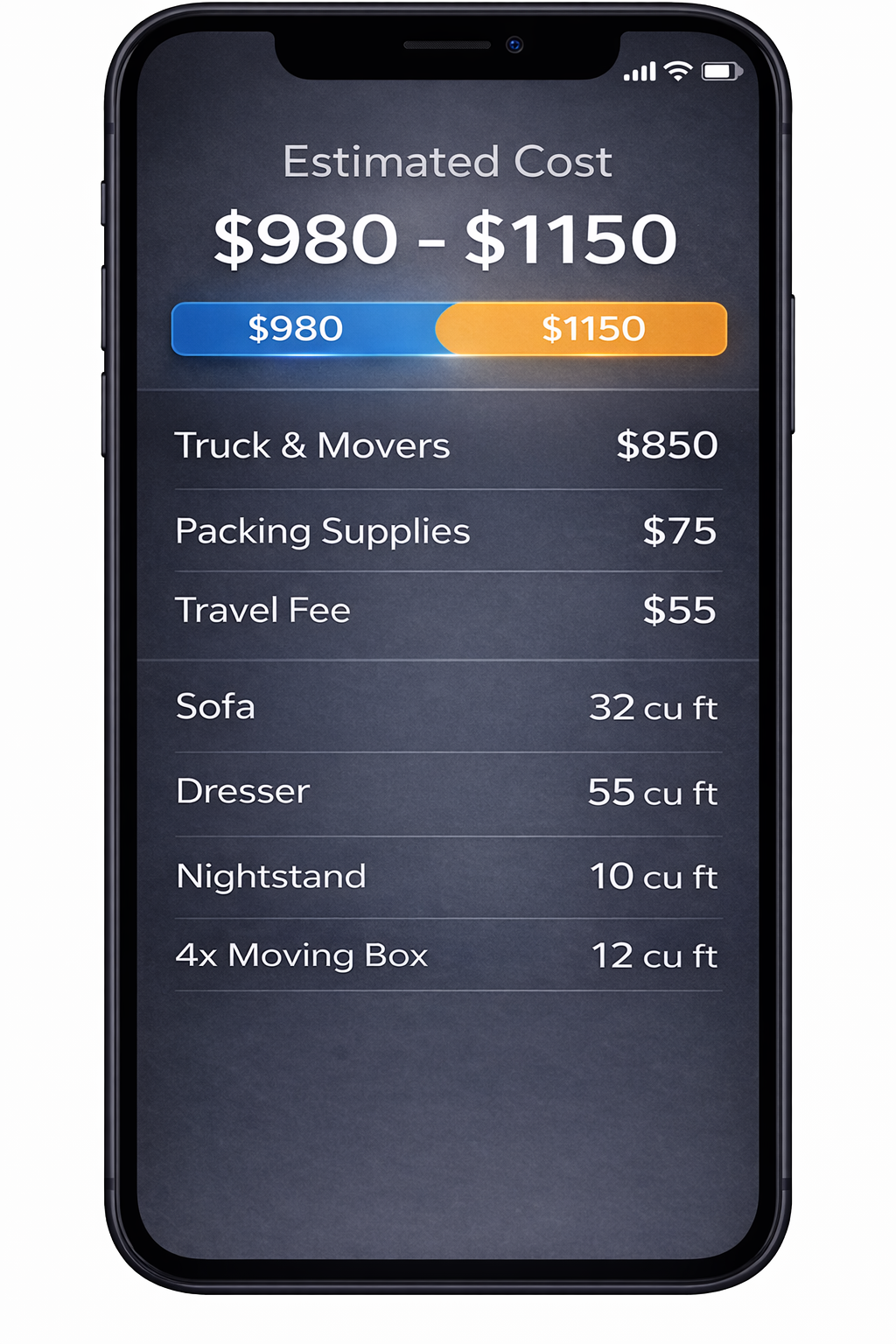
2. AI Detects Your Items
We identify your items and calculate volume for a clearer estimate.
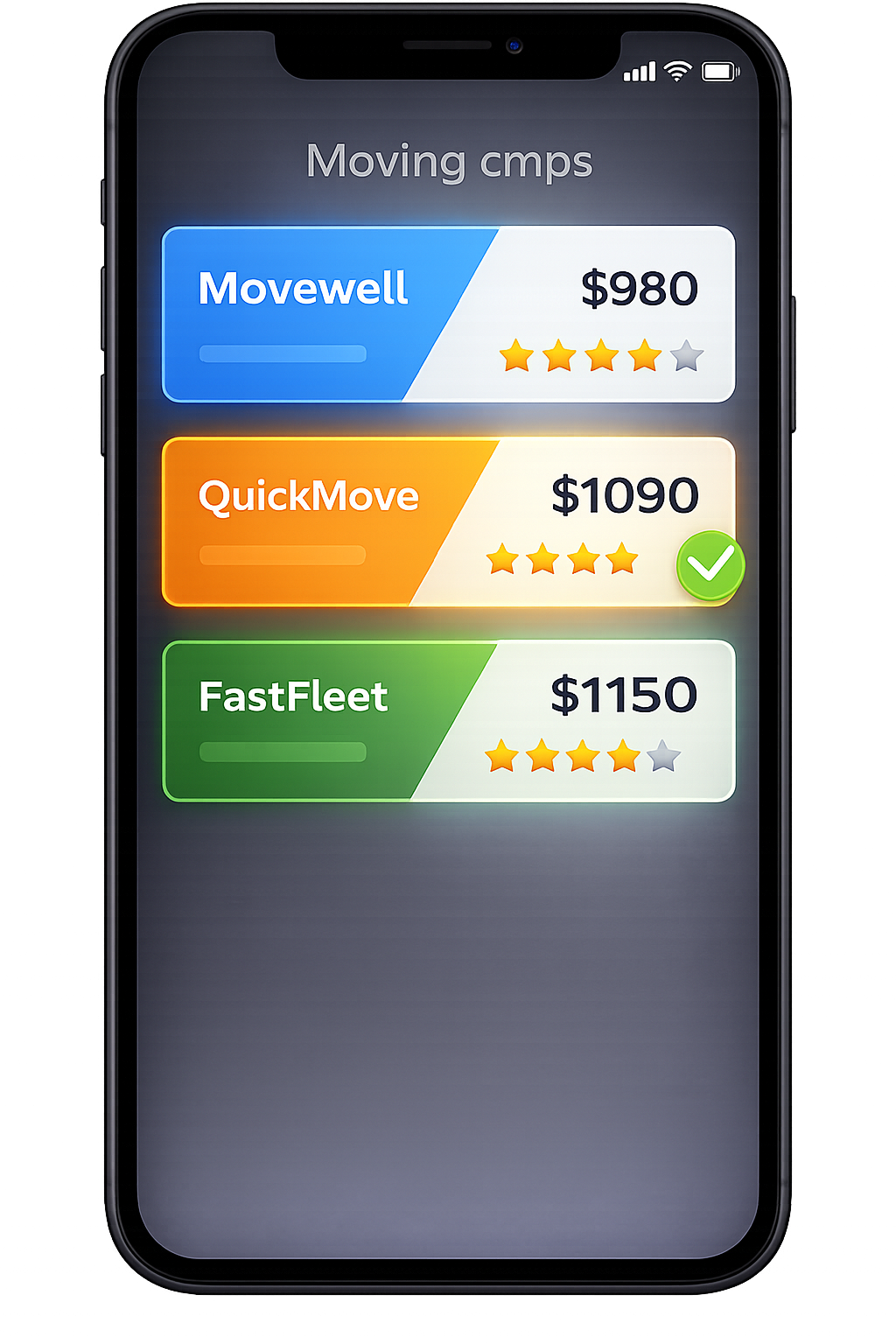
3. Compare Multiple Quotes
Compare mover quotes for Phoenix, AZ from the same scanned inventory.
Frequently Asked Questions
What is a realistic moving cost range for a small apartment move within Phoenix?
For a studio or small one-bedroom moving within the Phoenix metro — for example, from Downtown to Midtown, or from a central Phoenix apartment to a place in Tempe or Glendale — many people see totals in the $350–$800 range with professional movers. That usually reflects a 2-person crew, a truck, a base travel fee, and several hours of labor. Your position in that range depends on how much furniture you own, how long the crew spends walking to and from the truck, whether there are stairs, and how smoothly loading and unloading go. Scanning your apartment with MoveCost’s AI tool lets movers estimate based on your actual layout and belongings, rather than only your ZIP code and bedroom count.
How do moving costs differ for Phoenix moves to Tempe, Scottsdale, Mesa, Chandler, or Glendale?
These are all short routes, so distance usually matters less than time, access, and how much you’re moving. A typical small apartment move between Phoenix and Tempe or Scottsdale may fall somewhere in the $400–$900 range, while larger apartments or smaller homes going to areas like Mesa, Chandler, or Glendale can reach $750–$1,500+, especially if garages, patios, or storage units are involved. HOAs, gated entries, elevator reservations, and parking rules can add time. When you run a MoveCost AI scan, you can specify your exact route — for example, “Midtown Phoenix to north Chandler” — and share that with movers so their estimates reflect that specific suburb-to-city move.
Does Phoenix summer heat actually change what I’ll pay to move?
Heat affects both demand and how quickly work can be done. In late spring and summer, especially May through September, more people are moving, and crews are working in high temperatures that can slow mid-day loading and unloading. Morning start times are in higher demand, and some movers may charge differently for popular dates and time slots when crews and trucks are heavily booked. While not every summer move is automatically more expensive, many Phoenix residents find that weekend moves at the end of the month in peak heat are harder to book and can come with higher rates than mid-week, mid-month moves. MoveCost lets you request estimates for multiple dates and times so you can see how much timing changes your cost for your specific move.
How do HOAs and gated communities around Phoenix affect moving costs?
HOAs and gated communities in areas like Chandler, Gilbert, North Scottsdale, and parts of Laveen or Glendale can influence both scheduling and cost. If your community limits street parking, restricts truck size, or only allows moves during certain hours, movers may need more time to stage items, walk longer distances from the truck to your door, or adjust crew size to finish in a specific window. All of this can increase the labor portion of your bill. In MoveCost, you can note HOA and gate details — such as where trucks can park and whether a gate code or escort is required — so movers build their Phoenix estimate around the actual community rules you live with.
How much extra do stairs, elevators, and long walks add in Phoenix-area buildings?
In many Phoenix, Tempe, and Mesa complexes, access is the biggest unknown. Third-floor apartments without elevators, or long walks from gated parking lots, can easily add an hour or more of labor to a local move. Because local movers typically charge by the hour, that extra time can mean an additional $80–$200 or more, depending on crew size and the company’s hourly rate. Even when an elevator is available, sharing it with other residents or working within limited freight-elevator windows can slow loading. By including floor level, elevator details, and approximate walking distance in your MoveCost AI scan, you help movers anticipate this time and reflect it in the up-front estimate instead of adjusting later.
Can I use MoveCost to estimate long-distance moving costs from Phoenix to another state?
Yes. You can scan your inventory in your Phoenix home, list your destination city (for example, a downtown apartment in Denver or a house in the Dallas suburbs), and share that information with movers that handle your route. They use your AI-generated inventory along with the distance, access conditions, and preferred timing to estimate a total. You may see different structures — some movers offer flat-rate proposals, others use estimated weight or volume — but all of them are working from the same detailed list of what you’re moving. That makes it easier to compare offers and understand how each company prices your Phoenix-to-out-of-state move.
Is an AI-based inventory scan enough, or do I still need an in-home estimate in Phoenix?
For many standard apartment and home moves in and around Phoenix, an AI-based inventory scan provides enough detail for movers to build a solid estimate. The scan captures room-by-room furniture, major electronics, and boxes, and you can manually add anything unusual like a piano, large aquarium, or heavy gym equipment. You can also include building details such as floor level, elevator access, gate codes, and HOA notes. For highly complex moves — for example, multiple oversized items, very tight access, or unusual loading situations — some movers may still want additional photos or a quick call, but Phoenix users often find that the AI-driven inventory aligns closely with their final cost when they keep the list accurate and up to date.
Where can I compare Phoenix moving quotes online without a lot of phone calls?
If you want to compare movers that handle Phoenix routes without repeating your details on multiple calls, you can start with a single AI scan and then share that inventory with different companies. For a broader overview of how instant online quotes work, see the MoveCost resource on instant moving quotes without phone calls, which explains how online estimates are generated and how to spot key differences between offers.
How can I see whether Phoenix is more or less expensive to move in than other cities?
Phoenix moving costs are shaped by heat, building types, and rapid growth, so they can differ from other cities even on similar routes. If you’re deciding between Phoenix and another metro, or just want to see how your expected cost compares, you can use MoveCost’s moving cost calculator by state and city. It lets you plug in Phoenix alongside other locations and review route-specific estimates using the same style of AI-generated inventory you’d use for your Phoenix move.