
Compare Moving Quotes in Seattle Without the Headache
Scan your Seattle home with AI, see detailed moving cost estimates for your exact route, and compare quotes from local and long‑distance movers in minutes—no calls, no long forms.

moving quotes in Seattle, WA
Scan Your Seattle Home, Get Quotes in Minutes
AI turns a quick walk-through of your place into the detailed inventory movers need for accurate quotes. Most Seattle movers still rely on rushed phone calls or rough room counts. MoveCost uses AI-based home scanning so movers see what you actually have—without sending anyone to your home. You scan once, then compare multiple moving quotes side by side. Same inventory, clear breakdowns, less stress. Skip repeating details to multiple moving companies Inventory accuracy that typical quote forms miss Quotes tailored to real Seattle building and parking constraints
Why the Same Seattle Move Can Get Very Different Quotes
See how neighborhood, stairs, ferries, and time of year change what movers actually charge. Seattle moving quotes are rarely one-size-fits-all. Two moves with the same number of bedrooms can be priced very differently once you factor in hills, parking, elevator access, and even ferries. MoveCost is built to surface those local details instead of hiding them in fine print. When you scan your home or build an inventory, you also capture key Seattle-specific factors: how many flights of stairs you have, whether you need to reserve a Capitol Hill freight elevator, or if the truck has to take a ferry to Bainbridge Island. Below are example scenarios that show how quotes commonly differ around Seattle. These aren’t offers from a specific mover—they’re here to help you understand what drives your own estimate: Understand how stairs, ferries, and seasonality affect your price Compare options that are tuned to your exact Seattle route Use one AI-powered inventory to request multiple, consistent quotes Capitol Hill walk-up vs. South Lake Union high-rise Ballard to Greenwood vs. Ballard to Bainbridge Summer weekend in July vs. rainy weekday in October
One Place to Compare Real Moving Quotes Around Seattle
From Capitol Hill studios to Ballard townhomes, get quotes that reflect how Seattle really moves. Getting moving quotes in Seattle usually means calling a bunch of companies, repeating the same details, then trying to compare totally different prices. MoveCost does that legwork for you. Tell us where you’re moving from and to—or just scan your place with our AI inventory tool. We connect you with movers that regularly work in and around Seattle, whether you’re moving a studio in Capitol Hill, a townhome in Ballard, or a family house in Shoreline. You’ll see multiple moving quotes side by side with clear breakdowns: hourly vs. flat rate, travel time, stair or elevator considerations, possible ferry-related time for Bainbridge or Vashon moves, and add-ons like packing or furniture assembly. Instead of guessing which quote is realistic, you can quickly see what’s actually included. Multiple quotes from movers familiar with Seattle routes Easy-to-scan comparison instead of juggling emails Visibility into key factors before move day—not after
Use AI to Scan Your Home and Avoid Surprise Fees
Show movers exactly what you’re moving—without an in-person visit or long spreadsheet. Saying “one bedroom” in Seattle could mean a minimalist South Lake Union loft or a gear-packed Fremont apartment with bikes, skis, and a big sectional. That’s why rough room counts often lead to off-target quotes. With MoveCost’s AI inventory scan, you walk through your home with your phone—living room, bedrooms, kitchen, closets, storage areas—and our system identifies your furniture and boxes to build a detailed list. You can also flag the Seattle-specific details that really affect your price: long hallways in newer South Lake Union buildings, small elevators in older Capitol Hill walk-ups, or downtown docks where the truck has to be moved every 30 minutes. Movers use this to plan properly—enough movers for a three-story Green Lake townhouse, the right equipment for a piano in Queen Anne, or a second stop if you’re combining a SODO storage unit with your main apartment. More accurate estimates than generic online forms Lower chance of last-minute price changes Less back-and-forth with movers before you book Studios & 1BRs Townhomes & Walk‑ups Single‑Family Homes
From Tight Parking to Rainy‑Day Logistics, Local Seattle Moves Covered
Short-distance moves can be just as complex as crossing the state—especially in Seattle traffic. A three-mile move from Wallingford to Ballard can take longer than you’d think once you factor in I‑5 traffic, construction detours, and the hunt for a legal spot for a 26‑foot truck. When you request moving quotes through MoveCost, local movers factor in real Seattle logistics. If you’re near Pike/Pine in Capitol Hill where loading zones fill up by 8 a.m., you’ll often see recommendations for early-morning or weekday windows. Moving out of a South Lake Union high-rise with strict elevator reservations? Movers can build that timing and dock access into your estimate. Each quote includes context about access: stair flights, elevator reservations, distance from unit to truck parking, and potential overtime if your building has tight move-in/move-out windows. Instead of a generic “two movers and a truck” pitch, you see options that clearly match your situation—like a third-floor U‑District walk‑up during UW move-in week or a family home in West Seattle while bridge traffic is backed up. Quotes tuned to Seattle traffic and parking Better time-window choices for your specific block Less risk of move-day delays and surprise fees Filter by what matters Access-aware pricing Same-city, multi-stop moves
Compare Long‑Distance Moving Quotes From or Into Seattle
Use one detailed inventory to compare options for out-of-state or long-haul moves. If you’re moving from Seattle to another state—Portland, San Francisco, Denver, or beyond—you care about more than just the hourly rate. Delivery windows, how your shipment is handled, and how access is managed at both ends all matter. MoveCost lets you build your inventory once—by answering a few questions or using the AI scan—then compare long-distance quotes from movers who regularly run routes in and out of the Seattle area. These movers understand mountain pass conditions, ferry timing if you’re coming from the islands, and how long it really takes to clear a downtown high-rise dock. If you’re moving into Seattle, you can flag the building requirements locals know to ask about: Certificates of Insurance, loading docks behind buildings, or time limits on blocking alleys in neighborhoods like Pioneer Square or Belltown. Movers familiar with the area can factor these details into your estimate from the beginning. Side-by-side view of key long-distance details—not just total price Less back-and-forth with multiple movers in different cities Quotes that reflect Seattle-specific building and dock rules Shipment details up front Delivery windows Access at both ends
Realistic Pricing Expectations for Seattle Moves
Understand why quotes differ before you choose a mover. Moving quotes in and around Seattle can vary a lot, even for similar-sized homes. The difference usually comes down to details: stairs vs. elevator, carry distance to the truck, neighborhood parking, and time of year. MoveCost is designed to make those factors obvious. When you review estimates, you see how many movers are included, how many hours are estimated, travel time to and from your address, any notes on multiple stops, and seasonal timing like peak summer weekends or UW move-in periods. The goal isn’t to push you toward the cheapest option—it’s to help you find the mover that fits both your budget and your situation. If you want to save money by doing your own packing, you can focus on quotes that emphasize labor and transport. If you need more help for a larger home, you can spot movers that offer fuller support. See what drives the price for Seattle moves Compare crew sizes and time estimates at a glance Choose between budget-focused and higher-service options
Seattle Moving Quote Gotchas to Watch For
Use your quotes to spot stair surcharges, ferry timing, and building rules before you book. Seattle has a few quirks that regularly show up in moving quotes. Knowing what to look for makes it easier to compare estimates on equal footing. Older walk-ups on Capitol Hill, Queen Anne, and parts of Beacon Hill often have multiple narrow stair flights. Some movers build that into their hourly estimate; others list a stair-related surcharge or higher crew count. High-rise buildings in South Lake Union, Belltown, and downtown may require elevator reservations, loading dock check-ins, or Certificates of Insurance, which can add time even if the distance from unit to truck is short. Island and peninsula moves—like Bainbridge, Vashon, and Kingston—introduce ferry timing. Quotes may note wider arrival windows to account for sailing delays or the need to queue early. Weather plays a role too: rain itself usually doesn’t change pricing in Seattle, but long outdoor walks or steep, slippery driveways in neighborhoods like West Seattle and Magnolia can affect time estimates. MoveCost’s quote view makes these details easy to scan so you can decide whether paying a little more for a crew that has planned around your building and route is worth it for your situation. Spot local surcharges before move day See which movers have planned realistically for your building Use the same inventory to request updated quotes if plans change
How Common Seattle Routes Influence Your Moving Quotes
Use example corridors—like Capitol Hill to Ballard or Seattle to Portland—to understand how your own route might price out. Every Seattle corridor has its own mix of distance, traffic, and access rules. While your exact quote will depend on your inventory and dates, seeing how typical routes behave can make your own estimates easier to read. MoveCost doesn’t publish fixed prices for specific routes. Instead, the AI scan and inventory help movers estimate time realistically for your exact start and end addresses, then apply their own rates. The examples below show how factors like bridges, hills, ferries, and building rules often show up inside Seattle moving quotes: Route-level context that makes each quote easier to interpret Clearer expectations about how bridges, hills, and docks show up in pricing Ability to test multiple destination options with a single AI-generated inventory Capitol Hill to Ballard Queen Anne to South Lake Union West Seattle to Capitol Hill Seattle to Bellevue, Redmond, or Kirkland Seattle to Portland
Plan Your Seattle Move With Route- and Building-Aware Calculators
Use these tools alongside your Seattle moving quotes to understand costs from every angle. Your Seattle moving quotes get more useful when you pair them with calculators and guides that account for stairs, elevators, and long-distance routes. These MoveCost tools use the same AI inventory foundation as this Seattle quotes page, so you only have to describe your stuff once. Stronger internal navigation between Seattle quotes and core calculators Single AI inventory powering multiple planning tools Deeper context for both local and long-distance Seattle routes AI Moving Cost Calculator Online Free Local Moving Cost Calculator Near Me Moving Cost Calculator Including Stairs and Elevator Moving Cost Calculator by State and City Compare Moving Company Quotes Instantly Online Instant Moving Quotes Without Phone Calls Moving Estimate Guide for First-Time Movers
A Smarter Way to Get Moving Quotes in Seattle
Built for renters and homeowners who want clear, tech-forward estimates without the phone tag. MoveCost isn’t a moving company. It’s a tool that helps you quickly understand your moving costs and compare options across multiple Seattle movers, all in one place. Whether you’re moving across the hall, across the city, or across state lines, the process starts with the same thing: an accurate picture of what you own and where it’s going. AI scanning makes that fast. Our comparison tools make the quotes easy to understand. Quicker, clearer moving quotes for Seattle residents Tech-driven inventory instead of manual item lists Better decisions without spending hours on the phone No long forms No guesswork Flexible planning
How It Works
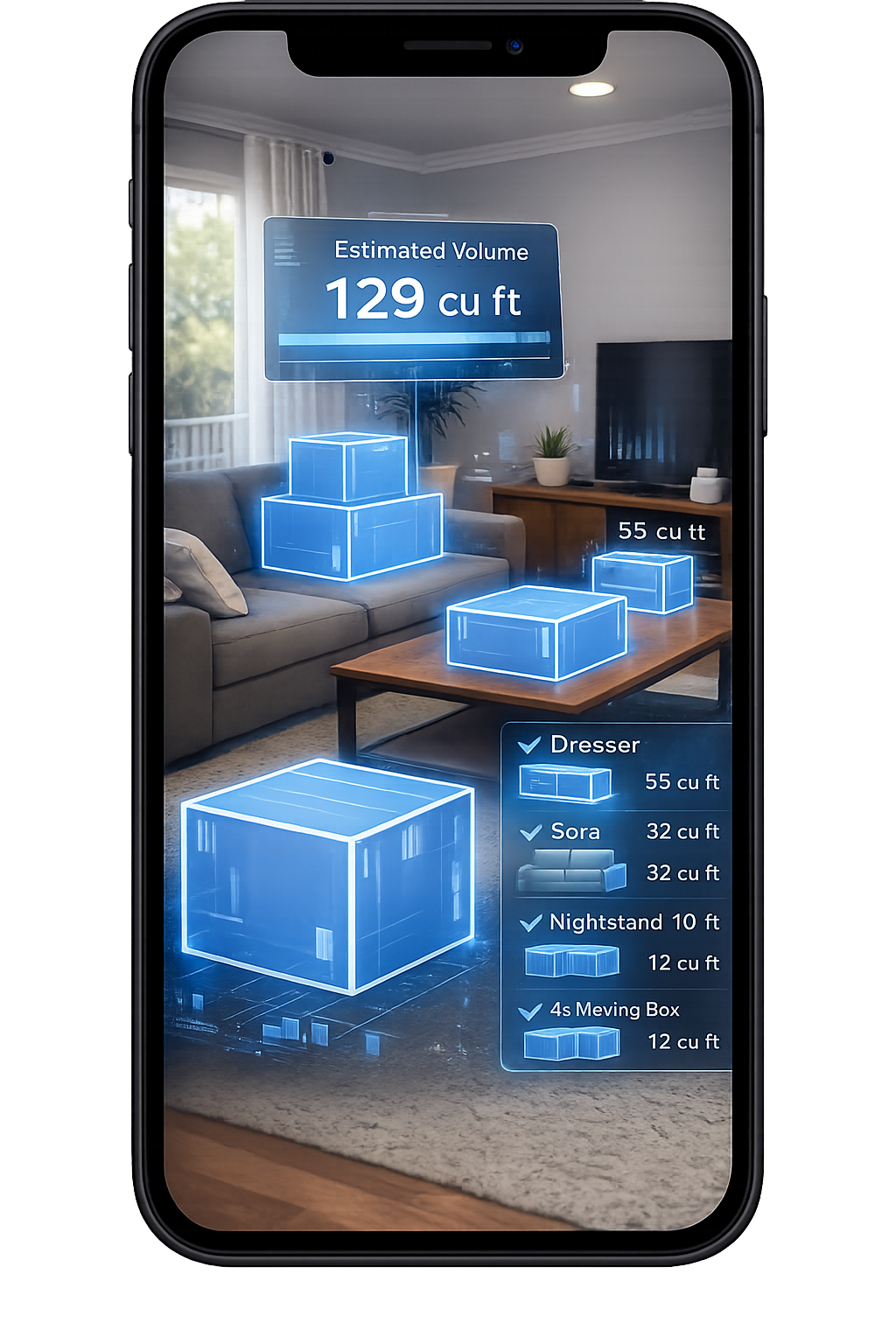
1. Scan Your Room With Your Phone
Walk around your space and scan your items in seconds.
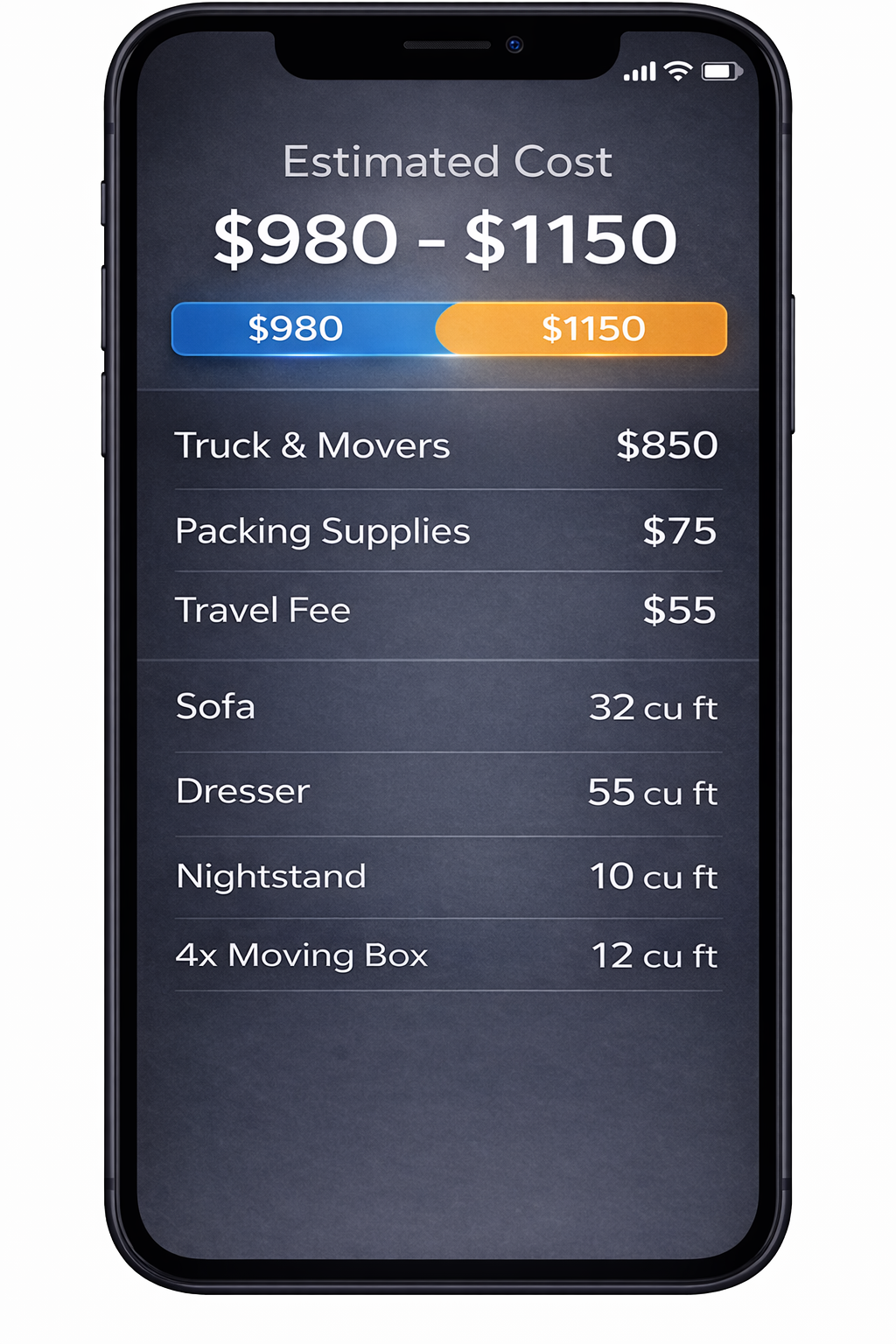
2. AI Detects Your Items
We identify your items and calculate volume for a clearer estimate.
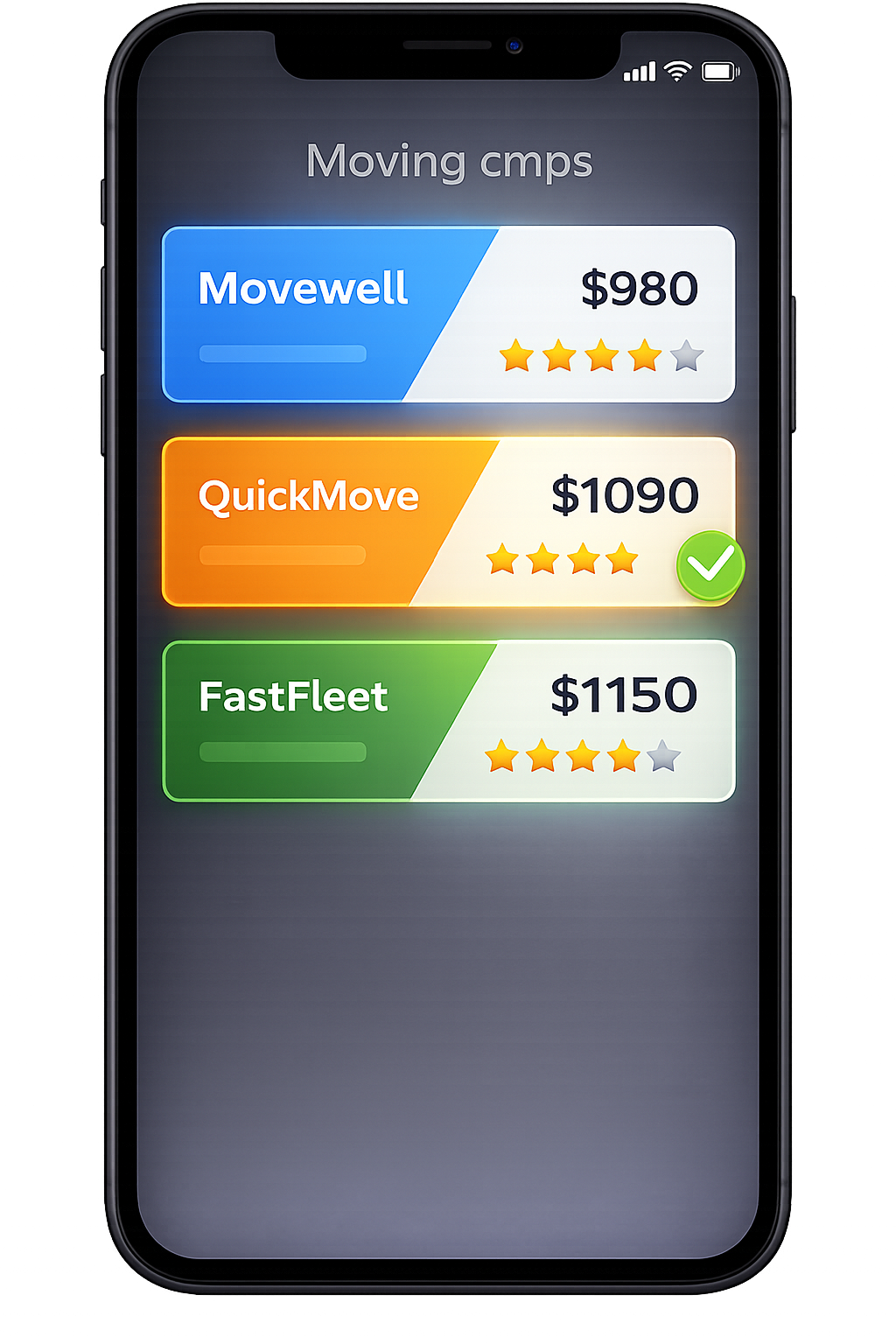
3. Compare Multiple Quotes
Compare mover quotes for Seattle, WA from the same scanned inventory.
Frequently Asked Questions
How far in advance should I get moving quotes for a Seattle apartment move?
For most local Seattle apartment moves, 3–4 weeks’ notice is ideal—especially for end-of-month dates or summer weekends when many leases turn over. Movers tend to book up quickly around the 1st and 15th of the month. MoveCost can still help you find options closer to your move date, but you’ll usually see better availability and more flexible time windows if you start scanning your home and comparing quotes a few weeks in advance. If your building requires elevator reservations or has restricted move hours, check those rules early so movers can plan around them.
Do I need a parking permit or reserved space for the moving truck in Seattle?
It depends on your street, time of day, and neighborhood. In dense areas like Capitol Hill, Belltown, South Lake Union, and parts of Queen Anne, finding a legal spot big enough for a moving truck can be difficult. Some Seattle residents arrange temporary no-parking zones or reserve loading bays through their building. When you request quotes via MoveCost, you can describe your typical parking situation and ask movers how they usually handle that block. They may recommend specific arrival windows, use alley access where allowed, or factor additional walking time into their estimate.
How do Seattle hills and stairs affect moving quotes?
Seattle’s hills and stair-heavy homes can add time and effort for movers. A basement-to-top-floor carry in a steep Queen Anne or West Seattle house usually takes longer than a similar square footage on flatter terrain. Some movers reflect this by estimating more hours; others may mention stair-related charges. When you use MoveCost, you can note the number of flights, any tight turns, and whether the path to the truck includes slopes or long outdoor walks. Movers then use those details to fine-tune your quote instead of relying on bedroom count alone.
What should I watch for in Seattle moving quotes if my building has an elevator?
Seattle high-rises and mid-rises often require freight elevator reservations, Certificates of Insurance, and rules about when moves can happen. When reading quotes, look for notes about elevator reservations, dock access, or time windows tied to your building’s policies. A quote that factors in a 3-hour freight elevator block will often include a more realistic crew size and time estimate. In MoveCost, you can add your building’s rules to your move details so movers can reflect them in your quote rather than discovering them on move day.
How do ferry routes like Bainbridge or Vashon influence my moving estimate?
Ferry moves introduce timing variables that local movers pay close attention to. Travel time can change depending on the sailing you catch, how early the truck needs to line up, and whether there are delays. Quotes for routes that include ferries may show broader arrival windows or extra time allocated for loading and unloading at terminals. When you build your move in MoveCost, simply indicate that a ferry is part of your route and which island or peninsula you’re going to or from. Movers can then estimate based on typical ferry patterns rather than a generic drive-time guess.
Can I get quotes for a partial move within Seattle, like only big furniture or storage runs?
Yes. Many Seattle residents move boxes and smaller items themselves in a car or rental van, then hire movers only for heavier or bulkier pieces like beds, sofas, dressers, or things stored in SODO or Georgetown storage units. In MoveCost, you can use the AI scan or item list to specify exactly what you want help with and whether a storage stop is involved. Movers will base their quotes on that limited scope, which can be more affordable than full-service packing and moving for everything you own.
How do I compare long-distance moving quotes from Seattle to another state using MoveCost?
Start by building a detailed inventory of what you’re taking—MoveCost’s AI scan is a fast way to do that—then request long-distance quotes. As you compare options, look beyond the total price. Review estimated pickup and delivery windows, how access is handled at your Seattle address and your destination, and whether your shipment travels on a direct or shared truck. Movers experienced with Seattle will also consider seasonal issues like winter travel over the passes. MoveCost lays these details out in a consistent format so you can focus on the tradeoffs that matter to you instead of deciphering different quote styles.
Can I use MoveCost if I’m moving into Seattle from out of town and don’t know the area yet?
Yes. You can create an inventory from wherever you are and still request quotes for your move into Seattle. It helps to gather some details from your future landlord, HOA, or building manager: floor number, elevator availability, loading dock access, move-in hours, and any parking instructions for trucks. You can enter those in MoveCost along with your destination neighborhood (for example, Ballard, Capitol Hill, or West Seattle). Movers familiar with those areas can incorporate local logistics into your quote so you know what to expect before you arrive.
How do Seattle seasons and weather affect my moving quote?
Seattle’s weather usually affects timing more than base rates. Summer is peak moving season, especially around late June through early September, so quotes for popular weekends may reflect higher demand and tighter scheduling. In fall and winter, frequent rain doesn’t always change pricing on its own, but long outdoor walks, steep driveways, and early darkness in neighborhoods like Magnolia or West Seattle can increase the time crews need to work safely. When you request quotes via MoveCost, note long outdoor paths, covered vs. uncovered entries, and any flexibility you have on dates so movers can recommend time windows that balance safety and cost.
What should I include in my MoveCost scan for a Seattle high-rise or condo move?
For high-rises and condos in areas like South Lake Union, Belltown, or downtown Seattle, include more than just your furniture. In your MoveCost scan and notes, add your floor number, whether you have a dedicated freight elevator, typical wait times, loading dock details, and parking height limits if trucks use a garage. Mention if your building has specific move-in/out hours or requires a Certificate of Insurance. Movers can use this information to send quotes that account for realistic elevator wait times, crew size, and any extra coordination with building staff.
Can I use MoveCost for Seattle routes that include both a storage unit and my home?
Yes. Many Seattle moves involve storage stops in neighborhoods like SODO, Georgetown, or Interbay. In MoveCost, you can add multiple stops to your move details and include items from each location in your AI inventory or item list. Movers then factor loading time at your home, the storage facility’s access rules and hours, and unloading at your final address into a single quote. That makes it easier to compare multi-stop quotes fairly instead of piecing together separate estimates.