
Moving estimate in New York made accurate, fast and stress‑free
Scan your New York apartment with AI, capture real stairs and elevator details, and compare moving quotes from NYC movers using one accurate inventory.

moving estimate in New York, NY
Get a moving estimate that matches real New York conditions
MoveCost turns the chaos of NYC moves into clear, data-backed estimates you can actually plan around. Most online moving forms just ask for “1 bedroom” and a rough guess at your boxes. In New York, that isn’t enough. A fifth‑floor walk‑up in Brooklyn, a compact studio in the East Village, and a high‑rise in Midtown all price out differently. MoveCost uses AI and local context so your moving estimate reflects how you actually live in New York: • Your real inventory, not vague checklists. • Walk‑ups vs elevators, tight hallways, and loading zones. • The time it really takes to move on busy city streets. This New York, NY moving‑estimate page is written as a detailed, standalone resource—not a thin template—so both people and search engines can understand exactly what it covers. It explains how AI scanning works in NYC apartments, how movers can use your data to build estimates, and how to compare quotes from different New York moving companies in one place. Scan your apartment once, share accurate details with multiple movers, and get estimates that are built around your specific New York space, not a generic national template. Estimates based on real items and access, not room labels alone Fewer last‑minute price changes on moving day Clear understanding of what your New York move will actually involve
Scan your New York apartment with AI and auto‑build your inventory
Crowded closets, narrow hallways, multipurpose rooms—MoveCost’s AI is designed for real New York layouts. Instead of guessing how many boxes you’ll have, you walk through your place once with your phone. MoveCost’s AI detects furniture and bulky items, estimates volume, and drafts a structured list your movers can price. Typical items it recognizes in New York apartments include: • Sofas, sectionals, TV stands, bookshelves, and dressers. • Bikes in the hallway, AC units in the window, and extra mattresses. • Desks, monitors, and small home‑office setups. You stay in control: • Review everything the AI captured. • Edit quantities and sizes. • Add special notes like “glass – fragile” or “needs disassembly.” Because your inventory is digital, you can reuse it for future moves, tweak it if you sell or buy furniture, or share details with building management when they ask what’s going through the lobby or service entrance. If you want a more general calculator view, MoveCost also offers an online AI moving cost calculator that works for any city. But when you care specifically about getting a moving estimate in New York, NY, this page and workflow focus on the access rules, apartment sizes, and building quirks that show up all over NYC. Accurate volume estimates for New York‑style layouts Less risk of forgotten items inflating cost later Movers arrive prepared with the right truck size and crew Bushwick railroad Upper West Side prewar East Village studio
Virtual New York moving estimates that fit your schedule
Skip in‑home estimates and handle everything from your phone—between subway stops or after work. Coordinating several in‑person walk‑throughs is tough when you’re juggling work, commutes, and building rules. With MoveCost, your AI inventory becomes the base for quick virtual estimates. After your scan: • Request virtual walkthroughs directly from movers in the platform. • Hop on a short video call so they can see staircases, elevators, and loading areas. • Show exactly how far your door is from the curb or loading dock. This is especially useful in neighborhoods like the West Village, Greenpoint, or parts of Queens where streets are narrow and parking enforcement is strict. Movers can confirm practical details like: • Whether there’s a freight elevator and how to reserve it. • If your building needs a Certificate of Insurance (COI). • Allowed move‑in/move‑out windows and any weekday‑only rules. For long‑distance moves—New York to Boston, Miami, or the West Coast—the same process helps movers consider both pickup and drop‑off based on real visuals instead of guesses about your “1 bedroom.” Flexible scheduling that works around New York work hours and commutes More accurate labor and timing estimates for complex buildings Fewer last‑minute surprises caused by unseen access issues
Compare multiple New York moving quotes side by side
Same inventory, same apartment details—so you’re finally comparing apples to apples. Once your AI inventory and building details are set, MoveCost lets multiple New York moving companies respond with estimates based on the exact same information. In your dashboard, you can see for each mover: • What’s included: loading, travel time, stairs, elevator use, long carries, and more. • Potential extra fees for things like extra flights of stairs or long walks from the truck. • Whether basics like blankets, tape, and simple disassembly/reassembly are covered. You can also look at movers by the types of jobs they know best: • High‑rise specialists used to Midtown and Downtown freight elevators and dock access. • Brooklyn and Queens movers familiar with walk‑ups, brownstones, and mixed‑parking blocks. Because every mover is working off the same AI‑generated inventory and access notes, the differences between quotes are much clearer. You’ll see which options are lean but basic, and which include more services that might be worth a slightly higher price for your situation. If you’re comparing quotes more broadly, you can also start from MoveCost’s national tools—like the instant moving quotes workflow or the moving cost calculator by state and city—and then return to this New York moving‑estimate page when you’re ready to focus specifically on an NYC move. Transparent comparison of multiple New York movers in one view Less back‑and‑forth explaining your apartment to each company Confidence you’re choosing based on real data, not just the lowest number Manhattan high‑rise moves Brooklyn & Queens walk‑ups New York to out‑of‑state
From first New York moving estimate to move‑in day, step by step
A clear, guided flow designed around how people actually move in and out of NYC buildings. MoveCost breaks your New York move into simple, guided steps so you’re never guessing what comes next. Clear overview of the entire moving‑estimate process Single source of truth for your inventory and building details Smoother move day because everyone has the same information Step 1: Enter move details Step 2: Scan and confirm inventory Step 3: Add building & access info Step 4: Get and compare estimates Step 5: Book and prepare
Plan for real New York logistics: elevators, parking, and building rules
Baking local details into your estimate now means fewer surprises on moving day. In New York, time is everything—for you and for your movers. What actually drives moving cost here isn’t just how much you own, but how hard your building and block are to work with. MoveCost prompts you to capture the details that matter most in New York: • Walk‑up vs elevator, and how many flights or half‑flights of stairs. • Distance from your door to where a truck can legally park or load. • Whether your super or management company needs a COI or advance notice. • If there’s a freight elevator, loading dock, or tight turn for large trucks. Season and time of day matter, too. Winter can slow things down with ice and snow; summer heat and rush‑hour traffic can affect timing. While no one can predict the exact weather, experienced New York movers can use these inputs to build realistic schedules and crew plans. For long‑distance moves starting or ending in the city, this same local data determines when trucks can arrive, how they stage on your street, and how long unloading will take—so your estimate is less likely to jump once the truck actually shows up. MoveCost also maintains broader guides—like a moving estimate guide for first‑time movers and a calculator that includes stairs and elevators—that use New York as a primary big‑city example. This page links back into those resources so people who land here can easily explore more detailed topics without leaving the MoveCost experience. More accurate crew sizing and time estimates for NYC conditions Lower risk of trucks circling the block or waiting for elevator access Less stress coordinating between movers and building management
How this New York moving‑estimate page fits into the rest of MoveCost
A dedicated NYC hub, connected to national tools and guides, helps both movers and search engines discover the right resource. This page is the main destination on MoveCost.ai for anyone looking for a moving estimate in New York, NY. It focuses on how AI scanning, inventory, and quote comparison work for New York apartments and New York–based moves. From here, you can branch out to related tools and guides: • Use the AI moving cost calculator if you want a quick national overview before zooming into New York. • Visit the moving cost calculator by state and city to compare New York routes with other origins and destinations. • Read the moving estimate guide for first‑time movers if this is your first big move and you want more background. • Check the cheapest states to move to from New York if you’re planning a bigger relocation out of state. • Explore the calculator that includes stairs and elevators if you live in a walk‑up or tall high‑rise and want to see how those details affect pricing. Those broader resources link back to this URL whenever they mention New York as an example. That two‑way internal linking, plus inclusion in MoveCost’s sitemaps, makes it clear to search engines that this is the primary New York, NY moving‑estimate page and part of a larger, crawlable New York hub on the site. Clear New York, NY landing page that stands on its own Direct connections to national calculators and educational guides Better context for how NYC pricing compares to other routes and states Leaving New York? First‑time mover? Stairs or elevator heavy?
Real‑world New York move scenarios this page is designed to cover
Different New York moves create different estimate patterns. This hub collects them in one place so people—and search engines—see the full range. Because this is the main New York moving‑estimate page on MoveCost.ai, it’s written to cover a wide spectrum of realistic NYC situations instead of just a single generic example. Here are a few of the move types it’s meant to support: • Short‑distance Manhattan moves For example, moving from a Hell’s Kitchen walk‑up to a Midtown high‑rise. The AI scan helps you capture your current inventory, while building‑access questions surface new elevator and loading‑dock rules at your destination. • Brooklyn and Queens walk‑up moves Think of a third‑floor brownstone in Park Slope or a fourth‑floor unit in Astoria. Stairs, narrow landings, and long carries to legal parking spots have a big impact on labor and timing, so they’re captured in your estimate. • New York to another state A move from New York City to a nearby state (like New Jersey, Connecticut, or Massachusetts) or a longer route (for example, New York to Florida or California). The same inventory and access details power estimates on the state‑to‑state calculator, then route you back here when you want NYC‑specific guidance. • Moves into New York from elsewhere If you’re relocating into the city, you can scan your current home, plug in your future New York address, and use this page’s building‑rules checklist to make sure access details on the NYC side are reflected in your estimate. By grounding the page in these concrete scenarios, it becomes more useful for renters actually planning a New York move and easier for search engines to understand that this URL is about New York, NY moving estimates—not just generic national pricing.
How It Works

1. Scan Your Room With Your Phone
Walk around your space and scan your items in seconds.
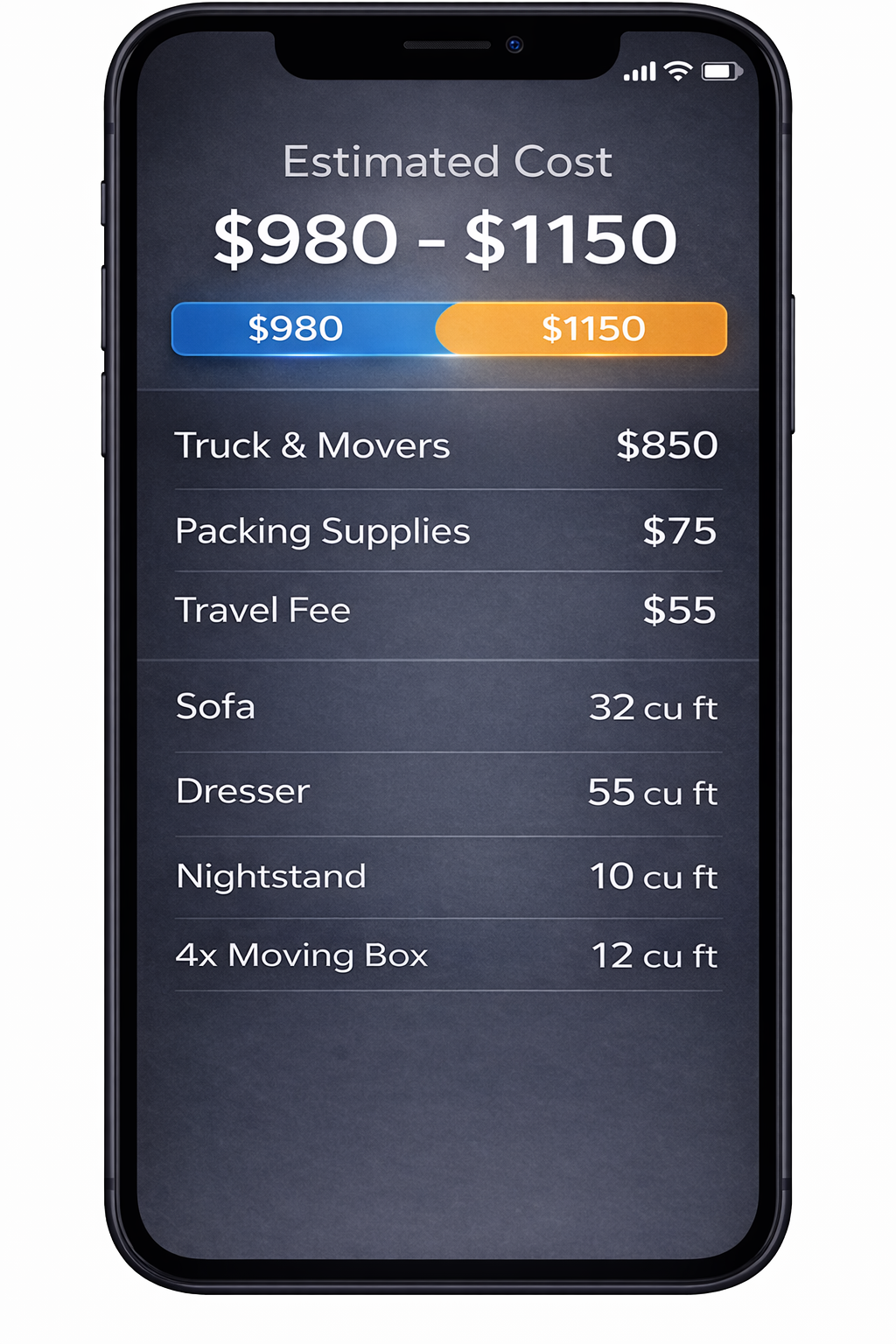
2. AI Detects Your Items
We identify your items and calculate volume for a clearer estimate.
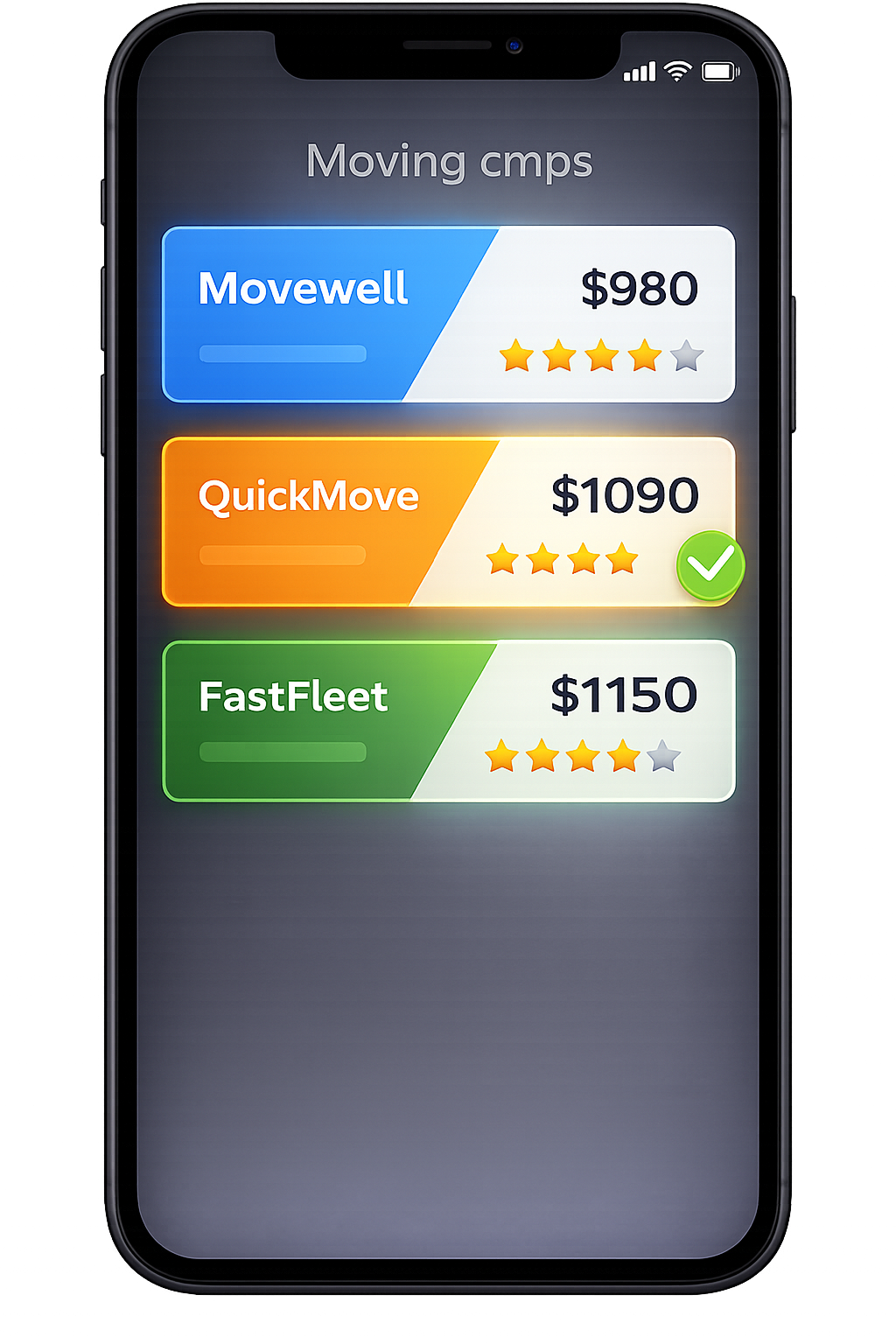
3. Compare Multiple Quotes
Compare mover quotes for New York, NY from the same scanned inventory.
Frequently Asked Questions
How accurate is an AI‑based moving estimate for a typical New York apartment?
For many New York studios and one‑bedrooms, AI‑based estimates tend to be closer to the final price than traditional online forms that ask only for “number of rooms.” MoveCost uses your scanned inventory (not just “1 bedroom”) and combines it with building access details like stairs, elevators, and walking distance to the truck. Most adjustments on moving day come from changes you make after the estimate—like adding items or forgetting to mention a second stop or storage unit. The more complete your scan and building info, the more aligned your New York moving estimate will be with what movers ultimately charge.
Can I get a reliable estimate if I live in a New York walk‑up with a tight staircase?
Yes. Walk‑ups are common in New York, and movers expect to price them differently from elevator buildings. During setup, you’ll specify your floor, any half‑flights, and whether the stairs are narrow or have tight turns. You can also show the staircase during a quick virtual walkthrough. MoveCost includes this information in the data movers see, so your estimate reflects the real effort required to carry furniture in and out of your walk‑up.
What if my New York building requires a COI or has strict elevator rules?
That’s standard in many Manhattan, Brooklyn, and Queens buildings. When you request estimates through MoveCost, you’ll be prompted to indicate if your building needs a Certificate of Insurance (COI) and whether there are set move‑in/move‑out windows or freight‑elevator reservations. Movers that respond can factor this into their timing and pricing, and they can typically issue a COI directly to your management company after you book. Sharing these details early helps avoid schedule conflicts and unexpected waiting fees.
How do long‑distance moving estimates work if I’m leaving New York for another state?
The process starts the same way as a local move: scan your New York apartment with AI, confirm your inventory, and add building and street‑access details. For long‑distance jobs, movers then consider mileage, tolls, overnight parking as needed, and labor at both pickup and delivery. Because New York pickup locations can be the most complex part of the move, capturing accurate access info here is important. Your quote will outline door‑to‑door service from your New York address to your new home in another state, with clarity on what’s included.
What happens if my inventory changes after I get my New York moving estimate?
You can log back into MoveCost at any time to update your inventory or building details. If you sell your couch, buy a new bed, or add an extra pickup or drop‑off stop, you simply adjust the items or addresses in the app. Then you can request refreshed estimates from the movers you’re considering. Small changes, like a few extra boxes, may not shift pricing much, but larger additions—like a new sectional or extra flight of stairs—can affect cost. Updating everything before moving day keeps you and your mover aligned.
Do I need to be in New York to get an estimate for a move into the city?
No. If you’re moving into New York from another city or state, you can still use MoveCost. You’ll scan and describe your current home, add your future New York address, and fill in any access details you know (for example, “elevator building in Midtown” or “4th‑floor walk‑up in Brooklyn”). As your New York building details become clearer—like COI requirements or freight‑elevator rules—you can update them so movers can refine your estimate before move‑in day.
Why does this New York moving‑estimate page exist separately from the general calculator?
MoveCost runs a general AI moving cost calculator that works for many routes, but New York has unique constraints—walk‑ups, elevators, COIs, loading docks, narrow streets, and strict move‑in windows. This dedicated New York, NY moving‑estimate page focuses entirely on those details, gives you city‑specific examples, and connects to other New York‑relevant guides. That makes it more useful for people planning an NYC move and clearer for search engines that this is the main New York moving‑estimate resource on MoveCost.ai.
Is this page only for New York City, or does it cover the whole state?
This page is written primarily for New York City–style moves—walk‑ups, high‑rises, and dense streets in the five boroughs. If you’re moving between cities in New York State or between New York and another state, you can still use the same AI scan and inventory tools, but you may also want to compare routes in the moving cost calculator by state and city. That calculator shows how New York routes compare to other origins and destinations, while this page stays focused on NYC building and street conditions.