
Realistic Moving Costs in Los Angeles: What People Actually Pay
See how distance, building access, traffic and your inventory all shape your moving cost in LA — then compare quotes and get AI‑powered estimates in minutes.

moving cost in Los Angeles, CA
Moving costs in Los Angeles usually come down to three things: how much stuff you have, how far you’re going, and how hard it is to get in and out of each building. For most local apartment moves within the city, people commonly see prices land somewhere between $450 and $1,200 for a small to mid‑size place, assuming a standard half‑day move with two or three movers. If you’re going from a studio in Koreatown to a one‑bedroom in Echo Park, with an elevator on at least one side and reasonable parking, your total might sit in the lower to middle end of that range. On the other hand, a two‑bedroom in a dense area like West Hollywood or DTLA, where movers have to deal with loading docks, elevator reservations, and tight time windows, can push your cost up even if the distance is short. Houses tend to cost more simply because there’s more volume. A three‑bedroom home going from the Valley to the South Bay can easily cross $1,500 once you factor in stairs, long carries from the truck, and LA traffic delays. If you’re leaving Southern California entirely — for example, relocating from Santa Monica to Austin or Seattle — you’re likely looking at a price based on weight and distance, often starting around $2,000–$4,000 for a smaller household and going up from there. Our marketplace connects you with multiple licensed movers used to LA’s specific challenges. You can scan your home inventory with AI, get a much more accurate sense of your price range before you commit, and then compare quotes from different companies that actually work these neighborhoods every day.
Distance is the obvious part of moving cost, but in Los Angeles, the route and timing can matter just as much as the mileage. A 6‑mile move from Silver Lake to Downtown might cost more in labor time than a 12‑mile move from Woodland Hills to Burbank, simply because of congestion, loading rules, and where the truck can legally park. Local movers usually charge by the hour, with rates that change depending on how many movers you need and whether it’s a weekday or weekend. When you’re crossing the city — say from Pasadena to Venice — you’re paying for drive time in traffic, not just the time movers are inside your home. Morning rush on the 110 or a stalled 10 freeway can add 30–60 minutes of billable time very easily. Neighborhood access also plays a big role. Older buildings near MacArthur Park or Hollywood often have narrow stairwells and no elevator, which slows everything down. Newer complexes in areas like Playa Vista or the Arts District may require movers to use loading docks, reserve elevator time slots, or check in with security. If the truck has to park far from the entrance — common on busy streets like Sunset, Wilshire or Ventura — movers spend more time doing long carries, and that can increase your total cost. For longer distances, such as moving from LA to San Diego, the Bay Area, or out of state, movers typically switch to a flat or weight‑based price instead of straight hourly charges. That quote will still reflect pickup and delivery access: a house in the Valley with driveway parking is cheaper to service than a high‑rise off Figueroa that requires a smaller shuttle truck. On our platform, you can enter both addresses, flag tricky details like “no elevator” or “street parking only,” and our AI will help translate that into a realistic time and cost estimate before you start comparing quotes.
Two one‑bedroom apartments in Los Angeles can have completely different moving costs, even if they’re the same size on paper. That’s because movers care more about how much you actually own — boxes, furniture, fragile items — than your floor plan. A minimalist studio in Highland Park with a bed, a sofa, a small dining table and 20 boxes is a very different job than a gear‑heavy place in North Hollywood packed with instruments, workout equipment and shelving. Volume affects both time and truck size. If your belongings fill half a standard truck, a local move may only require one trip. But if your two‑bedroom in Sherman Oaks has a garage full of storage bins, patio furniture and bulky dressers, the crew might need a larger truck or two runs, which means more hours. Heavy items like solid wood furniture, big sectionals, marble tables or a full home office setup also slow the crew down. This is where our AI inventory scan becomes extremely useful. Instead of trying to guess how many boxes you’ll have, you can walk through your home with your phone. The system identifies furniture, counts visible items, and helps you build a detailed list automatically. That inventory goes directly to movers in our marketplace, so the quotes you receive are based on what they’ll actually be moving, not a rough guess. Accurate inventory is especially important for long‑distance moves from LA. Carriers usually base your price on weight and volume. Underestimating can lead to surprise cost increases on moving day; overestimating means you might overpay. With a precise inventory, movers can plan the right truck size, crew and equipment, which helps keep your final bill aligned with your estimate.
Moving costs in Los Angeles shift throughout the year and even throughout the month. Late spring through early fall is the busiest period. Graduations at USC and UCLA, lease cycles in popular areas like West LA, and families trying to move before the school year all combine to push demand — and prices — higher from roughly May through September. During these busier months, Saturday and Sunday slots book up quickly. Movers may charge higher hourly rates on weekends or offer fewer discounts. The first and last weeks of the month are also premium times because many leases roll over then. If you’re trying to move from a Downtown loft to a place in Culver City on the last weekend of the month in July, expect fewer available crews and higher quotes compared to a midweek move. Weather also plays a quieter but real role. While LA doesn’t deal with snow, heat waves in the Valley or heavier winter rains can slow moves down. Crews may need more breaks on 100‑degree days in Van Nuys or North Hills, and wet conditions in January can make loading slower and more careful, especially with stairs and outdoor walkways. If you have flexibility, consider a weekday move that starts in the morning, avoiding peak drive times on major corridors like the 405 and 101. On our marketplace, you can experiment with different dates and time windows and instantly see how quotes change. The AI estimator can also show you how shifting from a Saturday at month‑end to a Wednesday in the middle of the month could lower your overall moving cost.
Local moves within the greater LA area — for example, from Glendale to Highland Park or from Marina del Rey to West Hollywood — are usually billed by the hour. Your cost will be tied to how long the crew spends wrapping, loading, driving and unloading your belongings. This structure makes sense for shorter moves where traffic, stairs and elevators are the main variables. Once you start heading farther out — to places like Palm Springs, San Diego, Las Vegas, or up to the Bay Area — pricing often shifts to a flat or hybrid model. For full cross‑country moves, such as from Los Angeles to New York or Denver, your quote is typically based on weight, distance and service level (full‑service packing, partial packing, or loading only). That means your inventory list and access conditions on both ends become even more critical. Apartments in denser neighborhoods can add complexity. Moving out of a high‑rise near Staples Center or along Wilshire often requires booking freight elevators and working within building rules that prohibit moves during certain hours. If you’re moving into a townhouse in Santa Monica with alley access and narrow stairs, movers might need extra time and specific equipment. House‑to‑house moves, like from a place in Studio City to a home in Redondo Beach, can be faster if there’s driveway parking and no tight time windows — but the overall cost may still be higher because larger homes usually mean more volume. Our platform helps with both kinds of moves. For local jobs, you can compare hourly rates and minimums from multiple movers who know the specific neighborhoods you’re dealing with. For long‑distance relocations, you can use the AI inventory tool to get a solid weight and volume estimate, then see side‑by‑side offers that include transit time, delivery windows, and any additional fees for stairs, long carries or shuttles.
Because Los Angeles has such a mix of building types and traffic patterns, a quick guess over the phone usually isn’t enough to understand your true moving cost. That’s why we combine AI inventory tools with real, competitive quotes from licensed movers who work across the city every day. You start by scanning your home. Using your phone, you walk through each room — from your living room in Echo Park to the small balcony in your Valley Village apartment. The AI identifies major items like sofas, beds, tables, desks, TVs and visible boxes. You can quickly add things from storage, like bins in a Hollywood garage or items in a Pasadena basement. Within a few minutes, you get a structured inventory that would normally take a mover a full walkthrough to build. Once your inventory is set, you enter your current and destination addresses, along with details that matter in LA: elevator or stairs, parking situation, if your building requires a certificate of insurance, and any time restrictions for moving in or out. The system uses this information to generate an estimate range, taking into account local traffic patterns, typical load times and seasonal pricing trends. From there, you can compare quotes from different moving companies in our marketplace. You’ll see how each mover prices your specific job — hourly for most local moves, or flat/weight‑based for longer routes — and what’s included. Because everyone is working from the same detailed inventory, the numbers are more reliable and less likely to jump on moving day. If you adjust your plan — maybe you decide to move some boxes yourself from your West LA storage unit, or you add packing help for your kitchen — you can update your inventory and see your estimated cost change in real time before booking.
How It Works

1. Scan Your Room With Your Phone
Walk around your space and scan your items in seconds.
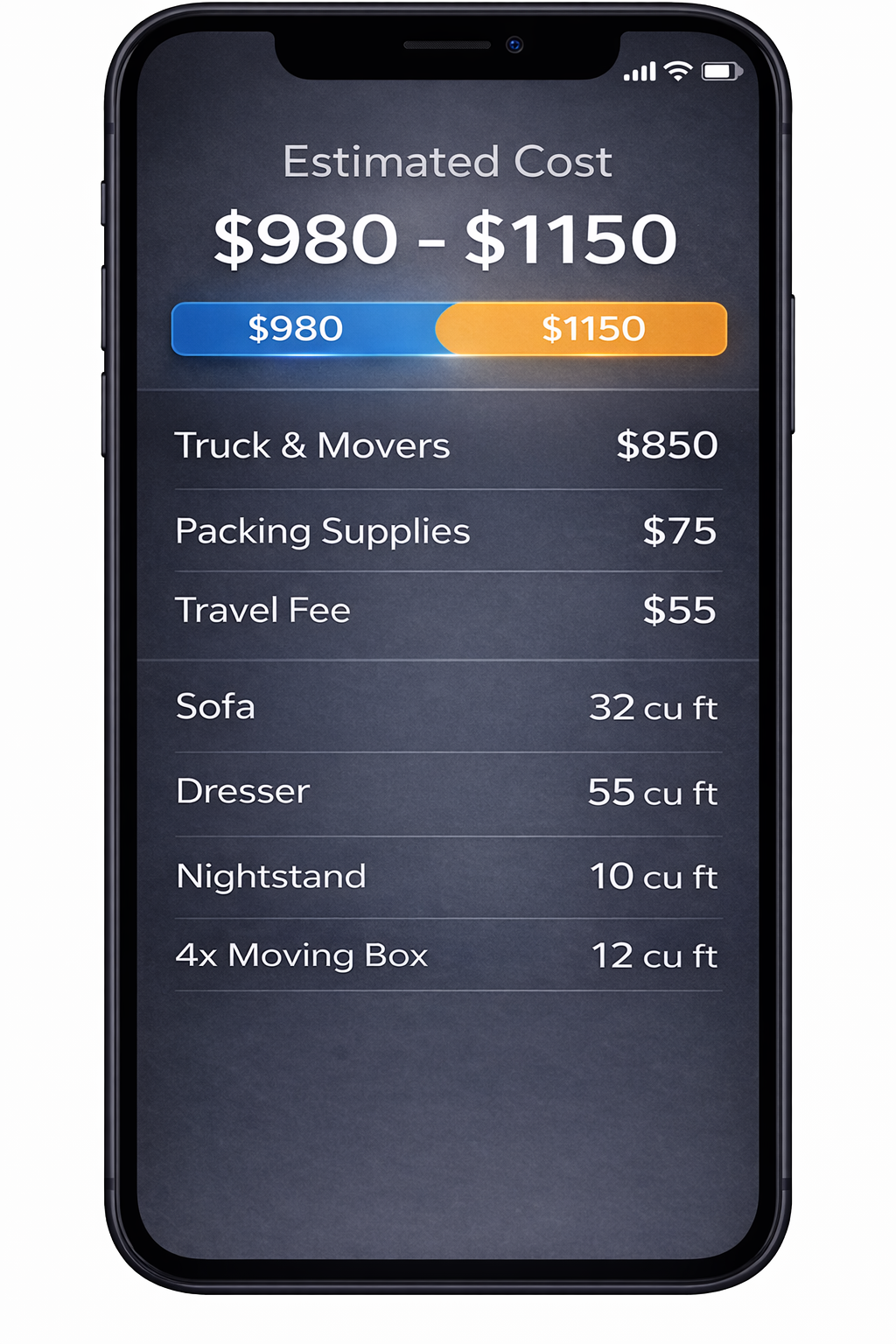
2. AI Detects Your Items
We identify your items and calculate volume for a clearer estimate.
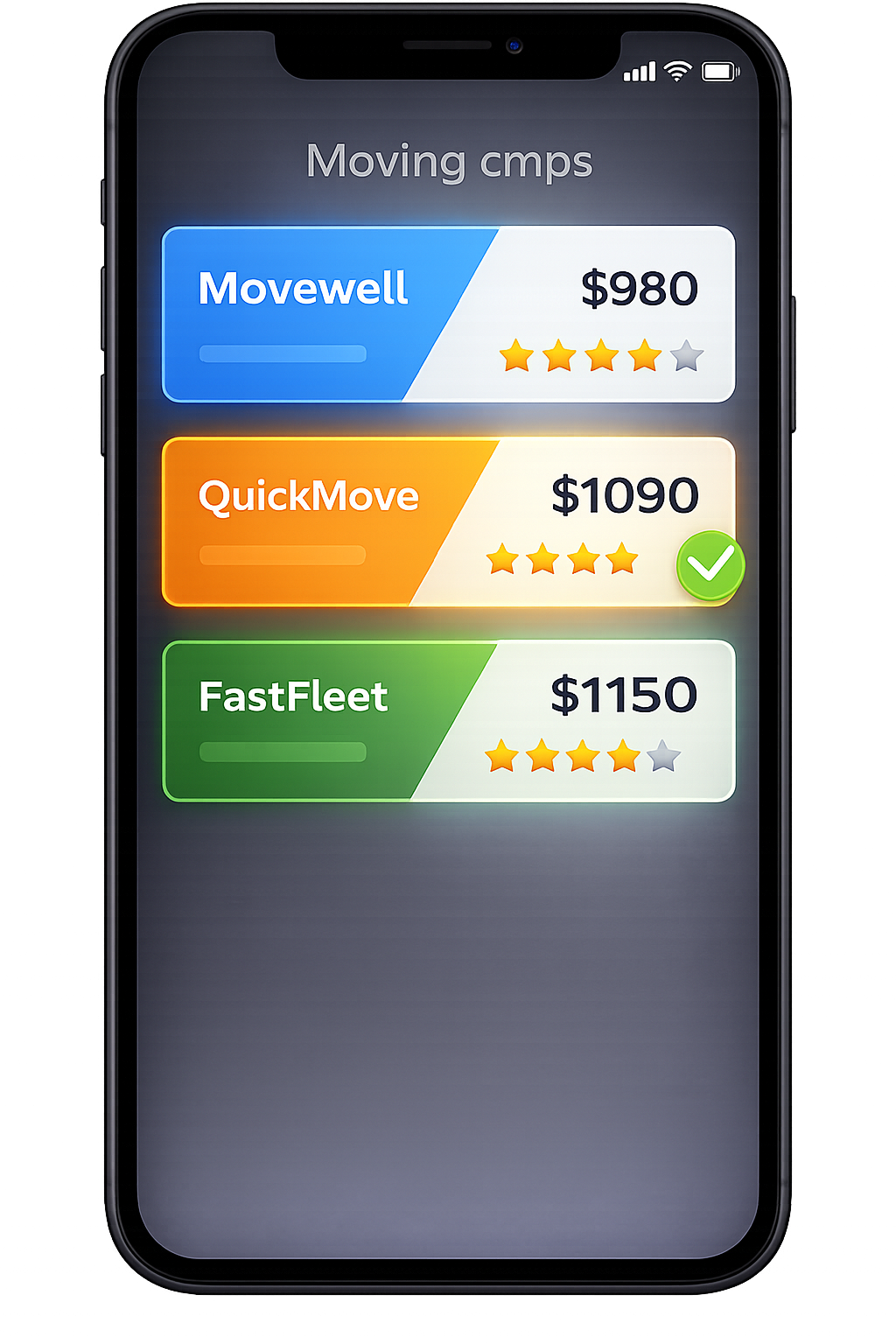
3. Compare Multiple Quotes
Compare mover quotes for Los Angeles, CA from the same scanned inventory.
Frequently Asked Questions
What does a typical one‑bedroom move cost within Los Angeles?
For a standard one‑bedroom apartment move within the city, most people see prices fall somewhere between $600 and $1,000. That assumes a three‑ to six‑hour move with two or three movers, light to moderate furniture, and average access — for example, one elevator building and one walk‑up with decent street parking. If both places have stairs only, limited truck parking on busy streets like Sunset or Wilshire, or a lot of fragile items that require extra wrapping, you can expect the total to land toward the higher end. Using our AI inventory scan and comparing quotes will give you a tighter range for your exact route and building setup.
How much more will my move cost if my LA apartment has no elevator?
Stairs add time, and in Los Angeles that almost always means a higher moving cost. For a third‑floor walk‑up in areas like Hollywood, Palms or East LA, you might see an extra 30–60 minutes of labor for a smaller place, and even more for larger homes or heavy furniture. Many movers don’t charge a separate “stairs fee” for local jobs, but they do bill by the hour, so extra time on the stairs raises your final total. When you request estimates on our platform, you can mark which floor you’re on and whether there’s an elevator. The AI will factor that into your time estimate so the quotes you see already account for the extra effort.
Can I lower my moving cost in LA by avoiding traffic hours?
Yes, your timing can make a noticeable difference. Because many LA movers charge door‑to‑door by the hour, being stuck on the 405 or the 101 during rush hour is effectively billable time. Scheduling your move to start early in the morning on a weekday and avoiding afternoon cross‑town drives can reduce your total hours. For example, a move from Santa Monica to Echo Park that happens at 8 a.m. on a Tuesday will almost always be cheaper than the same move starting at 3 p.m. on a Friday. When you request quotes, you can try different start times and days; our estimator will show you how your expected duration — and cost — changes.
How does the AI inventory scan actually help with my moving quote?
The AI scan replaces a lot of guesswork. Instead of telling movers, “I have a typical one‑bedroom in Koreatown,” you walk through your place with your phone. The system recognizes furniture, counts visible items and helps you record everything from your sectional to your bikes and bookshelves. That detailed list lets movers estimate how long loading and unloading will take, what truck size they need, and how many crew members to send. In Los Angeles, where access and parking can slow things down, accurate inventory is the difference between a vague ballpark and a quote that actually matches your final bill. It also lets you get firm offers from multiple movers without scheduling in‑person walkthroughs with each one.
Are long‑distance moves from Los Angeles priced differently than local ones?
Yes. Local moves within greater LA are mostly billed by the hour, plus any materials or special services. Long‑distance moves — for example, from LA to Phoenix, Portland or across the country — are more often priced by weight, distance and services included. That means the total volume of your belongings and access at both homes (driveway vs. street parking, ground floor vs. high‑rise) are key cost drivers. With our marketplace, you can use the AI inventory to estimate your weight, then compare long‑distance quotes that show line‑item pricing for transport, packing, potential shuttles for tight streets, and delivery windows. This helps you understand exactly what you’re paying for before you commit.