
Realistic Moving Costs in Houston, TX — Local & Long‑Distance Examples for 2026
See concrete price examples for inner-loop apartments, suburban houses, and a Houston–Dallas route, then use an AI-powered home scan to estimate your own moving cost and compare movers online.

moving cost in Houston, TX
What People Commonly Pay to Move in Houston in 2026
When you search for “moving cost” in Houston, you’ll usually see the same vague national averages. This page focuses on what moves around Houston often look like in practice so you can understand the ballpark before you scan your own place. Here are example ranges some Houston residents might see in 2026 for typical local moves when hiring a professional crew with a truck: • Small inner-loop apartment (studio or 1-bedroom) For a short local move—say from Midtown to Montrose or Heights to Washington Avenue—many people end up in the roughly $350–$700 range. That usually reflects a smaller inventory, a 2–3 person crew, and about 3–5 hours on the job, depending on stairs, elevator access, and traffic. • 2-bedroom apartment or townhome inside the Loop Moves like EaDo to the Museum District or Upper Kirby to the Galleria area can easily take 4–7 hours, especially with elevators or long walks from unit to truck. It’s common for these to fall somewhere in the mid-hundreds into the low thousands, depending on how much furniture and how many boxes you have. • 3-bedroom house in the suburbs (Katy, Pearland, Cypress, etc.) A local move such as Katy to Cypress, Pearland to Friendswood, or Spring to Tomball can often land in the roughly $900–$1,800 range or more. Houston is spread out, and even “local” can still mean 45–60 minutes of drive time plus loading and unloading. These are not quotes or guarantees—just grounded examples of how local Houston moves often price out when you hire professional movers. Your actual cost depends heavily on your inventory volume, building access, timing, and distance. MoveCost lets you turn your own home into numbers instead of guessing. You scan your place with your phone, our AI estimates the size and effort, and then you compare real offers from movers who can see the same details.
Inner Loop vs. Suburban Houston: How Your Neighborhood Affects Cost
Two moves with the same number of rooms can cost different amounts depending on whether you’re inside the Loop or in the suburbs. Inner Loop examples Inside the Loop—areas like Downtown, Midtown, Montrose, the Heights, Museum District, and the Medical Center—your moving cost is often shaped by elevators, parking, and building rules as much as distance. • A 1-bedroom move from a Midtown mid-rise to a Montrose walk-up might stay toward the lower end of that $350–$700 band if there’s easy parking and one flight of stairs. • The same size place in a high-rise near the Galleria with freight elevator reservations, loading docks, and long hallways can take more time. That can push a job into the higher end of the typical 1-bedroom range or beyond, simply because the crew spends more time walking and waiting. Suburban examples In suburbs like Katy, Cypress, Sugar Land, Pearland, Friendswood, Spring, Kingwood, or The Woodlands, crews usually have easier truck access but longer drives across the metro. • A 3-bedroom house from Katy to another neighborhood in Katy with good driveway access, minimal stairs, and moderate furniture might land closer to the lower end of that $900–$1,800 example band. • A similar 3-bedroom move from Pearland to Cypress, crossing a larger stretch of the metro and major loops (Beltway 8, 610, etc.), can be on the higher side because of more drive time and longer overall crew hours. Why this matters for your quote Instead of answering “How many bedrooms?” and hoping for the best, MoveCost helps you give movers real context: • Your actual inventory from an AI scan • Whether you’re inside the Loop or in a far suburb • Notes like “third-floor, no elevator,” “freight elevator only,” or “long walk from unit to parking lot” That way, local Houston movers can price your job around your real situation, not just a ZIP code and a guess.
From Houston Across Texas: Local vs. State-to-State Moving Costs
Short local hops and longer routes out of Houston are usually priced very differently. Local and in-state moves For local moves within the Houston metro, movers commonly charge by the hour for a crew and truck. For in-state routes—for example, Houston to Austin, San Antonio, or Dallas—many companies switch to pricing based on weight or volume plus distance, sometimes with fuel and overnight considerations. To put one example in context: • A family moving a 3-bedroom house from Spring (north Houston) to Austin might see example ranges in the low thousands once you add up: • Loading and unloading time for a full household • Drive time between cities • Any extra services like packing, furniture disassembly, or special handling Different companies structure these jobs differently (hourly, flat rate, or hybrid), which is why comparison is important. Example: Houston to Dallas vs. a local Houston move Consider a household with a similar amount of furniture deciding between: • Option A: Local move within Houston 3-bedroom home going from Cypress to Katy on a weekday. This may be priced as an hourly local job, and the total often lands somewhere in the same rough $900–$1,800 example band many suburban families see, depending on crew size, time, and access. • Option B: Houston to Dallas The same household moving from Cypress to a suburb of Dallas could see costs move into the low thousands because of: • Higher mileage • Longer drive duration • Possible overnight logistics or different crews on each end Again, these are illustrative ranges, not promises. The actual price you get will depend on the mover, date, inventory, and services you choose. With MoveCost, you can run both scenarios using your same AI-scanned inventory—a local Houston move vs. a state-to-state move—and see how offers from different movers compare before you commit to any route.
Distance Across Houston Isn’t Just Miles on a Map
In Houston, a 10-mile move and a 25-mile move don’t always price the way you’d expect. Traffic patterns, toll roads, and how crews schedule their days matter almost as much as the raw distance. Short inner-city hops A move from Montrose to the Museum District or Downtown to EaDo might only be a few miles. In theory, that sounds like a quick job. In reality: • Midday or evening 610 and I-69 traffic can slow the truck down. • Loading in busy streets with limited parking can add time as crews walk farther with each load. If a mover charges hourly, that extra time directly affects your final cost even if the mileage is low. Cross-metro moves A move from Sugar Land to Kingwood or League City to Cypress covers a much larger chunk of the metro. Even on days with light traffic, the drive is simply longer, and movers build that time into your quote. Many local Houston jobs end up with similar total hours because: • A short-distance, high-friction inner-loop move can take as long as • A longer-distance, lower-friction suburban move with easy truck parking How MoveCost factors distance into your estimate When you use MoveCost, you: 1. Scan your home so we can estimate loading and unloading time based on what you actually own. 2. Enter your current and new addresses, so distance and typical drive time can be accounted for. 3. Choose ideal move dates, which helps movers understand likely traffic and scheduling constraints. This information gives movers enough detail to price Downtown to Midtown differently from Katy to The Woodlands, even if both show up as “local” in a simple search box.
Inventory Volume: Why Two Houston Neighbors Pay Different Moving Costs
Two people can live in almost identical floor plans off Westheimer, yet pay noticeably different amounts to move. The main reason is inventory volume—how much stuff you actually have and how difficult it is to move. Same layout, different amount of work • A lightly furnished 2-bedroom in a newer Midtown mid-rise with elevator access, modular furniture, and minimal décor might take a crew 3–4 hours. • The same-size unit in an older complex in Alief or Spring Branch with heavy solid wood furniture, packed closets, and a full balcony storage unit can stretch into 6–7 hours or more. Both are “2-bedroom apartments,” but the labor is completely different. Oversized and special items around Houston Certain items regularly show up in Houston moves and can affect your quote: • Pianos in older Heights bungalows or Memorial homes • Large sectionals and entertainment centers in Cypress, Katy, and The Woodlands • Garage gyms, tool benches, and deep freezers in suburban houses • Storage units in areas like Pasadena, Clear Lake, or Pearland that add a second stop These often need more people, special equipment, or extra time for careful handling. How the AI scan helps Instead of asking you to count boxes and measure furniture, MoveCost lets you: • Walk through your home with your phone while our AI detects major items and boxes. • Automatically generate an itemized inventory list movers can understand. • Manually adjust the list—add that second fridge in your Cypress garage, remove the guest bed you sold in Pearland, or flag fragile items. As you tweak your inventory, your estimated moving cost updates in real time, so you can see how decluttering or selling a few heavy pieces might influence your budget.
Weekdays, Weekends, and Houston Weather: How Timing Changes Your Price
In Houston, when you move can matter almost as much as where you move. Movers adjust their schedules around school calendars, lease cycles, and the weather. Weekend vs weekday pricing in Houston • Weekends and end-of-month dates are usually the most requested, especially from renters in Midtown, Montrose, the Heights, and the Galleria area. When demand is high, some movers: • Fill their calendars weeks in advance • Enforce higher minimum hours or stricter start times • May quote higher overall costs compared with slower days • Weekdays (especially Tuesday–Thursday) often have more flexibility. For some moves, choosing a weekday can result in more options to choose from and, with some movers, more favorable pricing structures than a peak Saturday slot. How weather and rescheduling can affect your Houston move Houston’s weather can bring heavy rain, humidity, and occasional flooding. While each moving company has its own policies, weather can influence your experience in a few common ways: • Rain and wet conditions can slow loading and unloading as crews protect floors and belongings. • Localized flooding in low-lying areas can force trucks to reroute, adding drive time. • In severe conditions, some movers may recommend rescheduling for safety and to protect your items. Rescheduling policies, potential fees, and how “weather delays” are handled differ by company, so it’s important to review the specific terms in any quote you consider. Using MoveCost to compare dates MoveCost lets you: 1. Test multiple move dates using the same AI-scanned inventory. 2. See how quotes differ for weekday vs weekend, or for a peak summer date vs a shoulder-season date. 3. Ask movers questions about weather and rescheduling policies directly through the platform before you commit. That way, you can weigh the trade-off between working around your job schedule and aiming for dates that may be more favorable from a cost and availability standpoint.
Turn Your Houston Home into a Real Moving Cost Estimate with One Scan
Most people in Houston still figure out moving costs the old way: calling around, describing their place repeatedly, and comparing a few rough quotes that may or may not match the final bill. MoveCost is built to give you more clarity upfront while keeping the process simple. Here’s how it works for a Houston move: 1. Scan your home with AI Use your phone to walk through your apartment, townhome, or house—whether you’re in Downtown, Montrose, Sugar Land, or Katy. Our system recognizes large items and boxes and builds a detailed inventory for you. 2. Add your addresses and preferred move dates Enter your current and future addresses anywhere in the Houston metro or beyond. The platform factors in distance, traffic patterns, and building type when generating estimates. 3. See instant estimate ranges Based on your inventory and route, you’ll see ballpark ranges that help you understand what similar moves might cost. This isn’t a promise of a specific price, but it gives you a far clearer starting point than “small 2-bedroom.” 4. Compare offers from movers side by side Movers that work in your part of Houston can review your scanned inventory and details and then send their own quotes. You can compare how they structure pricing—hourly vs flat rate, what’s included, and their availability for your chosen dates. 5. Adjust to fit your plan and budget Try different dates, remove items you’re planning to sell, or note that you’ll move some boxes yourself. Watch how your estimated ranges respond so you can align your move with your priorities. Because each company is looking at the same AI-generated picture of your move, the quotes you receive are built around consistent information. That makes it easier to compare your options and choose a mover that fits your needs for your specific Houston route.
How This Page Fits Into Houston Moving Cost, Estimate, and Quote Tools
This Houston moving cost page is meant to answer one specific question: “What do people actually pay to move around Houston, and how might my situation compare?” To keep your research organized and make the rest of the MoveCost site easier to navigate, here’s how this page connects to related Houston-focused tools and guides: • Use this page for concrete 2026 price examples—inner-loop vs suburban moves, a Houston–Dallas scenario, weekday vs weekend, and how weather and distance across the metro play into cost. • Head to the Local Moving Cost Calculator Near Me page when you’re ready to turn your own addresses and inventory into a structured local Houston estimate instead of just reading examples. • Visit the State to State Moving Cost Calculator Online page if you’re comparing routes from Houston to other states, such as Houston–Dallas–Oklahoma routes or Houston–out-of-state moves. • Open the AI Moving Cost Calculator Online Free page when you want a more general, non-Houston-specific breakdown of how the AI calculator works, including workflows for other cities. • Use the Instant Moving Quotes Without Phone Calls and Compare Moving Company Quotes Instantly Online—With One Simple Scan pages once you’re ready to focus on the quote and mover-comparison step. In short, this page gives you Houston-specific cost patterns. The linked tools help you run your own scan, get an estimate, and compare real quotes for your exact move.
How It Works

1. Scan Your Room With Your Phone
Walk around your space and scan your items in seconds.
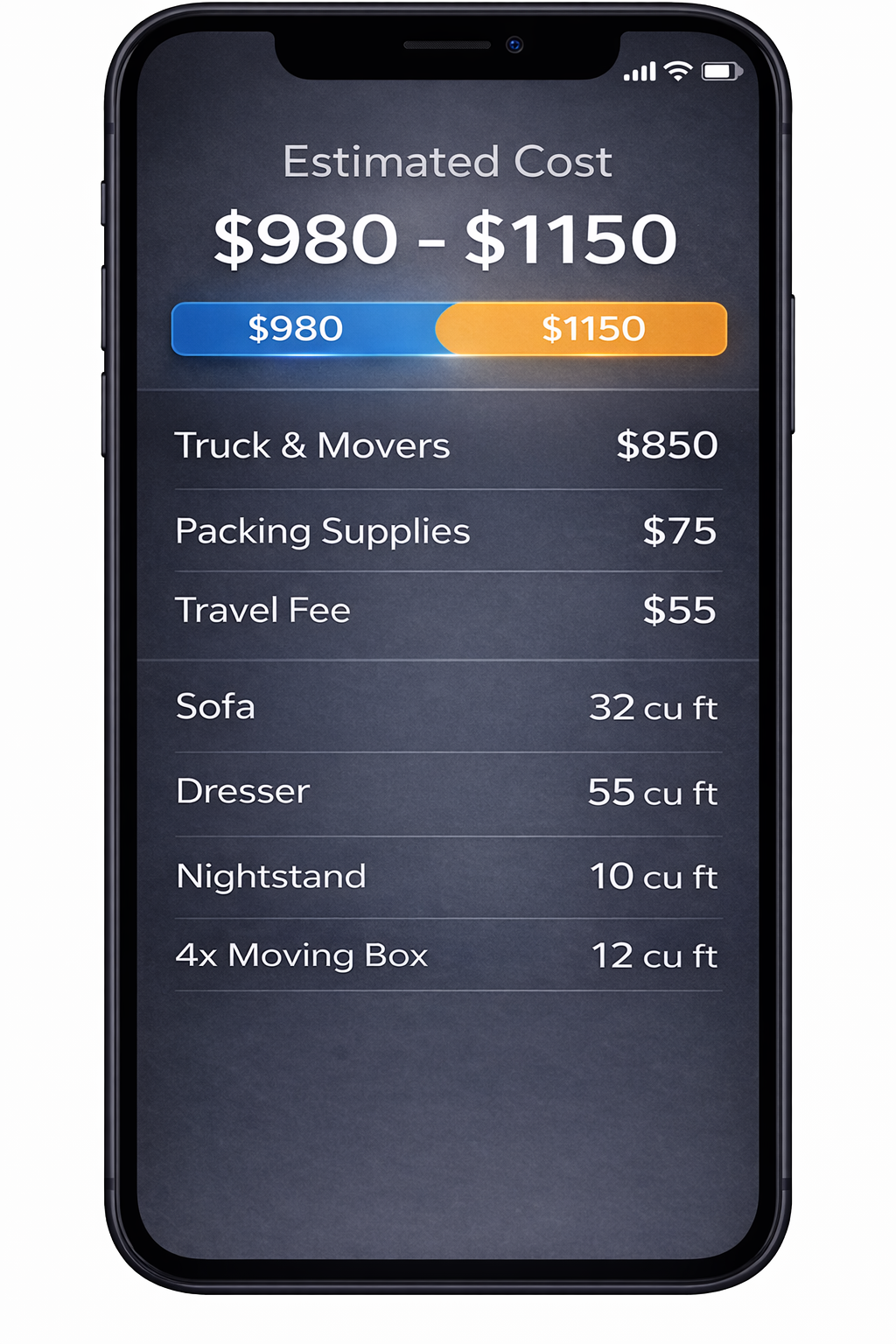
2. AI Detects Your Items
We identify your items and calculate volume for a clearer estimate.
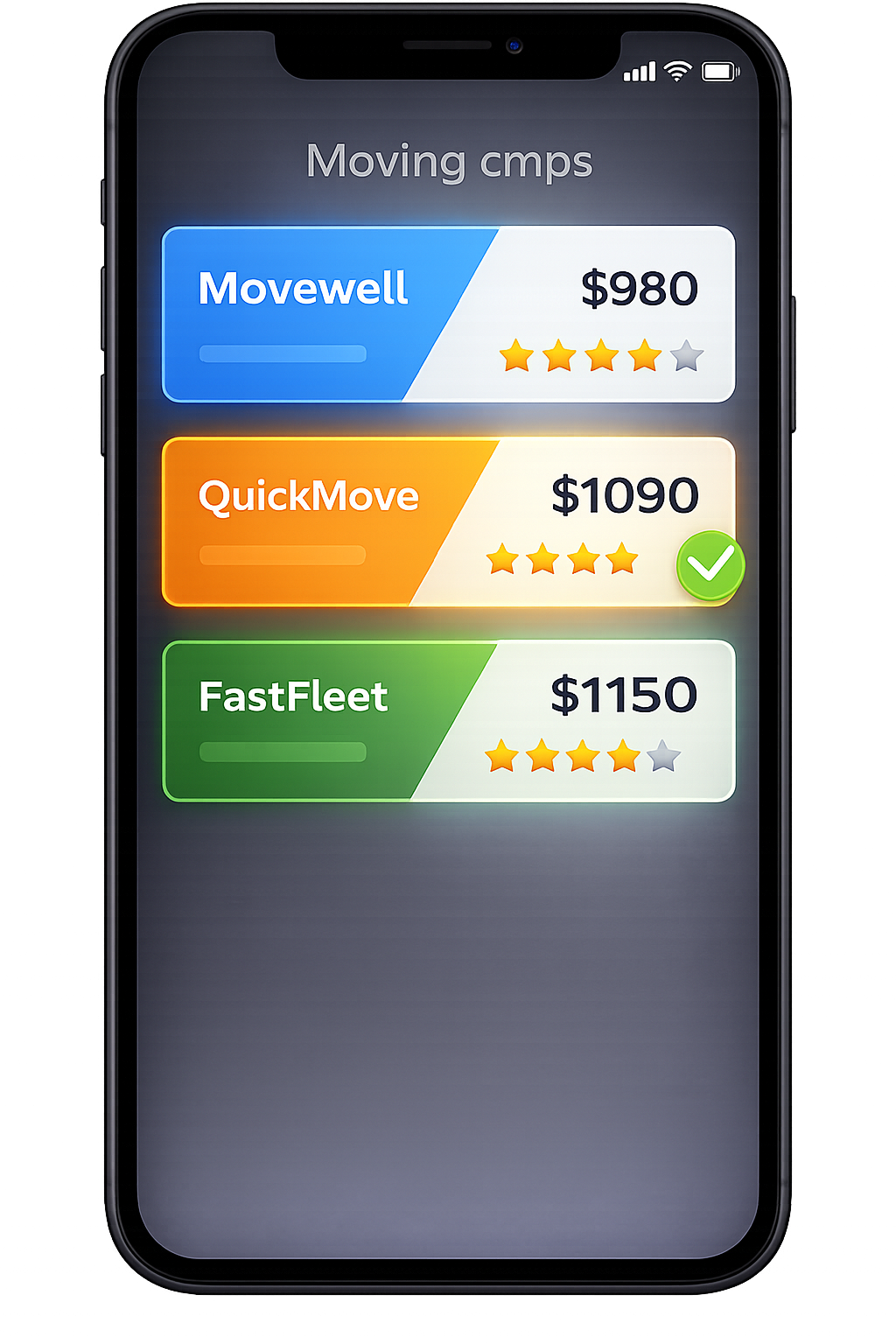
3. Compare Multiple Quotes
Compare mover quotes for Houston, TX from the same scanned inventory.
Frequently Asked Questions
What’s a realistic cost to move a 1-bedroom apartment within Houston in 2026?
For a typical 1-bedroom apartment going a short distance—say from Midtown to Montrose or from the Heights to Washington Avenue—many people see prices in the roughly $350–$700 range when hiring a professional moving crew. That usually reflects a small team, a truck, and around 3–5 hours of work, depending on stairs, elevator access, parking, and how packed you are. Walk-up units on higher floors, tight garages, and loading zones can all add time and push the total higher. When you scan your inventory with MoveCost’s AI, you’ll get a more tailored range based on what you actually own and the specific route you’re taking inside Houston.
How much more does it usually cost to move from Houston to Dallas than a local Houston move?
Local Houston moves are often priced by the hour, while a route like Houston to Dallas is frequently priced based on weight or volume plus distance. For example, a 3-bedroom move from Katy to Cypress might fall somewhere around the lower to middle part of a rough $900–$1,800 example band that many suburban households see for local moves, depending on time and access. Moving that same amount of furniture from Katy to a Dallas suburb could move into the low thousands once you include additional mileage, longer drive times, and different scheduling. These are illustrative ranges, not quotes. With MoveCost, you can use a single AI scan of your inventory to request both local and Houston-to-Dallas offers and compare how movers price each option.
Does moving on a weekday really cost less in Houston?
Often, it can. In Houston, weekends—especially end-of-month Saturdays—tend to book up first. That’s when a lot of leases turn over and when many families prefer to move. Some movers respond by setting higher minimum hours or prioritizing higher-priced jobs on those peak dates. Weekdays in the middle of the week usually offer more availability and, with some companies, access to more favorable price structures than peak weekends. Exact pricing policies vary by mover, but when you use MoveCost, you can try different dates with the same inventory and see how the offers you receive change between a weekday and a weekend.
How does distance across the Houston metro impact moving cost?
Distance across Houston matters, but it’s distance plus traffic plus access. A short move from Downtown to EaDo might only be a few miles but can still take time if crews deal with street parking and busy elevators. A longer move from Pearland to Cypress adds more drive time but might have simpler parking and loading. For hourly local jobs, extra drive and loading time both affect the final price. When you use MoveCost, your addresses are part of the estimate, so movers can factor in how far they’ll drive and what kind of logistics to expect on your route.
What happens if there is heavy rain or flooding on my Houston move day?
Houston’s weather can be unpredictable, and heavy rain or localized flooding can slow or complicate a move. Crews may need to take extra precautions to protect floors, belongings, and their own safety, which can increase how long the job takes. In more severe conditions, some movers may recommend adjusting your schedule or rescheduling altogether. Each company has its own approach to weather-related delays and rescheduling fees, so it’s important to review those details in your quote. Through MoveCost, you can ask potential movers about their weather and rescheduling policies before you decide who to book.
How can I avoid surprise extra charges on moving day in Houston?
A lot of surprise costs come from underestimating how much you have or not mentioning access challenges like third-floor walkups, long hallways, freight-elevator rules, or full storage units. To reduce the risk of surprises, use MoveCost’s AI inventory scan so movers can see a realistic picture of your items. Then add notes about building rules, stairs, elevators, parking, and any time restrictions your property manager sets. When movers quote based on complete information, they’re better able to estimate the time and resources required, which makes it less likely that you’ll see unexpected add-ons on moving day.
Is MoveCost a moving company?
No. MoveCost is not a moving company and does not transport your belongings. It’s a tool that helps you understand likely moving cost ranges based on your own inventory and route, and then compare offers from professional movers that serve the Houston area. You use the AI scan to create a detailed inventory, request quotes, and decide which mover to hire based on the information you see on the platform.