
Moving Cost in Dallas: What People Really Pay
See real-world moving prices in Dallas, compare quotes in minutes, and use AI to scan your home inventory for accurate estimates.

moving cost in Dallas, TX
Moving costs in Dallas can swing a lot depending on where you’re going and how much you own, but there are some clear patterns. For a small one-bedroom apartment going a few miles within the city, many people see full-service professional moves in the range of $350–$700. That usually assumes easy elevator or first-floor access, no major packing help, and a move on a weekday that isn’t at the end of the month. Costs climb as soon as you add stairs in older buildings near Oak Lawn, long walks from parking garages in Uptown, or tight loading zones in busy areas like Deep Ellum. A family moving from a three-bedroom house in Plano down to a similar home in Lakewood or Far North Dallas might see quotes more in the $1,200–$2,500 range, depending on how much furniture, boxes, and special items (like a piano or large sectional) they have. Long-distance moves out of the metro—say, Dallas to Austin, Houston, or even out of state—tend to be priced by distance plus weight or volume. A smaller apartment going from Dallas to Austin might land around $1,000–$2,000, while a full household heading to another state can easily run $3,000–$7,000 or more. Our marketplace pulls rates from multiple licensed movers in the area so you can see these ranges in real time instead of guessing. You can scan your home with AI, upload photos or a quick video walk-through, and get estimates that fit your actual situation instead of a generic "average move" that never feels quite right.
Distance is one of the first things movers look at when they price a job, but it’s not just miles on a map. In the Dallas area, a short move from a Victory Park high-rise to a nearby building downtown may technically only be a couple of miles but can still take longer than a straight shot up the Tollway to Addison during off-peak hours. For local moves within the metro, many companies charge by the hour for the crew plus a travel fee. If your movers spend an extra 30–45 minutes getting around I-35 construction or crawling through rush hour on US‑75, that time adds up. Moves that cross the metro—like from Arlington or Grand Prairie into East Dallas—can be more expensive than a shorter, in-neighborhood move simply because of drive time and how long the truck sits in traffic. For longer distances, like heading from Dallas to San Antonio, Oklahoma City, or beyond, pricing often shifts to a combination of distance and shipment size. The more space your belongings take up in the truck, and the farther they travel, the higher the cost. Fuel, tolls, and overnight stays for the crew sometimes factor in as well. Our platform helps you see how distance affects your price before you commit. Enter your current address—maybe a third-floor walk-up in Lower Greenville—and your destination—say, a new townhome in Frisco—and we’ll show you multiple quotes that clearly separate drive time, labor, and any extra fees. This way, you can decide whether moving on a Sunday morning to avoid traffic or adjusting your route makes financial sense.
In Dallas, two apartments with the same square footage can have very different moving costs because of what’s inside. A sparsely furnished studio in the Medical District doesn’t take nearly as long to empty as a similarly sized but fully packed place in Oak Cliff with heavy bookshelves, gym equipment, and boxes stacked to the ceiling. Movers base a lot of their price on how long they think your move will take and how much space your items will fill in the truck. That’s why being accurate about your inventory matters. Underestimating can lead to surprise charges, longer move times, or even the need for a second trip. Our marketplace was built to fix this guesswork. Instead of trying to remember every last side table and box in a long web form, you can use AI to scan your home inventory. Walk through your apartment in Uptown with your phone, or record your house in Garland room by room. The system identifies furniture, counts items, and helps estimate how many boxes you’ll likely need. With that inventory, we match you to movers who see a clear picture: two couches, a king bed, four barstools, a large dining table, 30–40 boxes, plus a few delicate pieces. That level of detail lets movers give tighter, more reliable estimates, and it helps you compare options fairly. You’ll be able to put a cheaper quote that assumes a light load side-by-side with one that’s priced for your actual inventory and see which is truly the better deal.
The layout of your building and parking situation in Dallas can quietly add or shave off hundreds of dollars from your moving bill. Movers often charge more when access is difficult because it slows everything down. Think about a high-rise near Klyde Warren Park or in the Arts District. Even with freight elevators, movers must reserve time slots with building management, protect floors and walls, and sometimes wait between rides when other residents are using the elevators. All that time is billable labor. In older apartment complexes off Greenville Avenue or in parts of Oak Cliff, third-floor units with no elevator can be even more tiring and time-consuming than a modern tower with a dedicated loading dock. Parking is another big factor. If your movers can back the truck directly up to the garage in a Plano subdivision, loading is fast. But if they’re circling for street parking in Bishop Arts or dealing with tight alleys in East Dallas, they’ll spend extra time just getting into position. Some downtown garages have low clearance that won’t fit a standard moving truck, which means the crew may have to park on the street and walk everything farther. Our quote form and AI inventory scan include questions about access: stairs, elevators, long hallways, loading docks, and parking rules. The more detail you share—"freight elevator must be reserved," "no parking in front of building," "long walk from parking lot"—the more accurate your moving cost will be. Movers in our network are used to Dallas-specific challenges, from summer thunderstorms turning driveways slick to last-minute building rules near SMU, and they’ll price them into your quote upfront instead of surprising you later.
Moving prices in the Dallas area shift with the calendar. Summer is prime moving season, especially for families trying to change school districts before fall and students moving to or from areas like Denton or near SMU. Late May through August tends to be the most expensive time to hire movers, and weekends at the end of the month often book up first. You’ll also feel price pressure around major local events and holidays. For example, moving anywhere near the State Fair of Texas can be tricky if you’re close to Fair Park, with added traffic and limited parking. Even big Cowboys or Mavericks game days can slow things down in parts of Arlington and downtown, which may increase your final labor charge. On top of that, Dallas weather plays a role. In August, crews often take more frequent breaks for safety in the heat, which can stretch your move time. In rare icy conditions, moves might be delayed or rescheduled altogether, and some companies charge change fees if the delay isn’t weather-related. Flexible dates can help you avoid these spikes. Inside our marketplace, you can compare moving quotes across different days and time slots. Try checking a Thursday instead of a Saturday or shifting from the 31st of the month to the 28th or 1st. The difference in price can be noticeable, especially for larger homes in suburbs like McKinney, Allen, or Mansfield. Once you scan your inventory with AI and set your preferred dates, you’ll see which movers offer off-peak discounts, flat rates, or guaranteed arrival windows so you can balance cost with convenience.
Most people in Dallas only move every few years, so it’s easy to feel lost on what a fair price looks like. Our platform is built to make that part simple. Instead of calling three or four companies and repeating your details each time, you enter your information once, scan your inventory with AI if you’d like, and then compare quotes from multiple vetted movers side by side. Here’s how it usually works for a local move: you plug in your current address—maybe a rental in Lake Highlands—and your new place—say, a townhouse in The Colony. You add move date preferences, note any special access details (like "stairs to third floor," "no elevator," or "loading dock behind building"), and scan your rooms with your phone. Within a short time, you’ll see quotes that break down hourly rates, travel fees, and any extra services like packing, furniture assembly, or TV mounting. For long-distance moves, you’ll see shipping options that may be priced by weight or space used in the truck. That’s where your AI-generated inventory really matters: movers can give more accurate binding or not-to-exceed estimates when they know exactly what’s going on the truck from your Dallas home. The marketplace doesn’t just show you a single number. You can compare: • Price ranges and what’s included • Estimated labor hours based on your inventory • How each mover handles stairs, elevators, and heavy items • Customer reviews from other people who moved in and around the area Once you pick a company, you can lock in an estimate and keep everything in one place—no digging through email chains or scribbled notes. The goal is simple: clear, realistic moving costs for Dallas-area moves, without the guessing game or surprise fees on moving day.
How It Works

1. Scan Your Room With Your Phone
Walk around your space and scan your items in seconds.
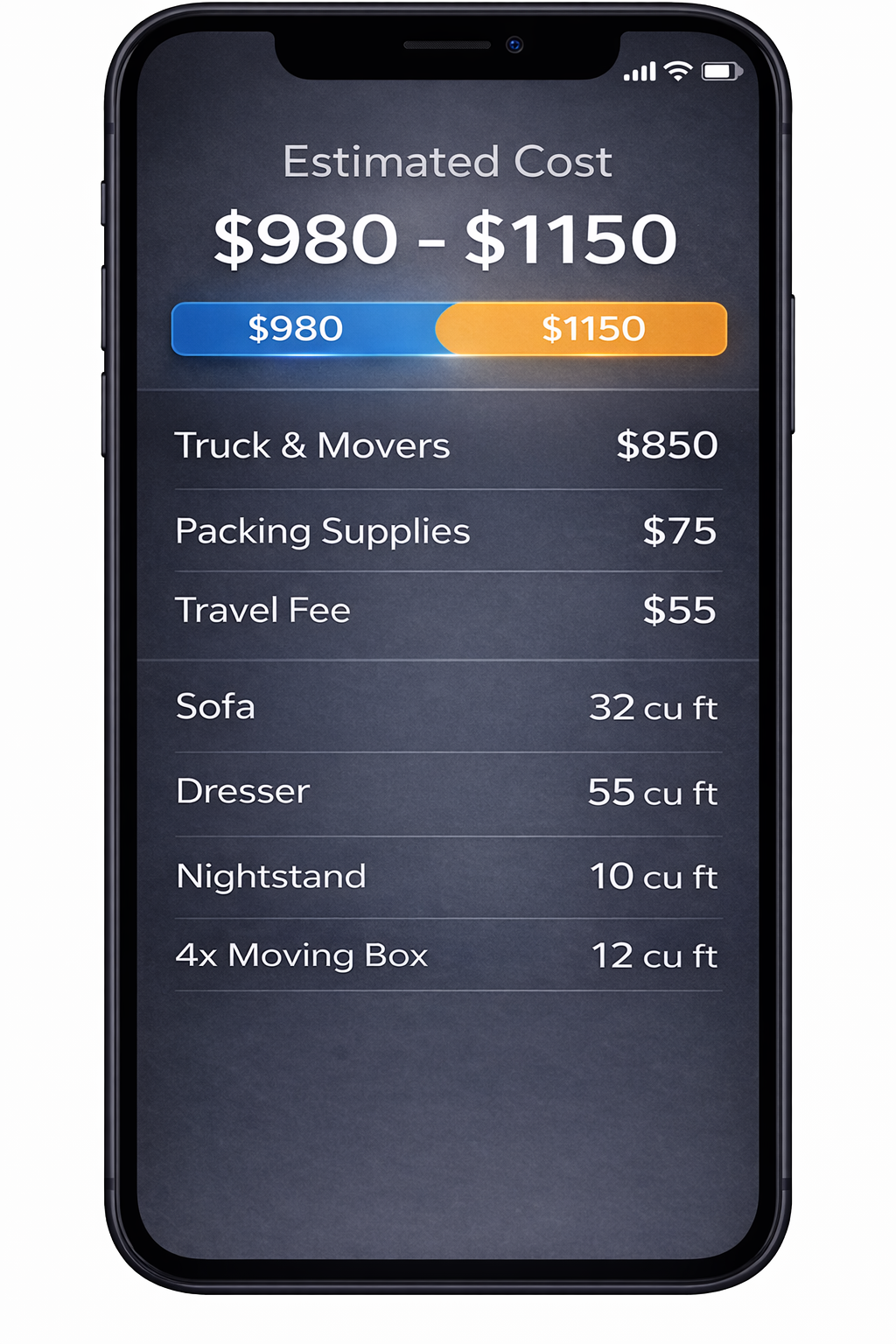
2. AI Detects Your Items
We identify your items and calculate volume for a clearer estimate.
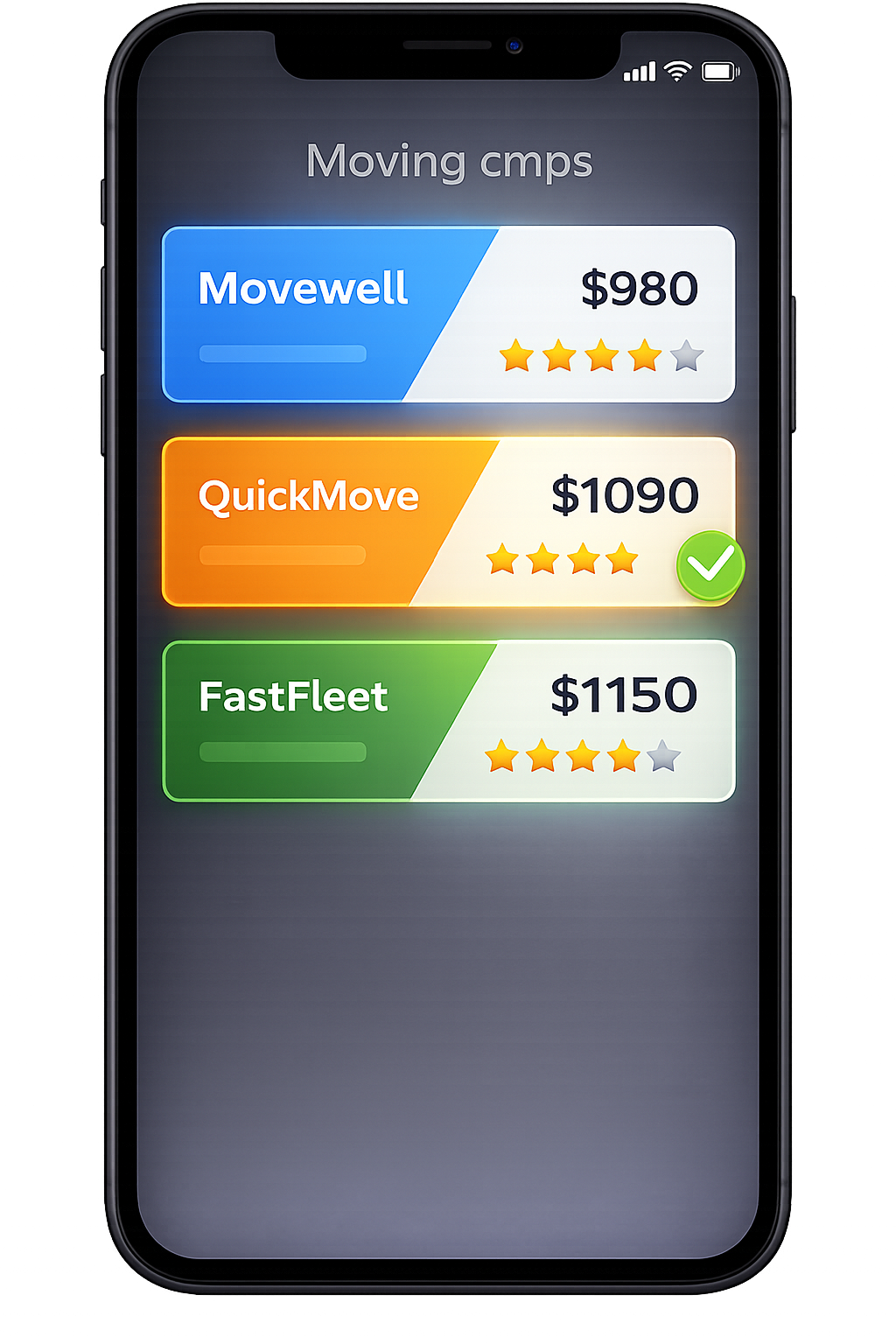
3. Compare Multiple Quotes
Compare mover quotes for Dallas, TX from the same scanned inventory.
Frequently Asked Questions
What’s a realistic price to move a one-bedroom apartment within Dallas?
For a straightforward local move within about 10–15 miles, many people in the area pay somewhere between $400 and $800 for a one-bedroom, assuming normal furniture, easy access, and a weekday move. If you’re in a third-floor walk-up near Lower Greenville, a high-rise downtown with a tight elevator window, or you’ve got heavy items like a solid wood dresser, expect to be closer to the higher end. In our marketplace, you can scan your apartment with AI, share those access details, and see multiple quotes so you’re not relying on a rough average.
Do Dallas movers charge extra for stairs or elevators?
Often, yes—though it’s not always a separate “stairs fee.” Many movers in Dallas simply factor stairs and elevators into their hourly estimate because they slow down the crew. Third-floor units in older complexes around Oak Cliff or Lakewood can take much longer than first-floor units in newer buildings. High-rises in Uptown or downtown sometimes require scheduling freight elevators and protecting hallways, which adds time too. When you request quotes through our platform, we ask about floors, elevator access, and walking distance from the truck so movers can build that into the price upfront instead of surprising you later.
How much more does it cost to move from Dallas to another Texas city?
Cost depends on distance and how much you’re moving, but for a typical one- to two-bedroom apartment heading from Dallas to cities like Austin, Houston, or San Antonio, many people see quotes in the $1,000–$2,500 range. Larger homes going to places like El Paso or out of state can hit $3,000–$7,000 or more. The best way to narrow it down is to create an accurate inventory—our AI scan helps with that—then compare long-distance quotes in the marketplace. You’ll see how much is going toward labor, truck space, and mileage so you can decide if the price makes sense.
When is the cheapest time of month to move in Dallas?
Moves at the very end and very beginning of the month usually cost more because that’s when leases turn over across the metro. If you can move in the middle of the month—say, the second or third week—you’ll often see better availability and sometimes lower rates. Weekdays are usually cheaper than Saturdays. Inside our platform, try adjusting your move date by just a few days. People moving from places like Addison to Richardson or from Arlington into Dallas proper are often surprised how much they save by shifting from the last Saturday of the month to a midweek move.
Can I get a solid estimate without an in-home visit in Dallas?
Yes. You don’t always need a traditional in-home walkthrough. With our marketplace, you can scan your home using AI—walking through your apartment in Uptown or your house in Garland with your phone—and the system identifies furniture and estimates volume. Movers then use that inventory along with your access details (stairs, elevators, parking situation) to build detailed estimates. For complex moves—like a large home with multiple stops in suburbs such as Frisco and Allen—some companies may still prefer a video or in-person survey, but the AI scan usually gets you very close to a reliable number without waiting for someone to come by.