
Local movers in Dallas neighborhoods you can actually compare and book with one scan
Scan your Dallas place once, see realistic hours for routes like Uptown to Oak Lawn or Oak Lawn to Bishop Arts, and compare hourly local movers that already know your buildings and suburbs—separate from our Dallas moving quotes and long‑distance cost tools.

local movers in Dallas, TX
How Local Moves in Dallas Usually Work with AI + Hourly Neighborhood Movers
Moving across Dallas rarely means a cross‑country semi. It usually means: • Getting a couch down a tight hallway in an Uptown mid‑rise • Reserving the freight elevator in a Victory Park or Downtown high‑rise • Parking a truck behind your Oak Lawn or Knox/Henderson building without getting ticketed • Navigating HOA gates in Oak Cliff, Lakewood, or Far North Dallas suburbs On this Dallas local movers page, you: 1. Enter your Dallas route – maybe you’re going Uptown → Oak Lawn, Oak Lawn → Bishop Arts, Deep Ellum → Lower Greenville, or from a central Dallas apartment to a house in Plano, Richardson, or Frisco. 2. Scan your home with AI – studio in the Medical District, 1BR off Greenville, 2BR in Oak Cliff, or a townhome near White Rock Lake. The AI detects your furniture, big items, and visible boxes. 3. Describe access details – floor level, stairs vs elevator, where trucks can realistically park, and how far it is from parking to your door. 4. See realistic time and crew patterns – Dallas movers can estimate how many movers and hours your local route usually needs, instead of throwing out a generic “3–5 hours” guess. 5. Compare local movers (not long‑distance carriers) – hourly rates, minimum hours, weekend vs weekday rules, and notes about which Dallas neighborhoods and buildings they know well. If you later decide you want more general quotes—including long‑distance from Dallas—you can follow the internal link to the Dallas moving quotes page. But if your priority is an across‑town or suburb‑to‑suburb move, this is the page where local hourly movers in Dallas are meant to be compared.
How Dallas Local Movers Set Their Hourly Rates (and Why Time Ranges Matter)
Most local movers in Dallas charge by the hour for a crew and truck. The hourly rate is only half of the picture; the real number you care about is hours × rate. What usually pushes hours up or down on Dallas neighborhood moves: • Neighborhood traffic and timing • Highways like 75, 635, I‑30, I‑35E, and the Tollway can slow short routes at the wrong time of day. • A Deep Ellum → Uptown move at 8 a.m. behaves very differently from the same move at 4:30 p.m. • Building type and access • Garden‑style apartments off Greenville or in Far North Dallas may have long walks from parking to stairs. • Downtown, Uptown, and Victory Park high‑rises often require freight‑elevator reservations and dock access. • Older walk‑ups in Oak Cliff, near Bishop Arts, or around Lower Greenville can mean multiple flights of stairs. • How much you really own • A “1‑bedroom” with light IKEA furniture and 15 boxes is not the same as a “1‑bedroom” with a sectional, solid wood pieces, bookshelves, and 35 boxes. How the AI scan + Dallas local movers flow handles this: • Your scan turns your actual items into an inventory. • You add whether you’re in an Uptown mid‑rise, Downtown high‑rise, Oak Lawn walk‑up, or a Plano/Frisco house with a driveway. • Local movers see both inventory and access and return time ranges like: • 2 movers × 3–5 hours for a light Oak Lawn → Deep Ellum 1BR • 3 movers × 5–7 hours for a fuller 2BR high‑rise move in Uptown → Downtown with dock/elevator time • 3–4 movers for 6–8 hours for a 3BR house move from East Dallas → Richardson or Plano You can then compare: • Which crew size and time range feels realistic for your Dallas neighborhood route • Whether a slightly higher hourly rate with a faster, properly sized crew might be cheaper than a low rate with a too‑small crew that runs long If you want broader price tables (not tied to your inventory yet), you can also open the Moving Company Cost in Dallas, TX guide. That page explains 2026 Dallas price bands, while this page stays focused on actual local movers you can hire.
Dallas Local Move Scenarios: Neighborhood-to-Neighborhood Time Patterns
Here are illustrative Dallas local move patterns showing how movers might think about time for common neighborhood routes. These are not quotes, but they mirror how your AI inventory and access notes affect hours. Scenario 1 – Uptown Apartment → Deep Ellum Loft • From: 1BR apartment in Uptown, 4th floor, elevator, garage parking • To: 1BR loft in Deep Ellum, freight elevator and alley loading • AI inventory: sectional sofa, TV and console, queen bed, dresser, desk, ~25–30 boxes. What local movers often plan for: • 2–3 movers • Roughly 3–5 hours total, depending on: • Elevator speed and dock congestion • Start time (early morning vs late afternoon on 75 and surface streets) Scenario 2 – Oak Lawn Walk‑Up → Bishop Arts Apartment • From: 2nd‑floor walk‑up in Oak Lawn, limited parking out front • To: 2nd‑floor apartment near Bishop Arts, small lot or street parking • AI inventory: standard 1–2BR set with some heavier pieces, 30–40 boxes. What often drives hours: • Multiple stair flights at one or both ends • Longer walks from truck to stairs if parking is tight • Crossing I‑30 and navigating surface streets near Bishop Arts Movers might suggest: • 3 movers for 4–7 hours, with a clear note that extra stair time is built into the estimate. Scenario 3 – East Dallas House → Plano or Frisco Suburb • From: 3BR house in East Dallas (near Lakewood or White Rock), driveway parking • To: 3BR house in Plano or Frisco, driveway parking • AI inventory: living and dining sets, 3 bedrooms, garage storage, patio set, 60+ boxes. Time and cost drivers: • Volume from a full 3BR plus garage and patio • Drive time up 75 or the Tollway, depending on start time • Straightforward driveway access on both ends Movers might propose: • 3–4 movers over 6–8 hours • Option to add an extra mover to shorten the day at a slightly higher hourly rate When you run your Dallas scan on this local movers page, MoveCost folds your exact inventory into patterns like these so Dallas crews can quote the type of move you’re actually doing, not just a generic “2BR Dallas” guess. If you also want long‑distance estimates, you can follow links to the Dallas moving quotes hub or the state‑to‑state calculators from here.
Parking, Elevators, and HOAs in Dallas: Small Details, Big Impact on Local Jobs
Local Dallas movers care about three things just as much as your furniture list: 1. Where the truck will sit • Tight inner‑city streets near Downtown or Deep Ellum • Crowded lots in older complexes off Greenville or in Oak Cliff • Shared garages in Uptown or Victory Park • Wide driveways in Plano, Frisco, or Richardson 2. How they get from truck to door • Freight or passenger elevators and whether you’ve reserved them • Stairs in walk‑up buildings near Lower Greenville, Bishop Arts, or Oak Lawn • Long interior hallways in bigger Dallas and Addison complexes 3. What rules they have to follow • Move‑only time windows in Downtown and Uptown buildings • HOA rules in suburbs like Plano, Frisco, Allen, McKinney, or Rockwall • Requirements for proof of insurance or extra floor protection Inside your MoveCost local move profile, you can capture all of this: • Elevator vs stairs at both addresses • Parking situation (driveway, street, lot, garage, alley) • Approximate walk distance from parking to your unit or door • Any HOA, condo, or apartment rules your property manager shares Dallas movers then respond with time estimates and crew suggestions that match these constraints, instead of assuming “easy access” and adjusting after they arrive. If you want a deeper explanation of how access becomes a cost line item, the Moving Cost Calculator Including Stairs and Elevator and any Dallas cost guide page can be opened from here for more detail.
Why AI Inventory Matters More for Local Dallas Moves Than You Think
It’s easy to underestimate how much you own in an apartment or small house—especially around Dallas where storage is often spread across closets, balconies, garages, and sheds. MoveCost’s AI scan helps local Dallas movers: • See how full your rooms really are—beds, sofas, tables, shelves, and actual box stacks • Decide whether a 2‑person or 3‑person crew is realistic for your local move window • Plan truck size for your route (for example, narrow lots vs wide driveways) without over‑ or under‑sizing • Spot items that might need extra time, like big sectionals, fragile glass tables, or heavy dressers For you, that means: • Your Dallas local mover estimate is tied to your real inventory, not a generic “small/medium/large” guess • You can easily tweak the list if you sell a couch or purge your garage before move day • Every Dallas mover you talk to is pricing the same list, making it easier to see who is underestimating time or leaving services out When you compare local movers on this page, you’re not just comparing hourly rates—you’re comparing how each mover plans to handle your exact Dallas neighborhood move as captured by the AI scan. If you later decide to explore broader quote options, you can take this same inventory to the Dallas moving quotes hub or the AI Moving Cost Calculator Online Free without starting over.
Dallas Moving Tools You Can Pair with Local Movers
Because MoveCost is a network of calculators and city pages, you can use this Dallas local movers page alongside other tools without rebuilding your inventory. Once you’ve scanned your place here, consider opening these in new tabs:
How It Works
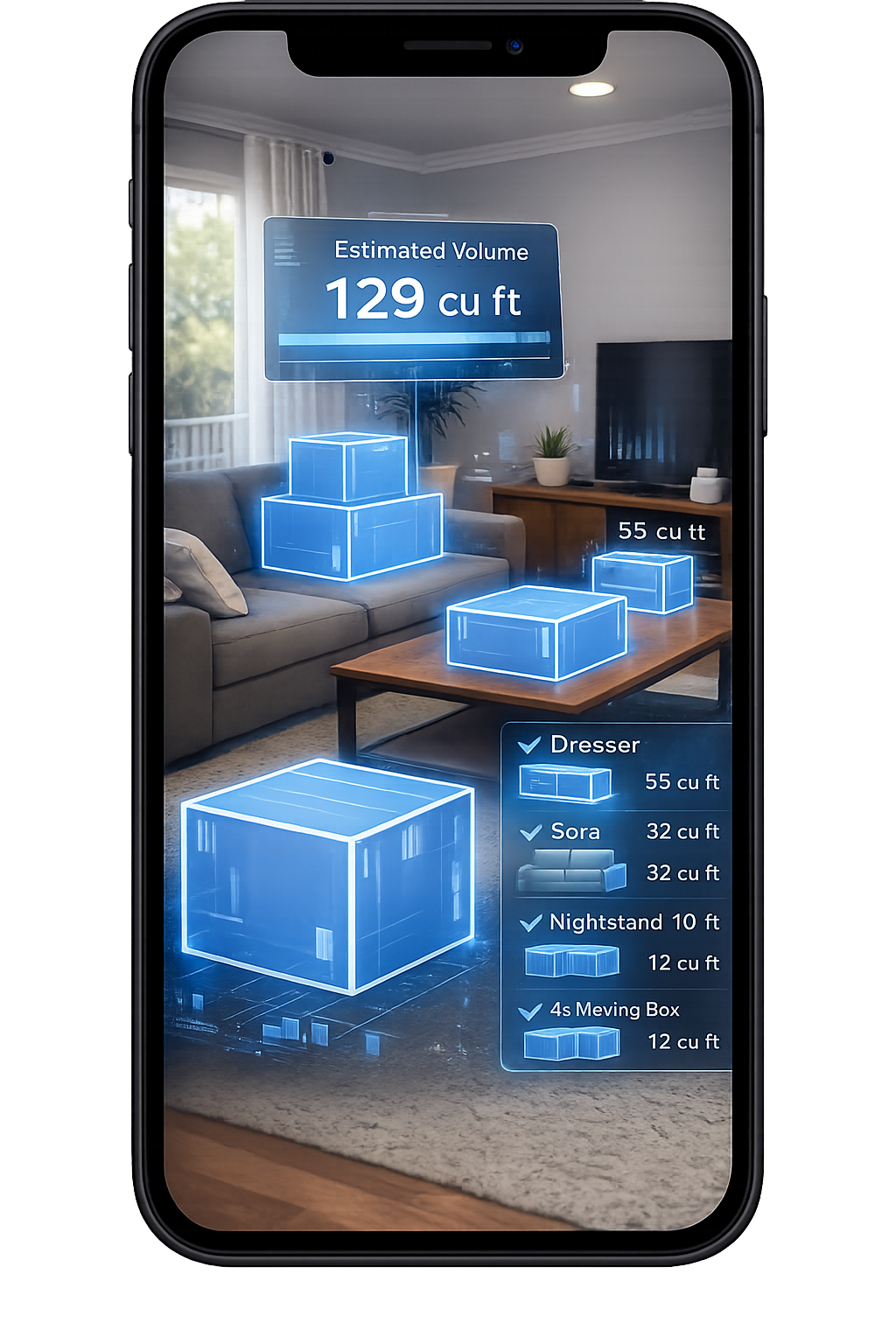
1. Scan Your Room With Your Phone
Walk around your space and scan your items in seconds.
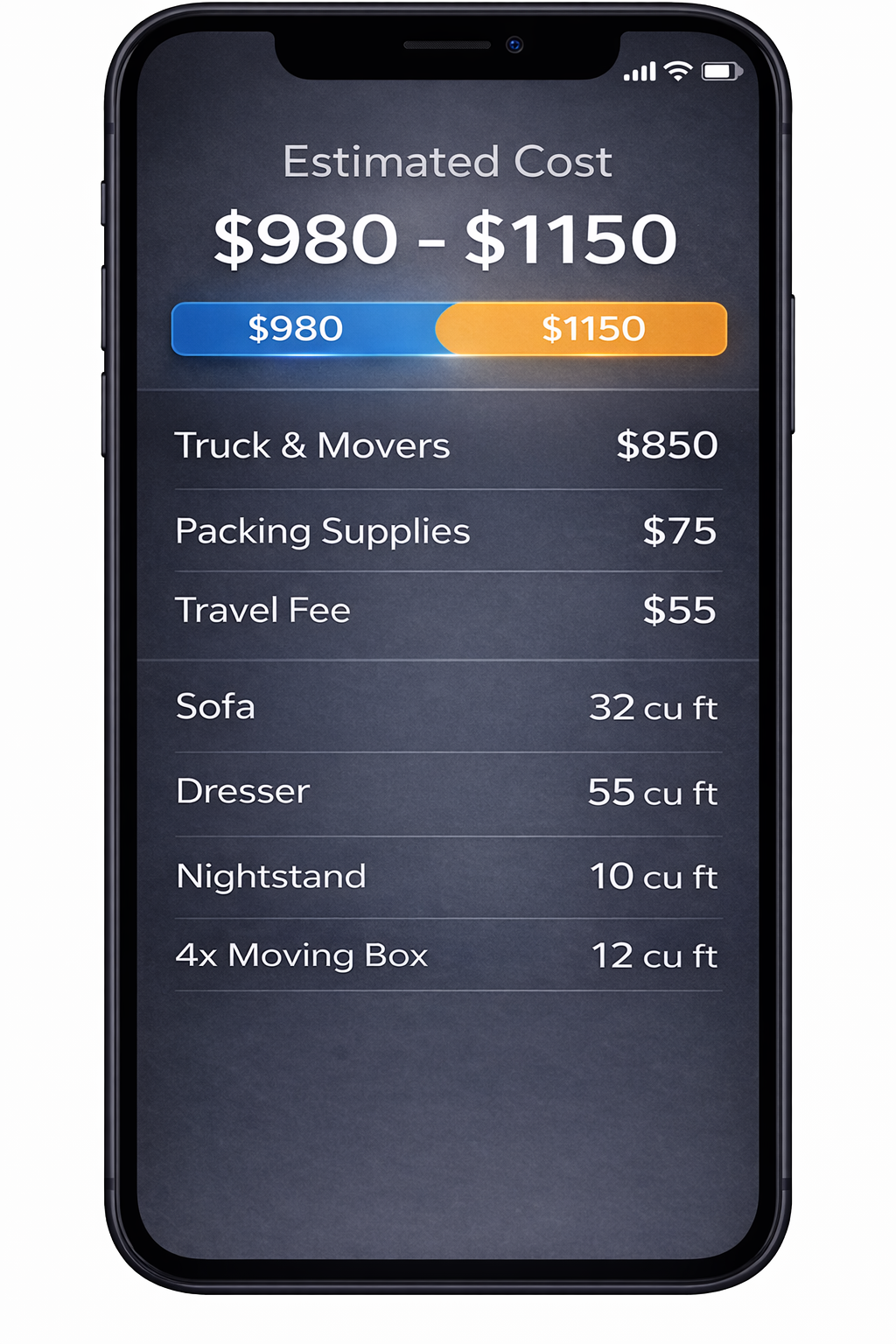
2. AI Detects Your Items
We identify your items and calculate volume for a clearer estimate.
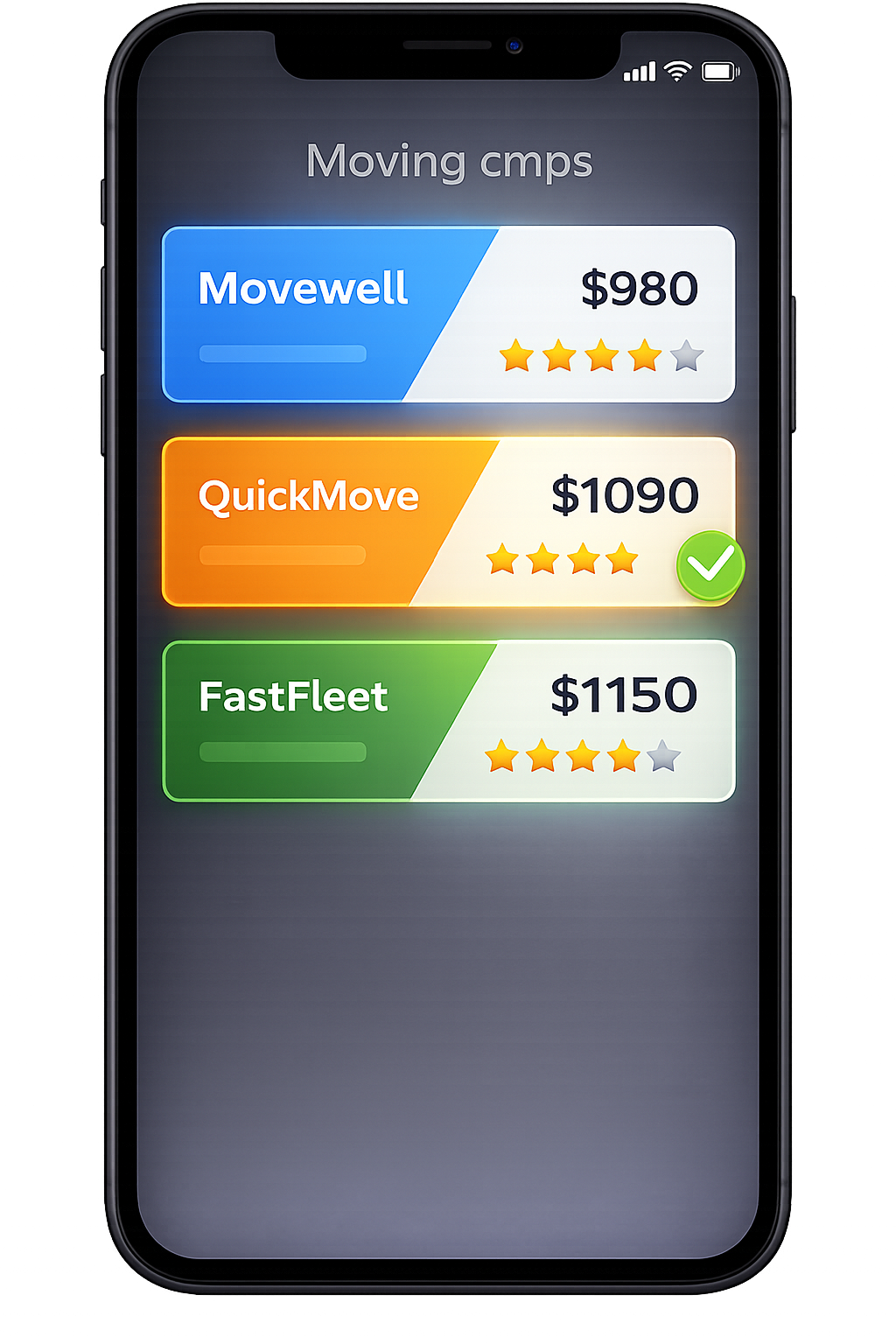
3. Compare Multiple Quotes
Compare mover quotes for Dallas, TX from the same scanned inventory.
Frequently Asked Questions
How is this Dallas local movers page different from the Dallas moving quotes page?
This Local Movers in Dallas, TX page is the main place to find, compare, and book hourly local movers in Dallas neighborhoods using an AI-built inventory. It’s focused on short-distance, within‑metro routes like Uptown → Oak Lawn, Oak Lawn → Bishop Arts, or East Dallas → Plano. The Dallas moving quotes page at https://movecost.ai/moving-quotes-dallas is a broader quote hub. It can surface both local and long‑distance movers starting from Dallas and is designed for people who want a more general “moving quotes Dallas” experience—including state‑to‑state routes. If you know you’re staying in the Dallas area and you want to compare hourly neighborhood crews, this is the right page. If you want to explore long‑distance or mixed local + interstate options, you can scan here and then click through to the Dallas moving quotes page with the same inventory.
Can I reuse my Dallas local move inventory on other MoveCost tools?
Yes. The inventory you build with your Dallas local scan can be reused across multiple MoveCost tools, including: The AI Moving Cost Calculator Online Free hub for broader planning and cost ranges The Local Moving Cost Calculator Near Me for short-distance pricing outside this city page The Dallas moving quotes page when you’re ready to broaden into long‑distance or mix of local and interstate movers The Moving Company Cost in Dallas, TX page (if available) to compare your expected hours and volume with 2026 price tables Access‑focused tools like Moving Cost Calculator Including Stairs and Elevator and educational guides like Moving Estimate Guide for First-Time Movers You don’t need to rescan your Dallas apartment or house every time—you just keep one accurate inventory and share it wherever you need more detail or quotes.
How far in advance should I book local movers for a Dallas apartment or condo?
For many Dallas local moves, booking 2–3 weeks ahead is often enough, but your exact timing depends on: End-of-month weekends, which fill up quickly—especially for popular move windows in Uptown, Downtown, Knox/Henderson, and the Medical District Summer moves with lots of stairs or long walks, where crews may be busier and need more recovery time between jobs Any building rules that require you to reserve a freight elevator or loading dock (common in Downtown, Victory Park, and larger North Dallas complexes) A good approach is: 1. Ask your property manager or HOA about allowed days/times and elevator or dock reservations. 2. Scan your place with MoveCost on this Dallas local movers page and request quotes for time windows that match those building rules. 3. Lock in your preferred mover once you see who can actually work within your building’s schedule.
How does Dallas traffic affect local moving time and cost?
Traffic in Dallas can noticeably change how long an hourly local move takes, even on short routes. Movers running routes that cross 75, 635, 35E, I‑30, or the Tollway at peak times often build extra drive time into their estimates. If your local move involves: Crossing the Mixmaster, 75, or 635 in the late afternoon Going from central Dallas to Plano, Richardson, Frisco, or Allen at rush hour Navigating Downtown surface streets during event times …you may see a wider time range on your estimate. When you use this Dallas local movers page, you can test different start windows (for example, 8–9 a.m. vs. 1–2 p.m.) and see which movers recommend earlier or later starts to avoid the worst congestion for your particular route.
What if my Dallas building or HOA has strict move rules or fees?
Many Dallas properties—especially newer apartments and HOAs in Uptown, Downtown, Oak Lawn, and the northern suburbs—have written move policies. These can include: Required move-only time blocks (for example, weekdays 9 a.m.–4 p.m.) Freight‑elevator or loading‑dock reservations and deposits Required proof of insurance from your mover Rules about floor protection, padded elevators, and where trucks can park You can enter these rules into your MoveCost profile when you set up your Dallas local scan and quote requests. Local movers then see those constraints up front and can: Suggest crews and start times that fit your windows Confirm whether they can provide the paperwork your building requires Build any extra time for elevators or long walks into their estimates instead of adding it later
Can I use this Dallas local movers page if I’m just moving from one Dallas suburb to another, like Plano to Frisco?
Yes. Even if you’re not moving in and out of inner‑city buildings, suburb‑to‑suburb moves around Dallas still benefit from AI inventory and realistic time estimates. For a typical Plano → Frisco, Richardson → Allen, McKinney → Prosper, or Garland → Rowlett move, your main drivers are: How full your 2–3BR home or townhome actually is (including garage and patio) Drive time up and down 75, the Tollway, 121, or George Bush Turnpike, depending on the route Any stairs inside the home or long walks from the truck to the front door The MoveCost scan helps local movers see your volume and layout so they can size crews and hours more confidently. You still choose between movers based on hourly rates, estimated hours, and who seems to understand your particular suburb‑to‑suburb route best.
Do I still need an in-person walkthrough if I scan my Dallas place with AI?
For many local Dallas moves—especially 1–2BR apartments and standard 3BR houses—an AI scan plus good access notes are often enough for movers to estimate hours and crew size without an in‑person visit. A mover might still suggest a walkthrough or quick video call if: You have a lot of unusual or oversized items (large aquariums, heavy safes, specialty equipment) Your layout is especially complex—for example, multiple split levels or very tight stairs Your HOA or condo board has particularly strict or unusual rules they want to verify In those cases, the AI inventory is still useful because it gives the mover a strong baseline. Any walkthrough becomes shorter and more focused: they’re confirming details rather than trying to build an inventory from scratch.